
Planning your first safari? Start with the people who can hear the hyenas
What we would tell you about your first safari if you sat down at our kitchen table. There is usually gin.

We cannot see the reserve from our kitchen window. People assume we can, and it makes a better story, but the truth is we see a fence, a marula tree and a row of solar panels.
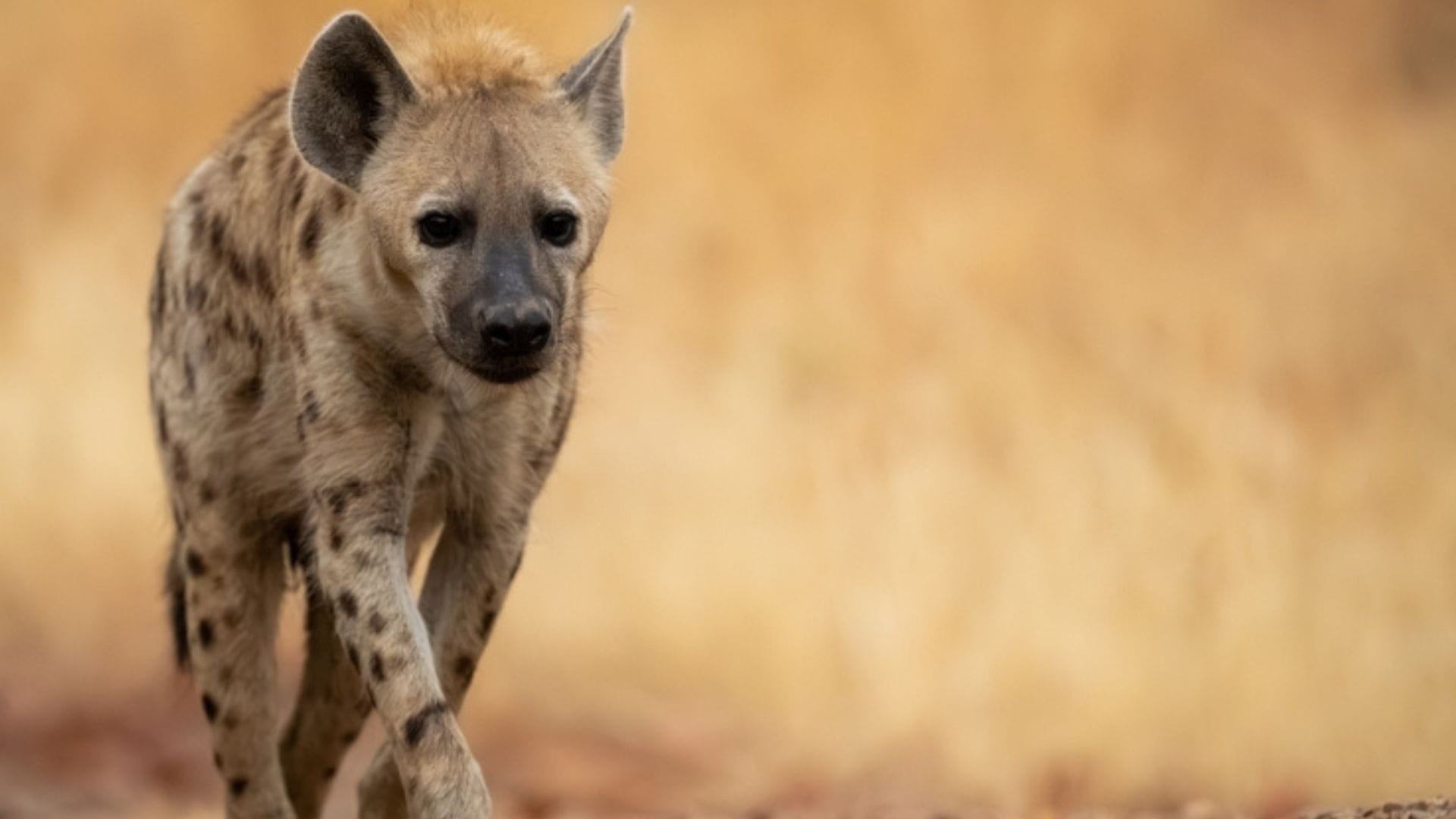
What we can do is hear it. Most nights, somewhere past the fence line, a hyena starts up. If you have never heard one it sounds like a laugh that has gone slightly wrong, rising and falling and then stopping as if someone has thought better of it. The first time a guest hears it at their lodge they tend to lie very still and wonder whether to ring somebody. By the third night they sleep straight through it.
That gap, between the first night and the third, is what this guide is about. Every first safari has one. Our job, and we have been doing it for a while from a small town called Hoedspruit in the South African Lowveld, is to make the gap as short and as lovely as possible.
So here is what we would tell you if you sat down at our kitchen table, which some clients have. There is usually gin.
The question that actually matters
Everyone starts with "which country". It is the wrong place to start and it is why so many first safaris end up slightly off.
The better question is this: how much friction are you willing to tolerate in exchange for how much wilderness?
At one end you have a private reserve on the edge of the Kruger. You land in Johannesburg, take a short flight or a long drive, and you are on a game drive by afternoon. The guiding is superb, the sightings are reliable, the bed is enormous and there is always somebody nearby with a tray.
At the other end you have the Okavango Delta in Botswana. Light aircraft, strict luggage limits, lodges a long way from anything, and a silence so complete you can hear your own blood. It is extraordinary. It is also not for everyone on trip one, and there is no shame in that.
Everything else, East Africa, Zambia, Zimbabwe, sits somewhere between those two poles.
We had a couple a few years ago who arrived convinced they wanted Botswana. They had seen the photographs. Halfway through a phone call it became clear that one of them did not much like small planes and the other got anxious when the plan was not fixed. We steered them to a private reserve near us for their first trip. They went to Botswana two years later, on their second, and loved it. Had they gone first, we think they would have spent a fair amount of money being quietly tense.
Then again, we had a photographer who wanted the Delta and only the Delta, understood exactly what she was signing up for, and we sent her without a second thought. She came back with a picture of a leopard in a sausage tree that we still think about.
The point is that the country is the last decision, not the first.
The four mistakes that cost people the most
We see the same handful of things go wrong, and almost none of them involve the animals.
Choosing for the photograph
Somebody books the Serengeti because the word does something to them. Then they find that the version of the Serengeti they pictured involves long drives, early starts and moving between several lodges, and that they are in fact a person who likes to unpack once.
Start with how you like to travel. Pace, comfort, structure, tolerance for logistics. Then choose the place that suits that. The photograph will still be there.
Spreading it too thin
Safari plus beach plus Cape Town plus one more park, all in nine nights. We understand the impulse. It is a long way to come and you want to see everything.
The trouble is that every move costs you the best part of a day, and the best part of a safari happens on day three or four when you have stopped counting sightings and started noticing the light. Two safari areas is our ceiling for a first trip, and one is often better.
Saving on the bed and spending on the plane
A cheaper lodge plus extra internal flights very often costs about the same as a better lodge with a simpler plan. It just feels different when you are paying it.
Protect your per-night quality first. The lodge is where you will spend the vast majority of your time. Build the itinerary around it, not the other way round.
Picking the wrong sort of safari for the sort of person you are
Self-drive sounds appealing until you are on a corrugated road, arguing about the map, while a leopard walks past behind you. Group safaris sound sociable until you would give anything for an hour on your own deck.
If this is your once-in-a-lifetime trip, go guided, go private where the budget allows, and go slowly.
Where we would send you
A set of introductions rather than a ranking.
South Africa
The easiest first safari there is, and we would say that even if we did not live here. The private reserves bordering the Kruger give you expert guides and trackers, off-road driving at sightings, and a limit on how many vehicles can be at any one animal. The Big Five are reliably here. The infrastructure is mature, the flights are short, and you can add Cape Town or the Panorama Route onto either end without the whole thing coming apart.
If you would rather avoid malaria altogether, the malaria-free reserves in the North West and the Waterberg give you much the same experience without the tablets, which matters for families and for anyone who has had a bad reaction before. There is more on the regions and the seasons on our South Africa page.
We would send: first-timers who want a high chance of seeing everything, families, anyone with limited time, anyone nervous.
We would not send: people for whom "remote" is the whole point.
Botswana
The premium wilderness option, and expensive for a reason. Low numbers of guests, enormous private concessions, water and land in the same day. The Delta in flood is one of the loveliest places on the continent.
What it asks of you: fly-in logistics, soft bags, a firm luggage weight limit, higher nightly costs and a willingness to let go of the plan.
We would send: couples, honeymooners, anyone who values silence over spectacle, anyone on a second safari.
We would not send: people trying to make Botswana fit a budget that does not want to stretch. It ends up feeling like a compromise, and Botswana should never feel like a compromise.
Kenya and Tanzania
The classic safari. Open plains, huge herds, high cat density in the right places, and the Migration if your timing is right. It is not hard, but it is heavier on the logistics than people expect. More driving, more moving, more vehicles in the famous spots during peak season.
The way to do it well on a first trip is to pick one anchor, the Serengeti or the Masai Mara, add one supporting area, and stop there. The private conservancies bordering the Mara are worth every penny for the reduction in crowds alone.
We would send: people with a lifelong Migration dream, anyone who loves scale and does not mind a fuller itinerary.
We would not send: anyone with a short window who wants a slow trip.
Zambia and Zimbabwe
The two that most first-timer guides skip, and they should not. Walking safaris were more or less invented in Zambia's South Luangwa, and the guiding standard across both countries is exceptional. Victoria Falls gives you a proper spectacle to bookend the trip. It is quieter, it is a touch more rustic, and it rewards people who have read a bit.
We would send: confident travellers, walkers, second-timers, anyone who wants to feel they have found something.
We would not send: anyone who needs a rooftop pool to feel on holiday.
Why two countries often work well
If you have the time, the structure we plan most often for first-timers is a two-country trip. A few nights in a South African private reserve, where you learn the pace of a game drive and get close to things, followed by a few nights in the Okavango or the Linyanti, where the water changes everything. The contrast is the point. By the second country you understand what you are looking at.
Cape Town plus a Mara conservancy does something similar, swapping one kind of scale for another. It also spreads your luck. Wildlife does not perform to schedule, and if the first reserve is quieter than usual, the second gives you a different set of odds.
The bit nobody tells first-timers
This is the section we wish somebody had written for us.
It is cold. Really cold. A July morning on an open vehicle in the Lowveld can be close to freezing before the sun gets over the horizon, and you will be in that vehicle for the best part of three hours. The lodge will give you a blanket and a hot water bottle. Bring a proper fleece, a warm hat, gloves and something for your ears anyway. You will feel silly for about forty minutes and then extremely smug.
You do not need three pairs of khaki trousers. Neutral colours matter on walking safaris. On a vehicle, the animals do not care. Take comfortable things you can layer. Leave the safari hat with the chin strap at home unless you actively want to look like a golfer.
Light aircraft mean soft bags and a weight limit. If your itinerary includes a small plane, and in Botswana it almost certainly will, your luggage needs to be soft-sided and it needs to be light. Ask us the number for your route before you pack, because it varies, and it is not negotiable at the airstrip.
"All inclusive" has a small print. At most lodges it means all meals, house drinks, two game drives a day and usually a guided walk. It rarely means premium spirits, spa treatments, conservation levies, park fees or gratuities. We will list exactly what is and is not in your quote so there are no surprises on the last morning.
Tipping. Guides, trackers and lodge staff are tipped, and it is expected rather than optional. We will give you a guide to what is customary for your itinerary. Take cash in small notes.
Malaria, in plain English. The Kruger area and most of Botswana, Zambia, Zimbabwe, Kenya and Tanzania are malaria areas. Some South African reserves are not. Talk to a travel clinic with your exact route and dates. If you would rather not take anything, tell us, and we will build the trip around that.
You will get used to the early starts within two days. Every single guest says they will not, and every single guest does. Something about the light at half past five does it.
The guide is the trip. You can put the same two people in the same reserve on the same day with two different guides and give them two completely different holidays. A good one turns a sighting into a story. We choose lodges partly on the strength of their guiding teams, and we are not shy about it.
What it costs
Safari is not one thing with one price. It is guiding, vehicles, conservation fees, remoteness, staff, and the simple fact that the best places limit how many people can be there at once. That is what you are paying for, and it is why a good one is not cheap.
We would rather talk it through with you than publish a figure that turns out not to apply. The same standard costs differently in South Africa and in Botswana, and the same lodge costs differently in June and in February. South Africa gives you the widest range of the lot, and it is possible to have a first safari here that stands up against anything, for meaningfully less than the equivalent further north.
What we will say is this. Fewer nights somewhere excellent nearly always beats more nights somewhere average. And if the budget will not quite stretch to the trip you have in mind, the conversation becomes about trade-offs rather than whether it is possible at all.
We have written a longer piece on what drives the price of a safari, and where the differences hide, in how safari pricing works.
A word for the green season
Every first-timer guide tells you to go in the dry season, May to October in Southern Africa, roughly June to October in East Africa. Visibility is better, the grass is shorter and the animals gather at water. It is sound advice and we give it too.
But we would be doing you a disservice if we did not mention the green season, November to about March. The bush is dense and vivid, the light is extraordinary, there are baby animals everywhere, the birds arrive in their thousands, and the storms come through in the late afternoon like something out of the Old Testament. Rates come down, lodges empty out, and the sightings, while they take a little more work, are often more intimate because you are one of very few vehicles.
If you are a photographer, a birder, a second-timer, or simply someone who would rather have a lodge nearly to yourself, take a serious look at it. We will tell you plainly which reserves work in the rain and which do not.
What a first trip tends to look like
Skeletons only. We will put the flesh on once we know you.
The classic first safari, South Africa, eight nights
Two nights in Cape Town to shake off the flight. Fly to the Lowveld. Five nights at one private reserve lodge on the edge of the Kruger. One night near the airport or back in the city before you fly home. One lodge, no rushing, the best possible chance of seeing everything.
The two-reserve version, South Africa, nine nights
Four nights in a Kruger private reserve for the Big Five, then a short hop to a malaria-free reserve for four nights of something wilder and quieter. A night in Johannesburg either end.
The step-up, South Africa and Botswana, ten nights
Four nights near the Kruger to find your feet, then across to Botswana for five nights over two Delta lodges, one water-based and one land-based. A night in Johannesburg to start. This is the one for people who want their first trip to be their big one.
The East Africa classic, eight nights
Three nights in a private conservancy bordering the Masai Mara, four nights in the Serengeti timed to the Migration, a night in Nairobi to recover.
Questions we get asked most
What is the best African country for a first-time safari?
For most people, South Africa. It is the easiest, the most reliable and the best value, and the guiding in the private reserves near the Kruger stands up against anywhere on the continent. If the Migration is a lifelong dream, Kenya or Tanzania. If you want remoteness and silence and the budget allows, Botswana.
How many nights should I spend on a first safari?
Seven to ten if you can. Fewer than four in one place and you have barely arrived. If you only have a short window, one lodge for four or five nights beats two lodges for two nights each every time.
When should I go?
Dry season is the safe default: May to October in Southern Africa, June to October in East Africa. Green season is the interesting alternative, and we will tell you honestly whether it suits the trip you have in mind.
Is an African safari safe?
Yes, when you are with a reputable lodge and you listen to your guide. Do not walk around an unfenced lodge at night without an escort. Take out travel insurance that covers medical evacuation. You almost certainly will not need it. It is there so you do not have to think about it.
Can I take the children?
Yes, though minimum ages vary by lodge and are usually higher for walking safaris. Several reserves run excellent family programmes, and the malaria-free options make it far simpler with younger children. Tell us their ages and we will steer you.
I am travelling on my own. Does that work?
It works beautifully. Safari is one of the most sociable ways to travel alone, because you will be on a vehicle with the same small group every day and eating together most evenings. Single supplements vary a lot between lodges, and we know which ones are kindest to solo travellers.
I am not keen on small planes. Can I still go?
Then we will not put you on one. South Africa can be done entirely by road, and plenty of it is a lovely drive. Just tell us at the start.
Do I need malaria tablets?
It depends where you go. Most of the famous areas are malarial. Some South African reserves are not. Speak to a travel clinic with your exact route, or tell us you would rather avoid it entirely and we will plan around that.
Where we come in
We are not a listings site. We do not pass you on to somebody else once you have read this far. We are the people who build the trip, book it, and answer the phone when the transfer is late.
Marula Hill is a small safari consultancy based in Hoedspruit, forty minutes from many of the lodges we book. We have stayed in them, eaten in them and complained about the coffee in one or two of them. We are members of SATSA, and every booking is financially protected through SATSA bonding.
If you would like to start somewhere gentle, our short quiz will tell you what kind of safari suits you before we have even spoken: shape your safari.
If you would rather just talk, get in touch. Roxanne will pick it up. She is very good.
The hyenas are optional. They come with the territory.
Marula Hill is a boutique safari consultancy based in Hoedspruit, South Africa. Co-founded by Vikki Jackson and Sian Loehrer.
If this resonated
The bush has been expecting you
Start with a conversation. We will ask what makes you want to wake up at four-thirty, and build from there.
Begin a conversation
What we would tell a young woman starting out in safari travel
Both of us came out of corporate, one of us with travel experience already. This is the advice we give when a young woman writes and asks how to build a career in luxury safari travel.

Botswana has water again. Here is what that means for your safari.
Botswana is having a stronger water year. Here is what that changes, and why the right lodge and the right week still matter more than a brochure month.

18 On The Hill review: a luxury tented safari in the Greater Kruger
Read our 18 On The Hill review, a luxury tented safari lodge in Greater Kruger, with excellent food, beautiful scenery and memorable wildlife.

Royal Malewane reopens: what we remember, and what the fact sheet confirms
The original Royal Portfolio property is back after months behind scaffolding. We haven't seen it yet. Here is what we know anyway.

We run on solar and we have not printed since 2019
Vikki and Sian on solar power, paper, and what a small safari company can honestly claim.

Sandringham Private Game Reserve: should you go early, or wait?
Greater Kruger's newest reserve opens in August 2026. Our honest take on who should book Sandringham early, and who should give it a few seasons.

The packing guide
What to bring on safari, what to leave at home, and the one thing no lodge can lend you. An honest packing list from the team in Hoedspruit.

How do you want to feel when you get home?
Why we plan safaris around how you want to feel when you get home, not around a pin on the map.

South Africa's online traveller declaration: what it means for your safari (and what it doesn't)
A five-minute customs form now stands between you and the arrivals hall. Here's what it is, who needs it, and what nothing to declare actually means for a normal safari guest.

Safari After Dark
Night drives reveal a different Africa. Quieter, older, more deliberate. Here's what we love about the bush after the sun goes down.

How we tailor every Marula Hill safari
We don't start with destinations. We start with you: your pace, your family, your idea of a good day in the bush.

When space teaches: what Saseka's refresh tells us about gathering in the bush
What a thoughtful safari lodge refresh tells us about gathering in the bush.

Inside FedAir's new Baobab lounge at Hoedspruit
The new Baobab lounge at Hoedspruit airport changes how a safari begins. Vikki Jackson on the room that holds you before the bush does.

How safari pricing actually works
From the people who build the quotes. What you are really paying for, where the money goes, and how to spend it well.

Monwana, and what coming home actually means
By Vikki Jackson and Sian Loehrer. A week at the Thornybush lodge that has built its whole identity around the word home, and what we found when we tested it against the room, the drives, the afternoons and the bill.

The Mozambique dhow: a slow boat at the end of a fast trip
Why we put a dhow afternoon into almost every Mozambique trip. Sail, salt water and the long breath out after safari.

Why we built the Antarctica page
A short note from Sian on why an African safari business added Antarctica to its destination map, and how we handle a trip neither founder has yet made.

Lion Sands Ivory Lodge. What their redesign gets right
I visited Lion Sands Ivory Lodge in the Sabi Sand. The redesigned spaces are quiet, bold, and rare. Here is what they got right.

Where the money actually goes on a luxury safari
A line-by-line look at what you're actually paying for on a luxury African safari — and what a quote that looks light is usually hiding.

Bazaruto vs Quirimbas: which Mozambique archipelago is right for you?
How to choose between Mozambique's two great archipelagos for a bush-and-beach trip. Geography, lodge feel, when to go.

Sabi Sand or Kruger
Two reserves, one fence line, very different mornings

What is the best month to visit Cape Town?
Cape Town rewards you differently in every season, but March to May is the window most of our clients come back to.

What Singita Lebombo's 2026 redesign tells us
Lebombo reopened March 2026 warmer, quieter, more art-led

Gorilla trekking, Uganda or Rwanda
Two countries, the same forest, two very different days

Do you need travel insurance for a safari
What safari travel insurance must cover, and why standard policies fall short