
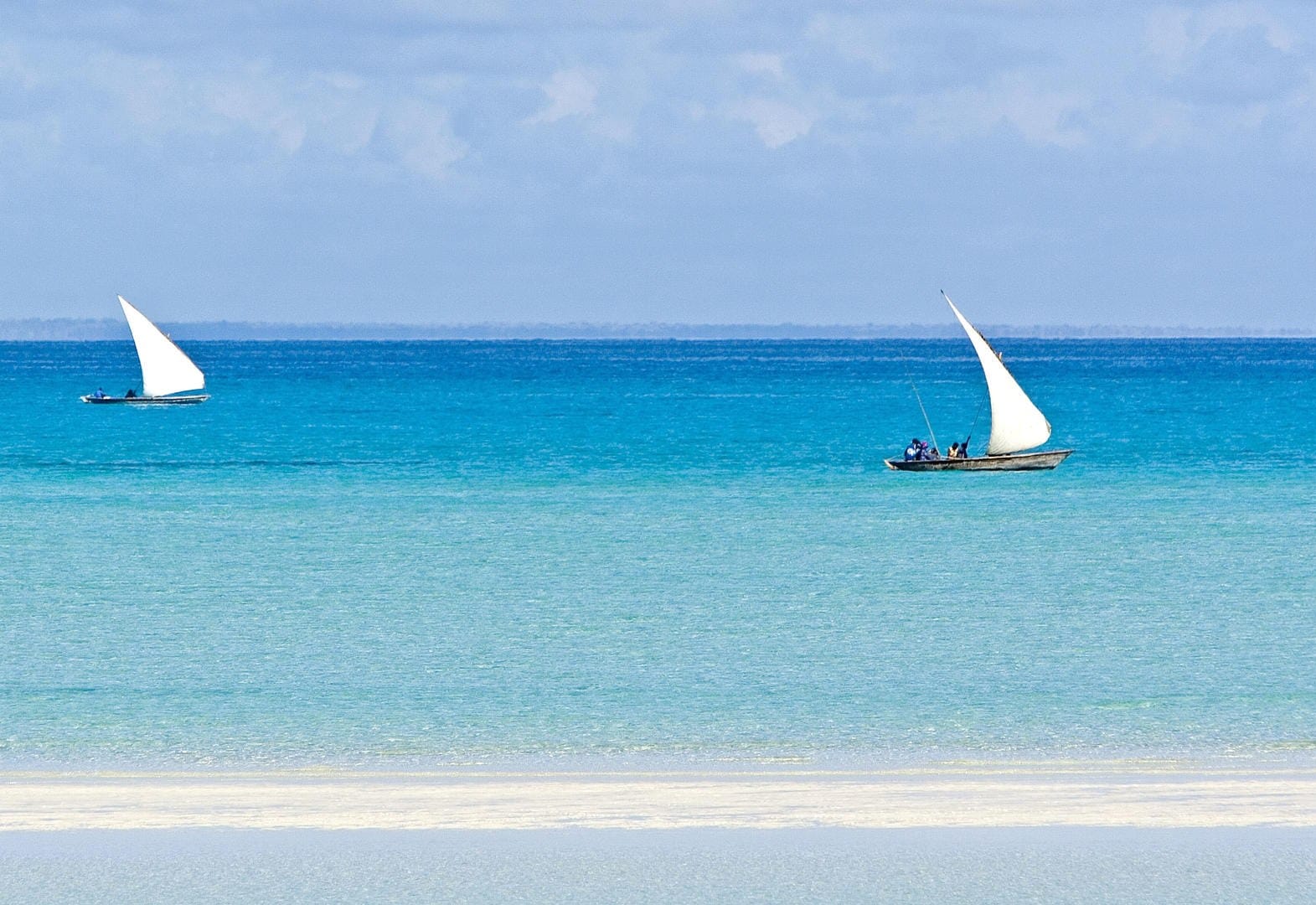
01 · The southern archipelago
Bazaruto Archipelago
Five islands off Vilanculos, declared a national park in 1971. Dunes, dugongs, and the easiest pairing from a southern African safari. Three to five nights.
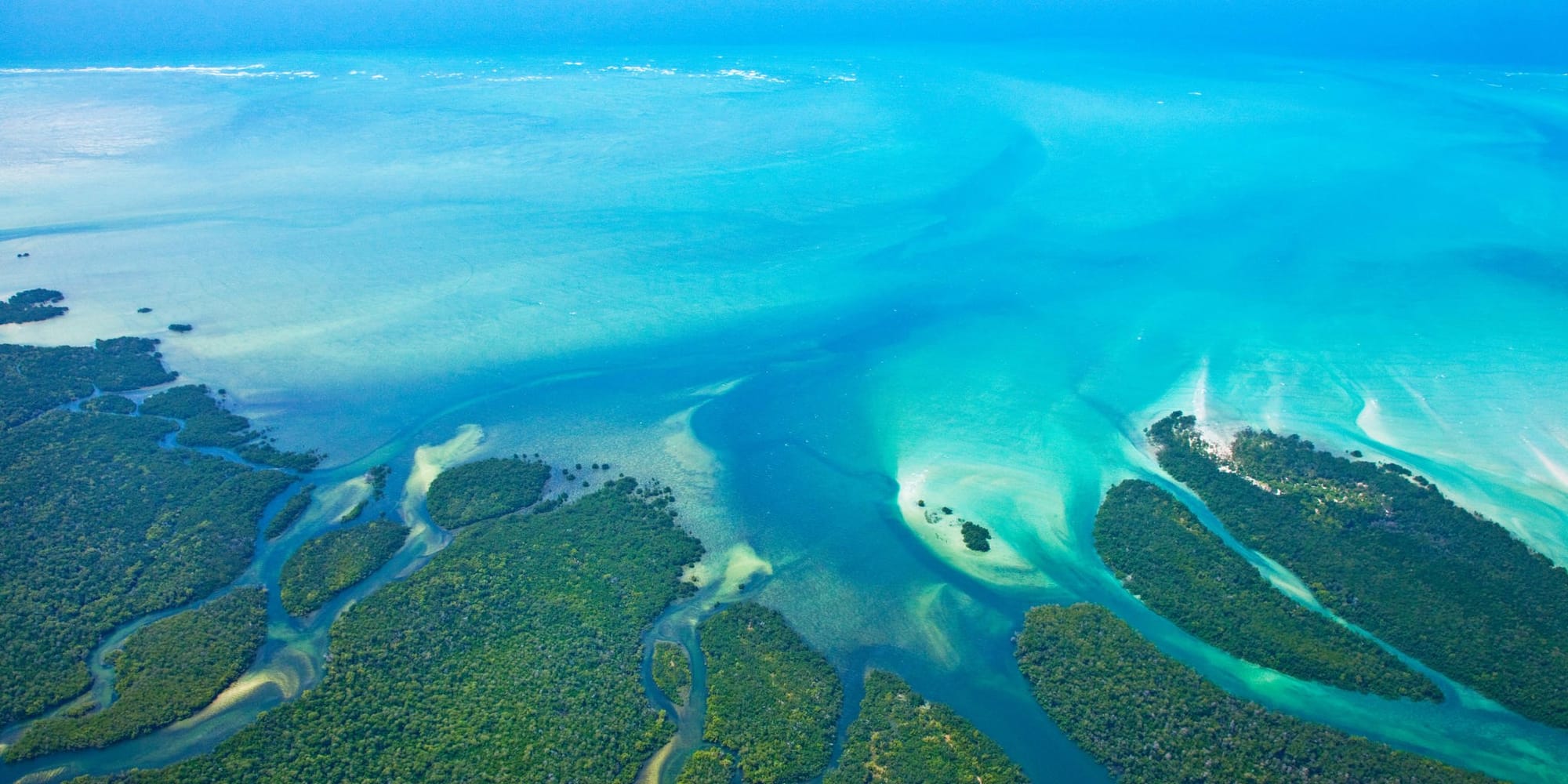
Mozambique Travel Guide
The right country to wash the bush off.
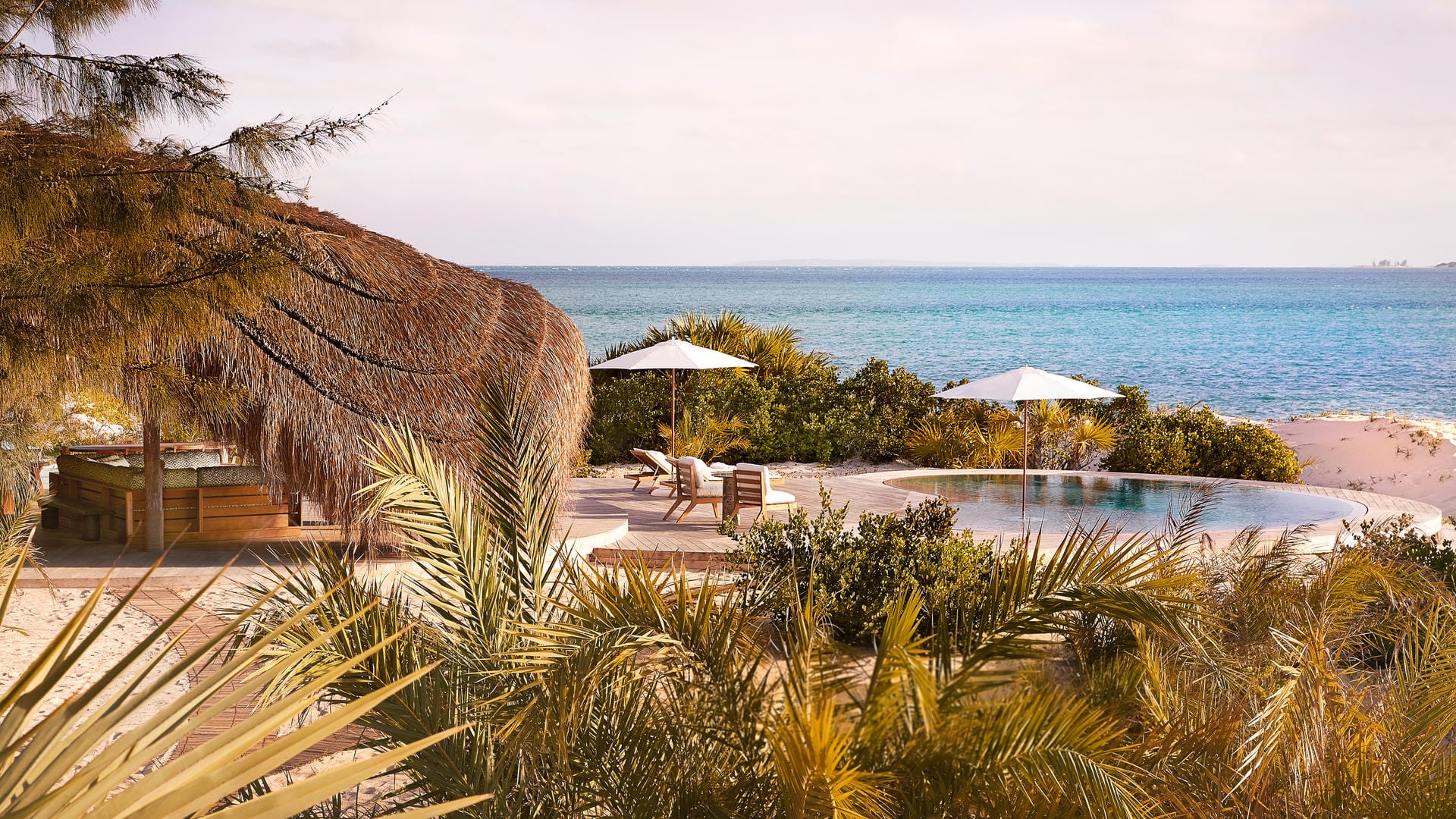
Why Mozambique
Mozambique is a coast country. The mainland has its own pull, the Portuguese-colonial layer, the food, the music, but the trips we plan here are almost always about the islands. Two archipelagos sit off the coast: Bazaruto in the south, opposite Vilanculos, and Quirimbas in the far north, opposite Pemba. Between them, a vast stretch of empty Indian Ocean, fringing reef, dhow sails, and white sand.
The islands are the headline. Bazaruto's are vast, dune-backed, and ringed by sandbanks that surface and disappear with the tide. The Quirimbas are flatter, denser with mangrove and palm, and sit closer to the Tanzanian border in waters that are among the clearest on the African coast. Both archipelagos hold a small number of well-run lodges on private concessions, and the spacing between them is intentional. You will rarely see another boat on the water.
What Mozambique offers, and what it does better than the wider Indian Ocean islands and Zanzibar, is the combination of strong marine life with very low visitor numbers. Dugongs in Bazaruto. Manta rays in the northern channels. Whale sharks and humpbacks in season. The country pairs naturally with a safari, which is how almost all of our clients see it. The bush, then the sea. The order matters.
Mozambique also pairs naturally outward. With Botswana for the Okavango or Linyanti, then Vilanculos, then five nights on a private island concession, the most-booked combination we plan. With South Africa from the Sabi Sand via direct flights into Vilanculos. With Kenya or Tanzania pairing the northern circuit into Quirimbas through Dar es Salaam or Nairobi. Most Mozambique stays we plan run three to five nights at the end of a longer safari.
What this country does best
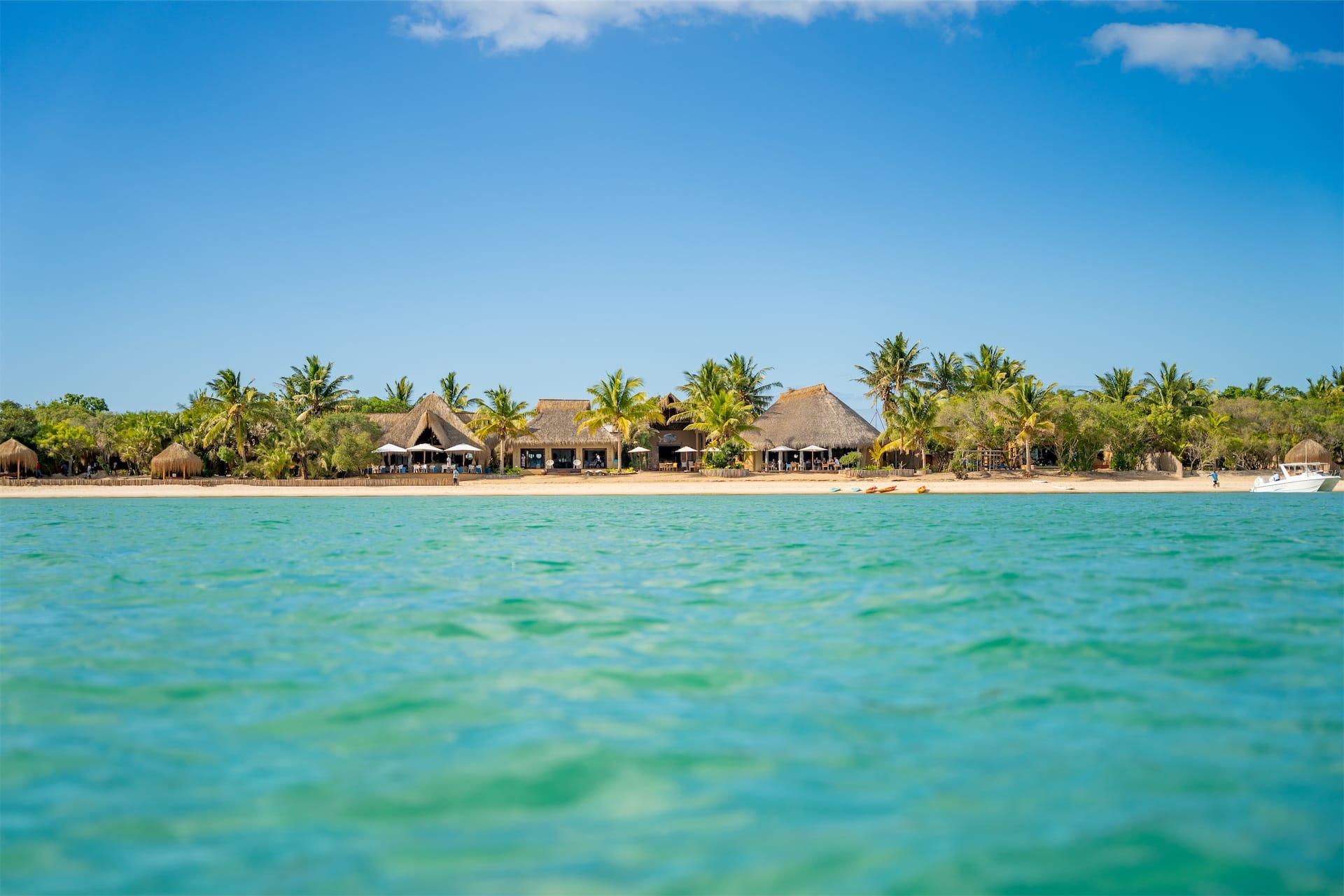
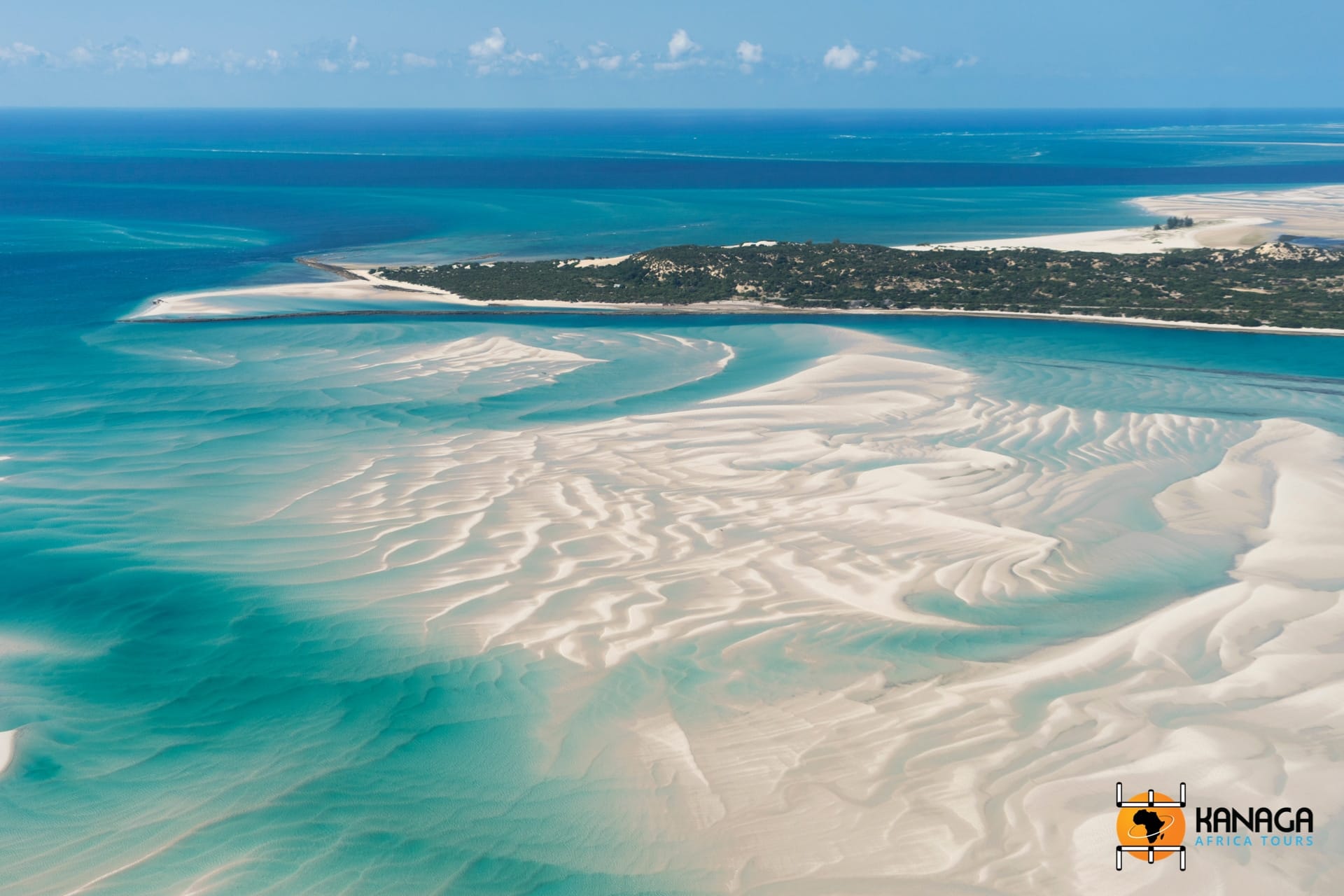
Five islands off Vilanculos, declared a national park in 1971. White sand dunes rising from turquoise water, sandbanks that surface with the tide, fringing reef, and the last viable dugong population in the western Indian Ocean of around 250 individuals. The headline destination for southern African safari pairings.
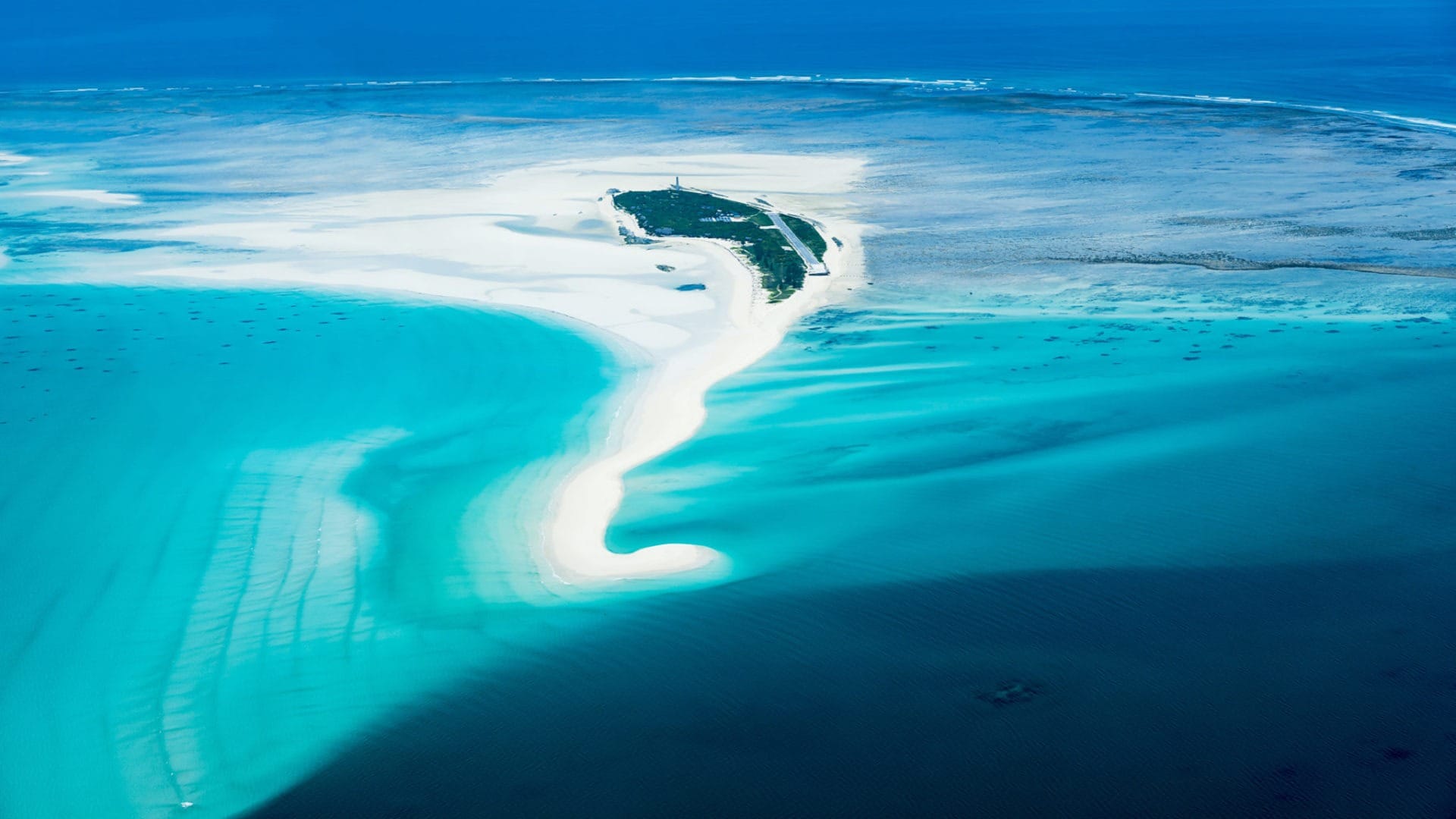
Thirty-two islands stretching 250 kilometres along the northern coast, declared a national park in 2002. Flatter and greener than Bazaruto, with strong mangrove systems and exceptional reef. Closer to Pemba than to anywhere else, and the more remote of the two archipelagos.
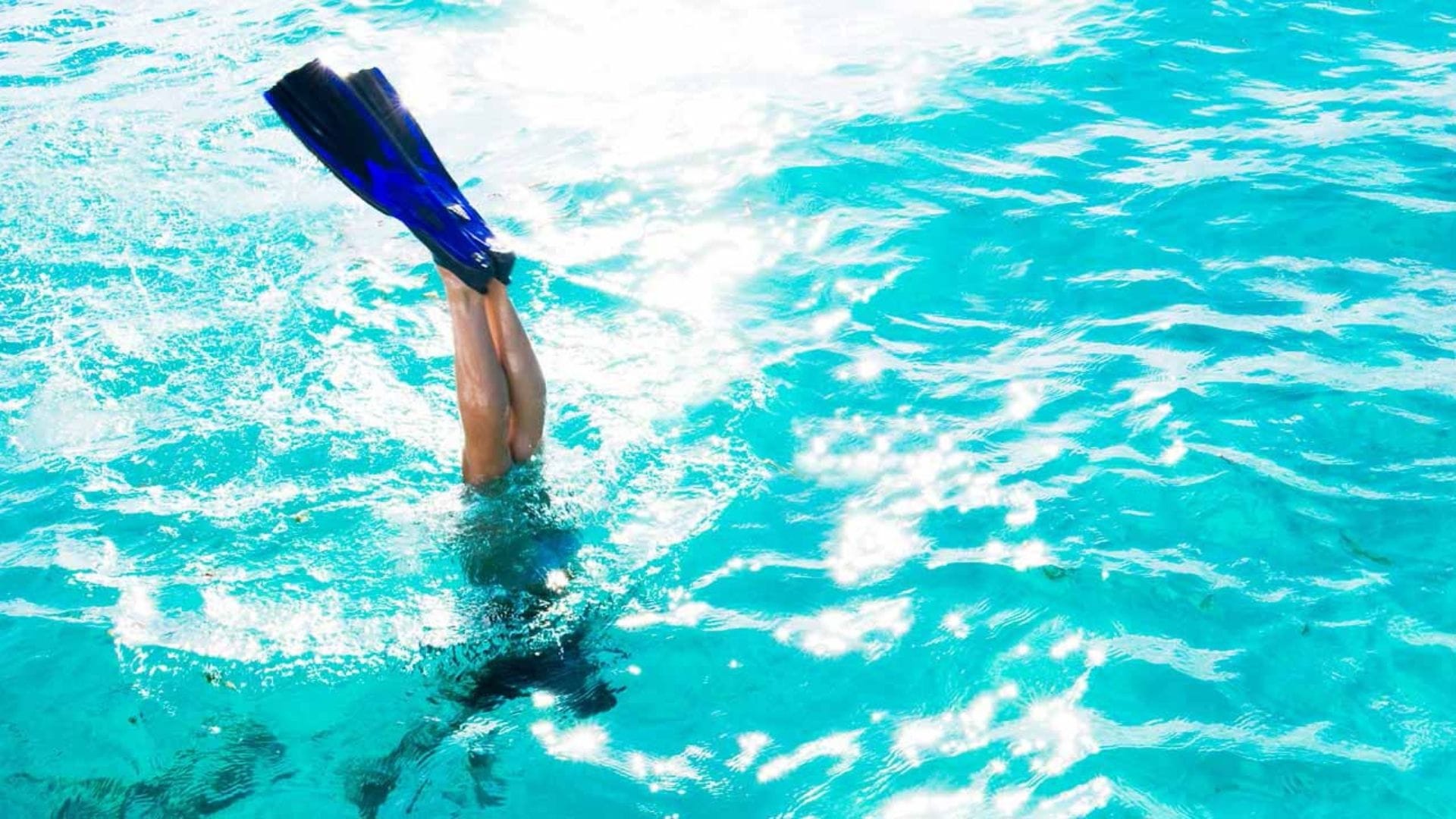
Two Mile Reef in Bazaruto for the soft corals and turtles. Manta Reef at Tofo for the manta rays. The northern Quirimbas channels for whitetip sharks and humpback whales in season. Reef condition across the country is among the best on the African coast and visitor numbers are low.
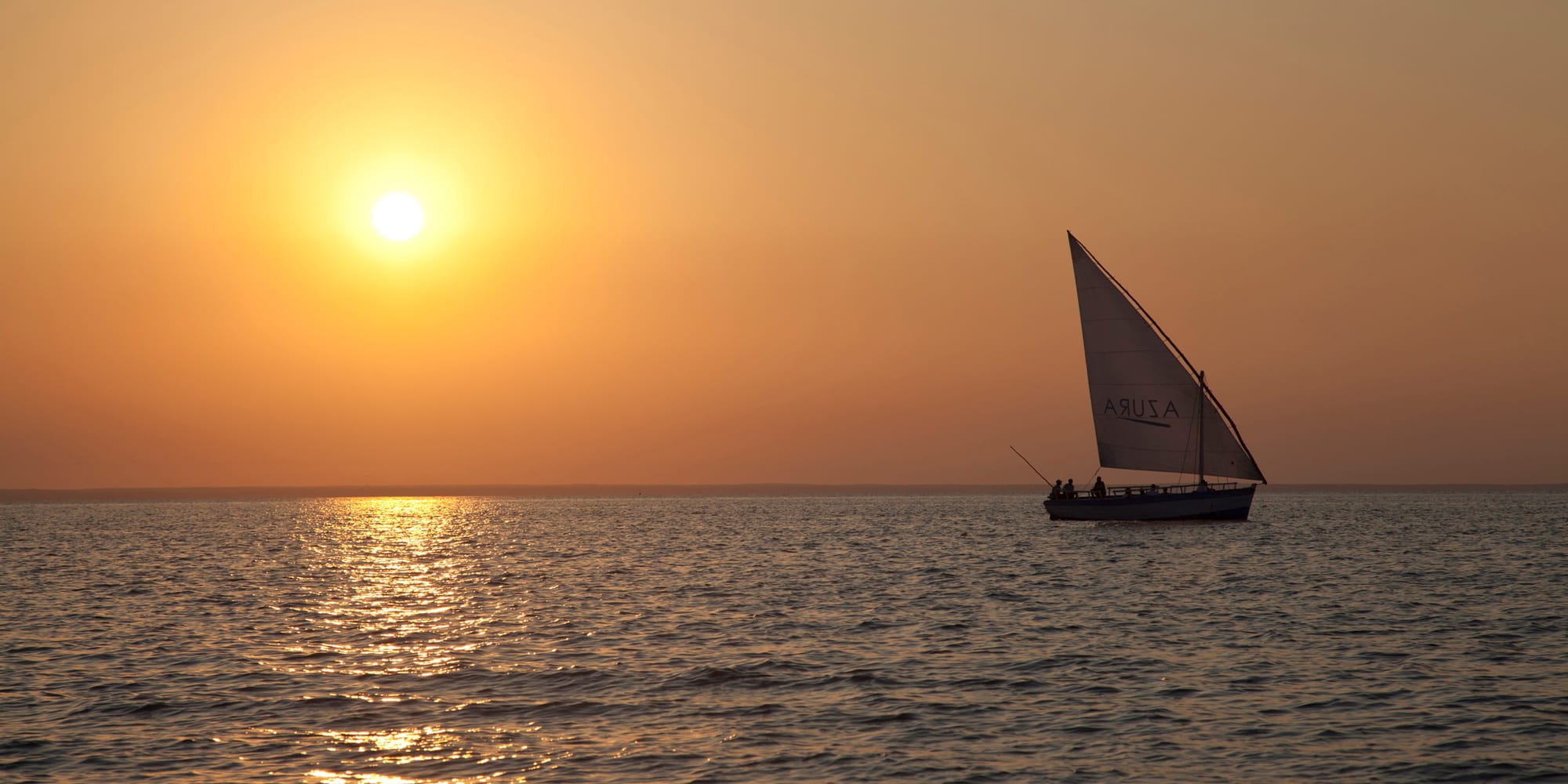
The traditional Arab sailing vessel, still used by local fishermen and brought into private island use for sundowners and channel runs. Slower than a motorboat, quieter, and the right pace for the end of a safari.
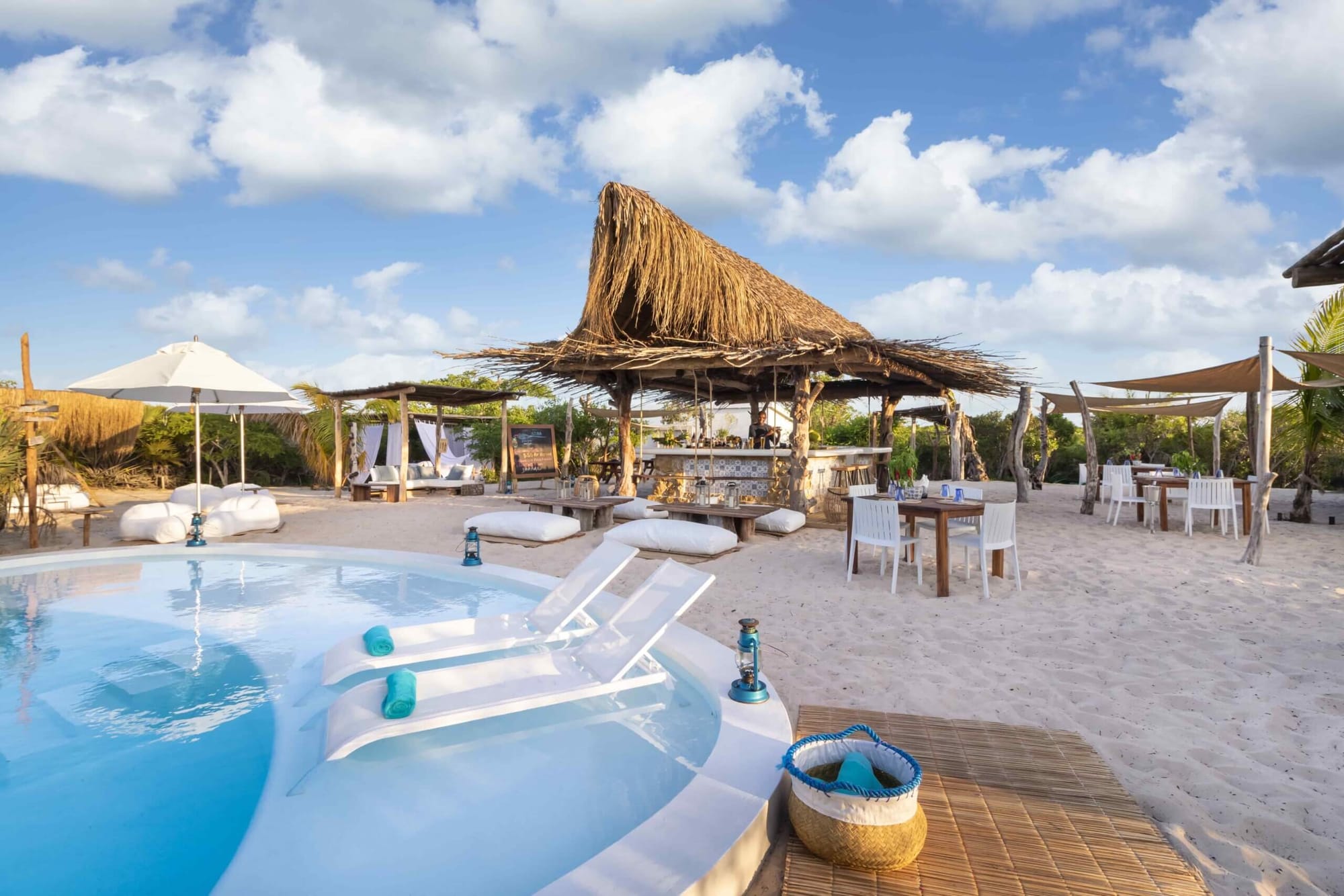
Private island concessions in Mozambique are large and the islands are quiet. Most guests rarely see another boat or another property all week. A strong contrast to the busier Seychelles or Zanzibar.
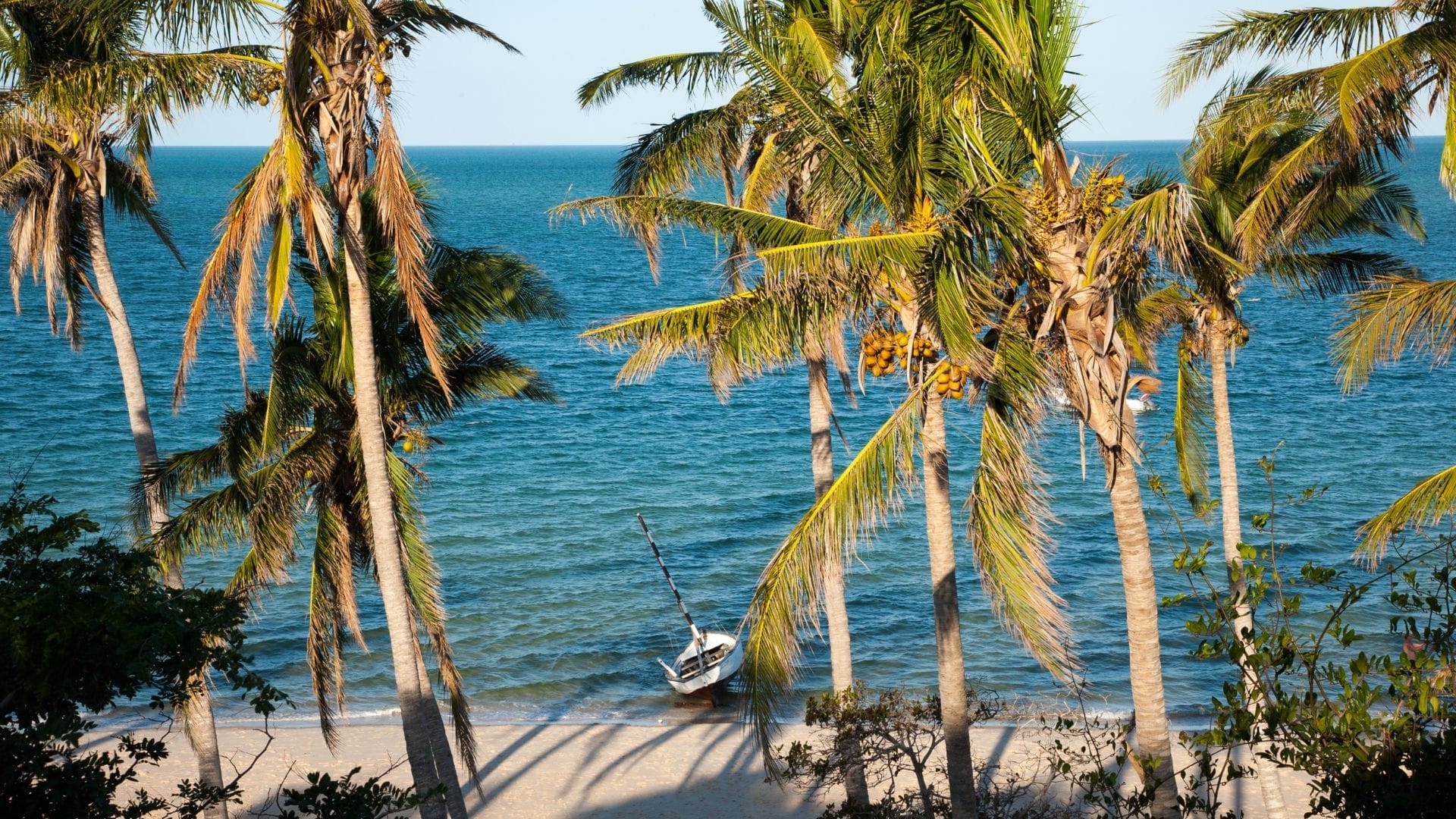
For travellers with two extra days at the end, the mainland is worth it. Ibo Island in the Quirimbas is a UNESCO-listed Portuguese colonial town. Vilanculos has a strong food scene. Maputo at the end of a long trip is a slow city day.
Where, specifically
01 · The southern archipelago
Five islands off Vilanculos, declared a national park in 1971. Dunes, dugongs, and the easiest pairing from a southern African safari. Three to five nights.
02 · The northern archipelago
Thirty-two islands stretching 250 kilometres along the northern coast. Flatter, greener, more remote than Bazaruto. The better choice from East Africa. Four to five nights.
03 · The mainland gateway
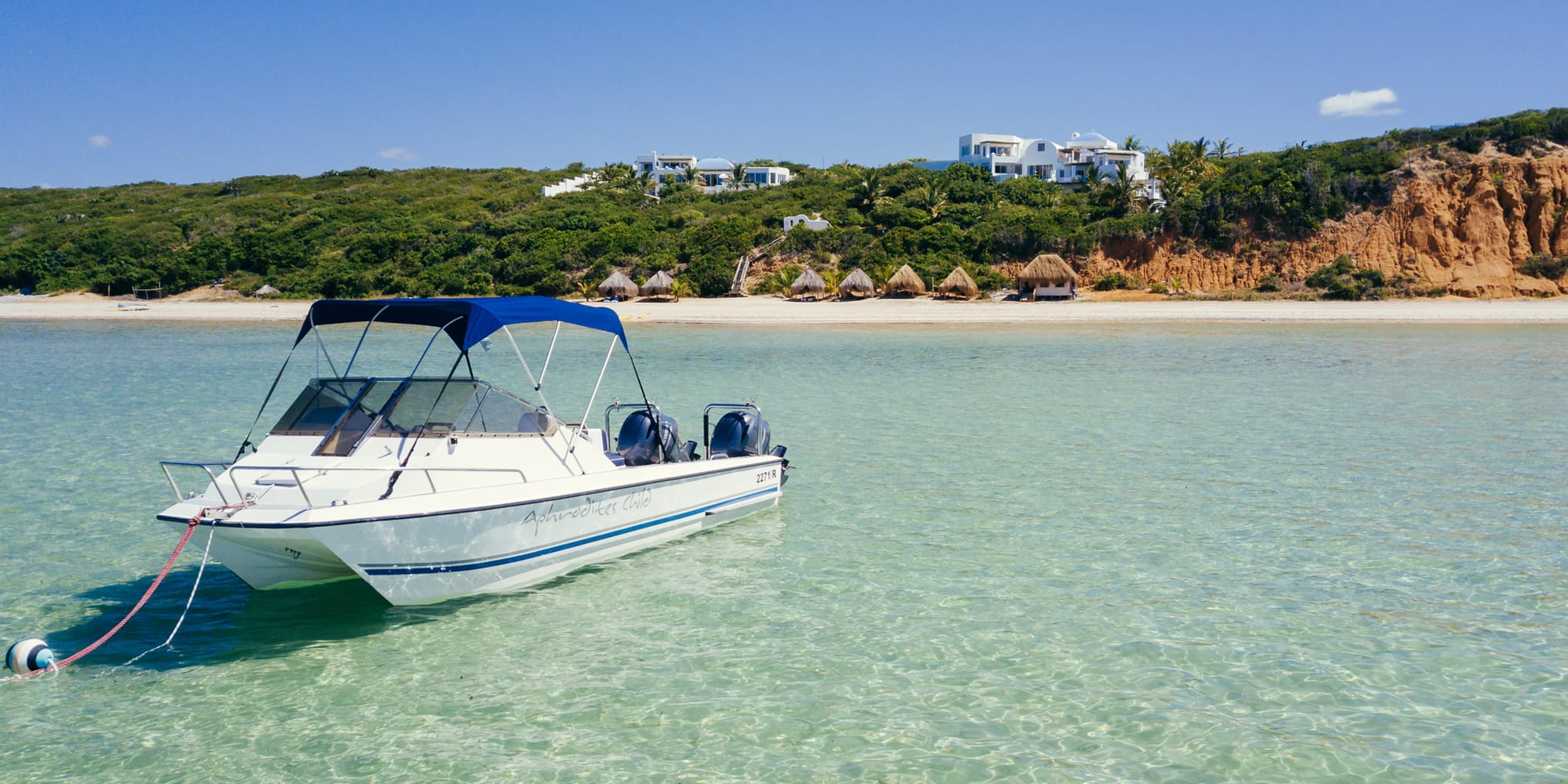
The mainland gateway to Bazaruto. Strong food, a working dhow harbour, and a softer alternative to the islands. One night either side of the archipelago is usually enough.
04 · The dive coast
The diving headline of the country. Manta rays year-round, whale sharks October to March, humpbacks June to October. Less polished than the islands, more authentic. Three nights for divers.
05 · The capital
The capital, on the south coast. Portuguese colonial architecture, strong food, FEIMA craft market. A slow day at the start or end of the trip rather than a multi-night stop.
01 · The southern archipelago
A chain of five islands off the central Mozambican coast, opposite Vilanculos: Bazaruto, Benguerra, Magaruque, Banque and Santa Carolina. Declared a national park in 1971. Vast white sand dunes rising from turquoise water, sandbanks that surface and disappear with the tide, and the last viable dugong population in the western Indian Ocean. The headline destination for southern African safari pairings. Light-aircraft transfers from Vilanculos take fifteen minutes. Three to five nights is right.
02 · The northern archipelago
Thirty-two islands stretching 250 kilometres along the northern coast, declared a national park in 2002. Flatter and greener than Bazaruto, with strong mangrove systems and exceptional reef. The better choice from East Africa. Quieter, more remote, closer to the equator and warmer water. Pemba is the gateway, and your lodge arranges the light aircraft out to the island. Four to five nights is right. Ibo Island, a UNESCO-listed Portuguese colonial town, sits within the archipelago for travellers who want a cultural layer.
03 · The mainland gateway
The mainland gateway to Bazaruto. A small coastal town with strong food, a working dhow harbour and a handful of mainland properties that work as a softer alternative to the islands. We use it as the access point to Bazaruto rather than as a destination in its own right, although a night either side of the islands can be useful for travellers who want a slower start.
04 · The dive coast
South of Vilanculos, on the mainland. The diving headline of the country. Manta rays year-round at Manta Reef, whale sharks October to March, humpbacks June to October. Less polished than the islands, more authentic. The lodges are simpler. Three nights is right for divers, and a night or two of Tofo at the end of a Bazaruto stay can extend the marine layer of the trip.
05 · The capital
The capital, on the south coast near the South African border. Portuguese colonial architecture, strong food, the FEIMA craft market. We use it as a slow day at the start or end of a Mozambique trip rather than as a multi-night stop. A short flight from Johannesburg, and the gateway for travellers coming from the Sabi Sand or Cape Town.
When to be here
Mozambique sits in the southern hemisphere with a hot wet season and a cool dry season. Four ways to think about it.
For the dry calm
May – October
Cooler air, calmer water, clearer visibility for diving and snorkelling. Humpback whales pass through Bazaruto from June to October. The strongest window for islands and the easiest pairing with peak-season safaris.
For the warm green
October – December
Water warming, wind dropping, visibility excellent. Whale sharks at Tofo from October. Strong for honeymoons. Christmas and New Year trade at peak rates and book up a year ahead.
For the storms and value
January – March
Hot, humid, with the chance of cyclonic weather, particularly in the north. Some Quirimbas lodges close. Bazaruto stays open with lower rates. Strong value, occasional storm days, beautiful when the sky clears.
For the shoulder
April, November
The two transition months. Warm, mostly dry, fewer guests, lower rates. Our most-recommended shoulder windows for travellers who want the islands without peak prices or peak crowds.
A signature Mozambique stay
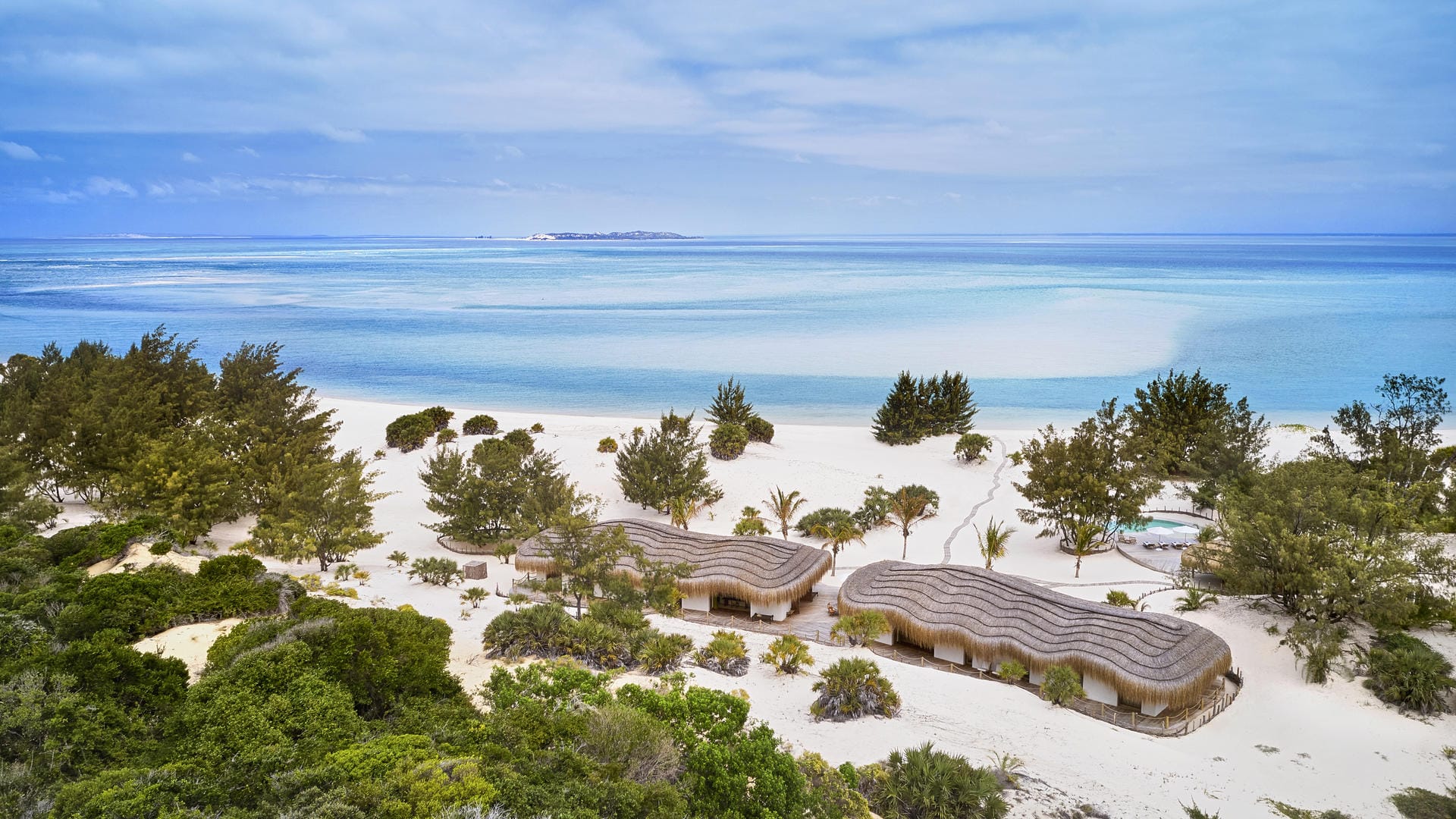
A vast private estate of forest, dune and empty Indian Ocean shoreline on the southern tip of Benguerra Island. Handcrafted residences scattered through the forest and along the beach, your own beachfront, your own pool, and the kind of quiet that recalibrates you within a day. The right way to end a southern African safari.
View sample itinerary →A starting point, not a fixed package. We rebuild every Mozambique stay around the traveller and the season.
What it costs
Per person, per night, sharing. All-inclusive of accommodation, meals, drinks, non-motorised activities and most house drinks. Light-aircraft transfers from Vilanculos or Pemba to the islands add $400 to $700 per person, per leg. Diving and motorised activities are usually charged separately.
4-star plus
From $700 to $1,200
per person, per night, sharing
5-star
From $1,200 to $2,400
per person, per night, sharing
5-star premium
From $2,400 to $5,500
per person, per night, sharing
Mozambique sits in the upper end of Indian Ocean island pricing, comparable to the Seychelles. Bazaruto is more accessible and slightly cheaper than Quirimbas. Christmas and New Year trade at peak rates. April-May and November are the best-value windows. A typical five-night Bazaruto stay at the 5-star tier runs $8,000 to $14,000 per person all-in, before flights from Johannesburg.
Is Mozambique right for you
Typical length: 3 to 5 nights, at the islands, at the end of a longer safari.
Most trips are not one country
Botswana to Bazaruto is the most-booked combination we plan: the Okavango or Linyanti, then Vilanculos, then five nights on a private Benguerra Island concession. South Africa's Sabi Sand also pairs well, with the Sabi Sand airstrips connecting to Vilanculos in a single day through Johannesburg, and Cape Town and the Winelands fit naturally before or after.
Tanzania and Kenya pair with the Quirimbas through Dar es Salaam or Nairobi for travellers wanting the northern circuit followed by the islands. Twelve to sixteen nights covers most pairings comfortably. The bush, then the sea. We tend to send clients onto Mozambique at the end of the trip, because the ocean is the harder thing to leave.
Questions we hear most
May to October is the southern winter and the strongest window for the islands. Cooler air, calmer water, clearer visibility for diving. Humpback whales pass through Bazaruto from June to October. Whale sharks at Tofo from October to March. Christmas and New Year trade at peak rates. April and November are the shoulder months we tend to recommend most often.
Bazaruto is the easier choice from a southern African safari (Botswana, Kruger, Cape Town): direct flights from Johannesburg to Vilanculos, fifteen-minute light aircraft to the islands. Quirimbas is the better choice from East Africa (Kenya, Tanzania, Rwanda): direct flights from Dar es Salaam or Nairobi to Pemba. Quirimbas is also more remote, with warmer water and better diving. Bazaruto has the bigger dunes and the dugongs.
Three nights is the practical minimum to feel rested after a safari. Four or five is better, especially if you want to dive. The light-aircraft transfers chew into the first and last days. Six or more nights and most travellers run out of things to do unless they are committed divers.
The safari and island regions of southern Mozambique (Bazaruto, Vilanculos, Tofo, Maputo) are well-managed and we have not had a safety concern with any client trip. Northern Mozambique has had ongoing security issues in Cabo Delgado province, particularly inland and around Mocímboa da Praia. The Quirimbas island lodges sit offshore on private concessions and have continued to operate. We follow current advice from SATSA, the British and US embassies, and our on-the-ground partners.
Yes. Mozambique is a malaria area, particularly in the north and in summer. We recommend a prophylactic and standard precautions: long sleeves at dusk, repellent, the screened rooms most lodges provide. Your doctor or a travel clinic will advise on the right tablets for you.
Rarely. Mozambique earns its rates through the pairing with a safari. As a standalone beach holiday, the Seychelles and Mauritius are easier to reach and the value case can be stronger. We plan Mozambique almost exclusively as the coastal pause at the end of a southern or East African safari.
From the journal
Plan it properly
Tell us roughly what you are thinking. We come back within a working day, often sooner.
One of us will write back.
