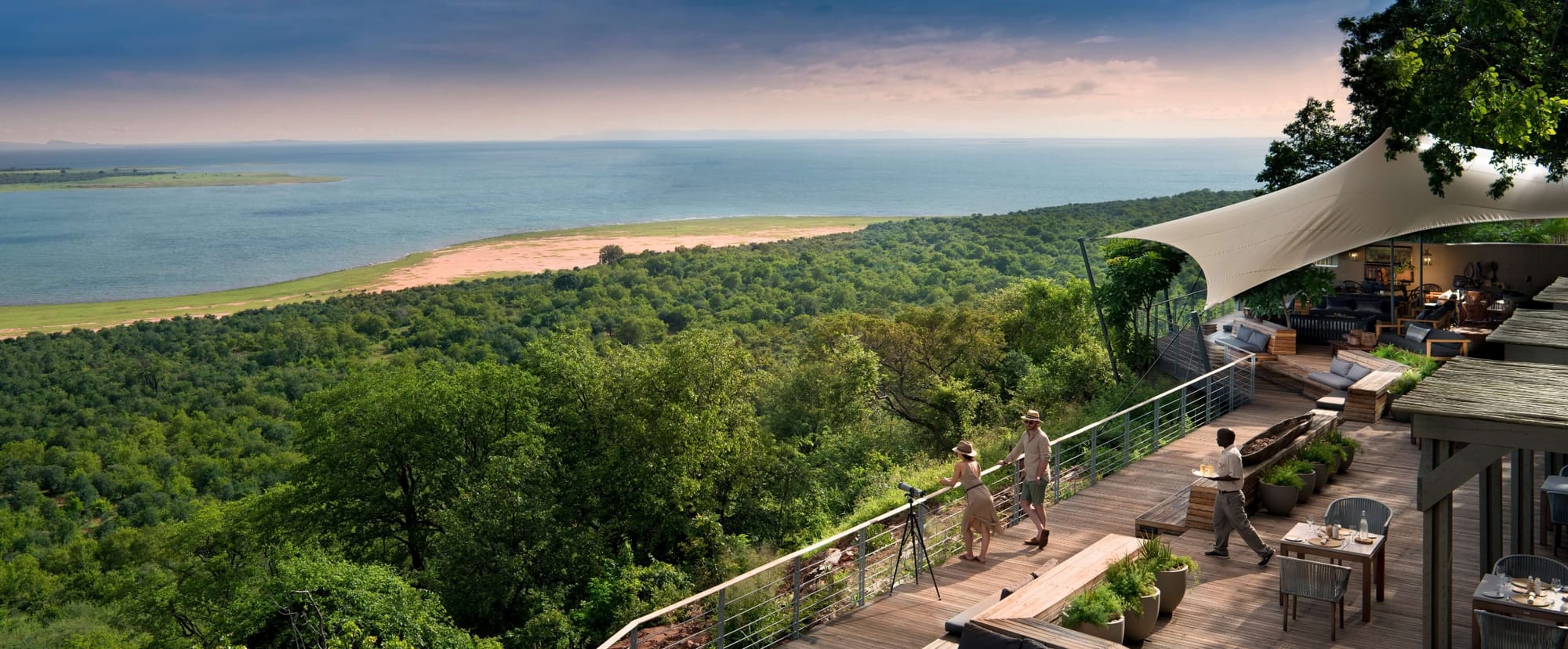
Wide editorial Zimbabwe safari landscape at golden hour

Zimbabwe Safari Guide

Zimbabwe, where the guides write the textbook

The country has been quiet for years. The wildlife and the guides have not.

Why Zimbabwe

A country defined by the river and the elephant

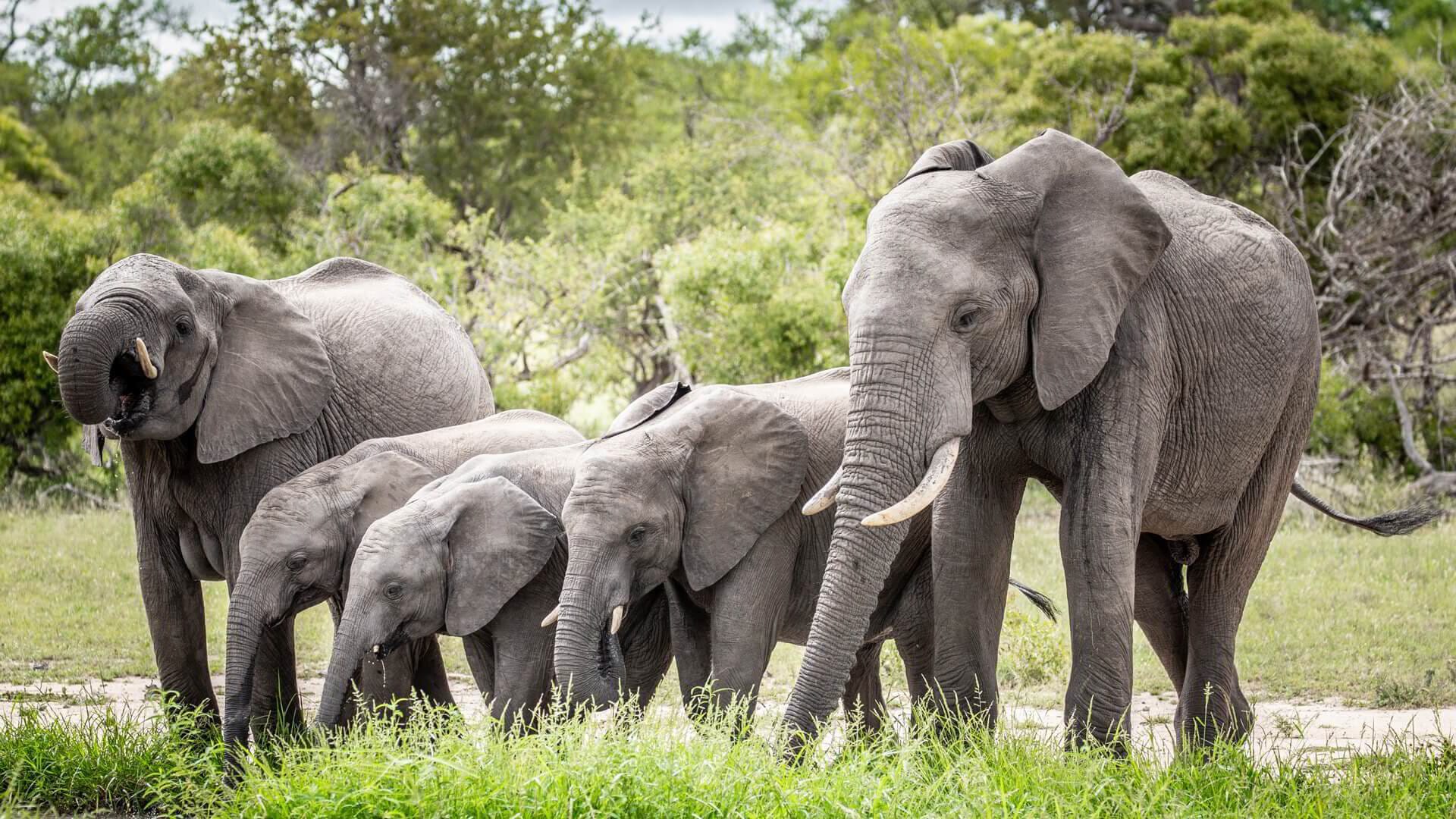
Zimbabwe is shaped by the Zambezi. The river runs along the entire northern border, falls over the lip of Victoria Falls, slows through the Mana Pools floodplain, and broadens into Lake Kariba in the centre of the country. Most of the country's safari camps sit on or near it. The southern half holds Hwange, the country's largest national park and home to one of the largest concentrations of elephants on the continent, sometimes more than 40,000 at peak dry season.

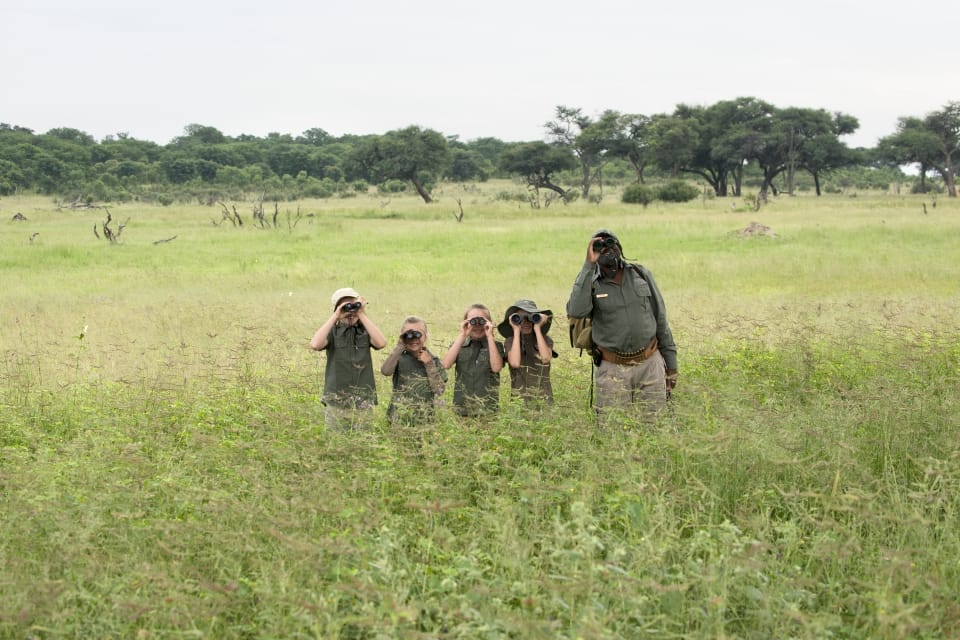
The country has been quiet on the international travel map for nearly two decades. That has been hard for Zimbabweans, but it has kept the bush wild, the camps small, and the guiding standards high. The Zimbabwean Professional Guide qualification is the most demanding in Africa. Walking and canoeing safaris in Mana Pools and Matusadona are some of the most skilled experiences in the genre.

Most clients combine three regions: Victoria Falls or the Matetsi for two nights, Hwange for three or four, and either Mana Pools (for canoes and walking) or the Malilangwe Reserve in the south (for the rhino conservation and the malaria-free option). Nine nights is the right length for a first trip.

Where Zimbabwe sits

A geography worth knowing

The five regions of Zimbabwe we plan around, and how they sit in relation to each other.

What this country does best

What Zimbabwe does best

01

Mana Pools by canoe

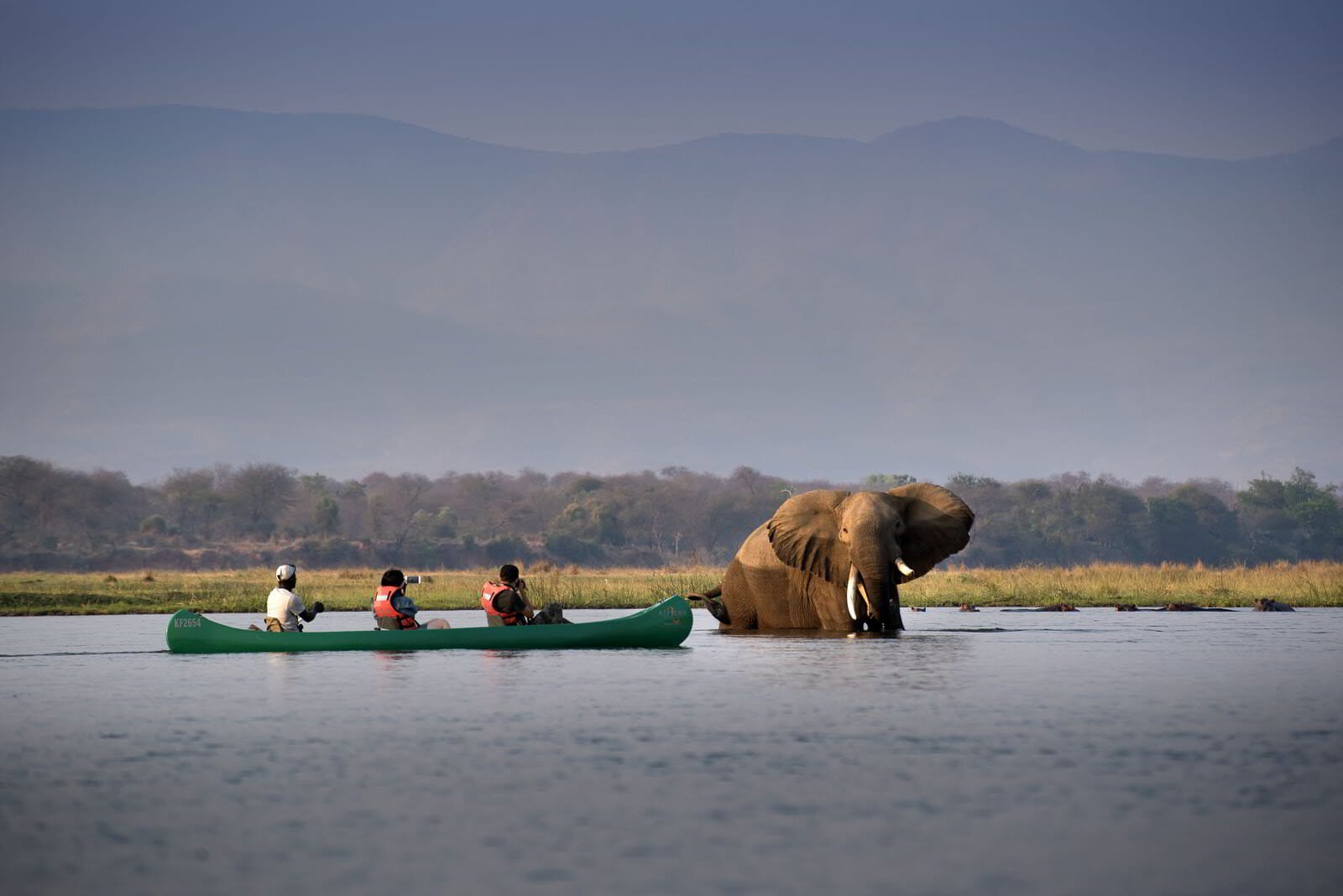
Paddling between elephants, slipping past hippo pods, drifting under the giant albida trees while baboons drop pods from the canopy. Mana Pools is one of the most atmospheric places on the continent and the country's most distinctive single experience. Three nights at Chikwenya, Nyamatusi or Ruckomechi.

02

Hwange's elephants in the dry

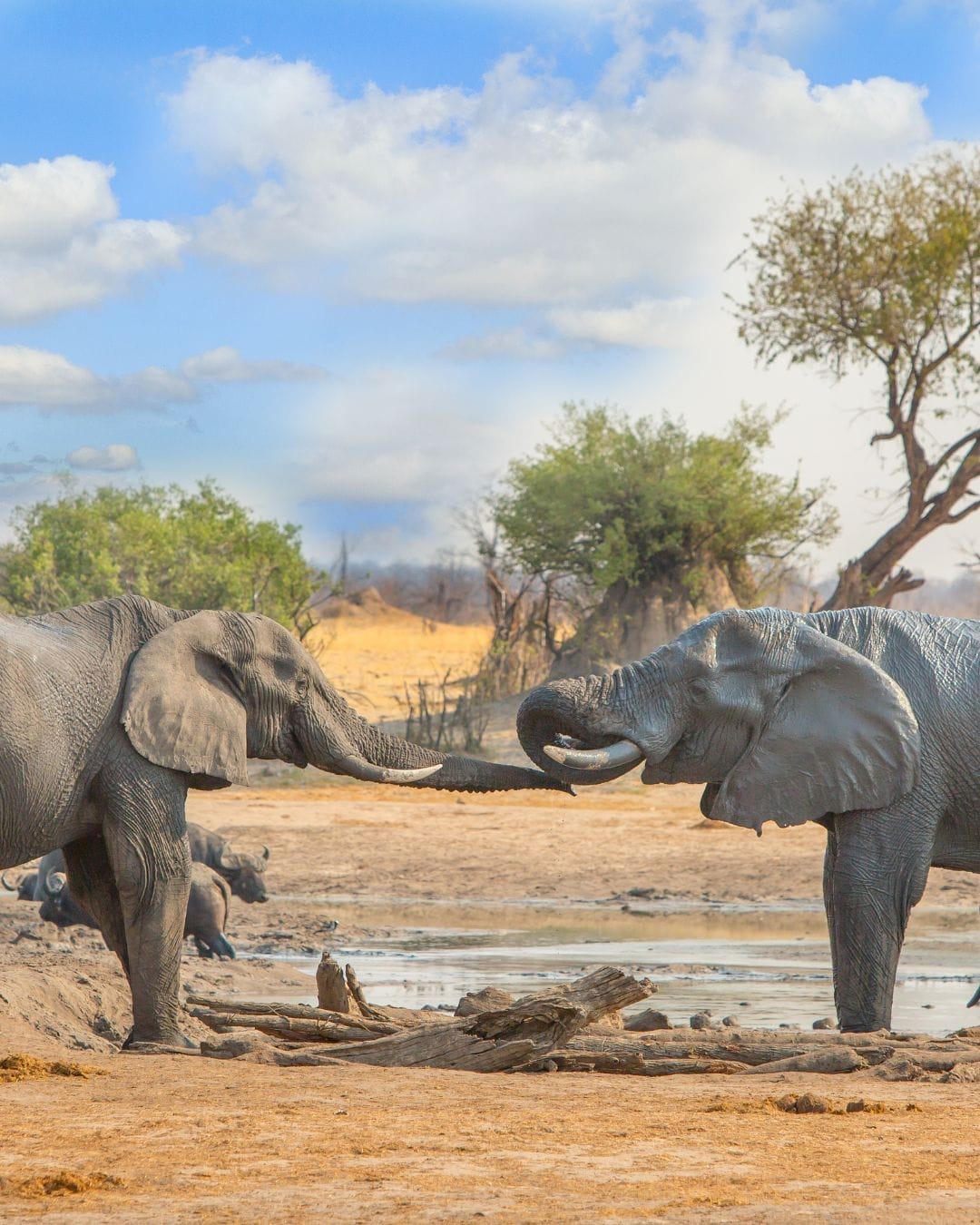
Hwange has no permanent water, so the dry-season elephants concentrate on a network of pumped pans. From August to October you can sit at one pan and watch a thousand elephants come through over a single afternoon. The country's most generous wildlife display.

03

Victoria Falls from the Zimbabwean side

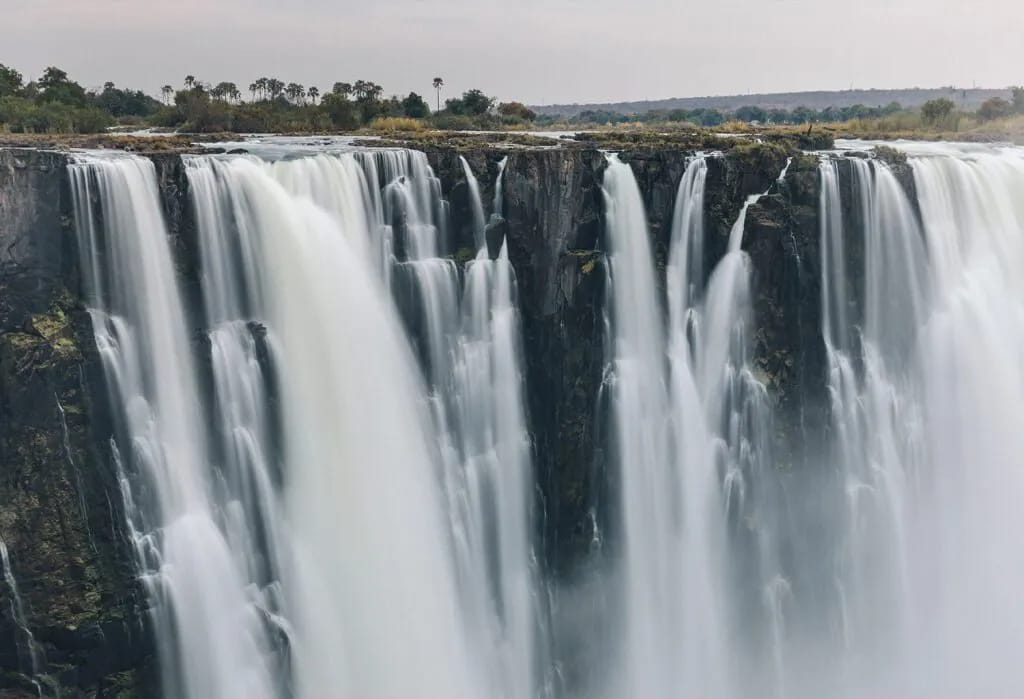
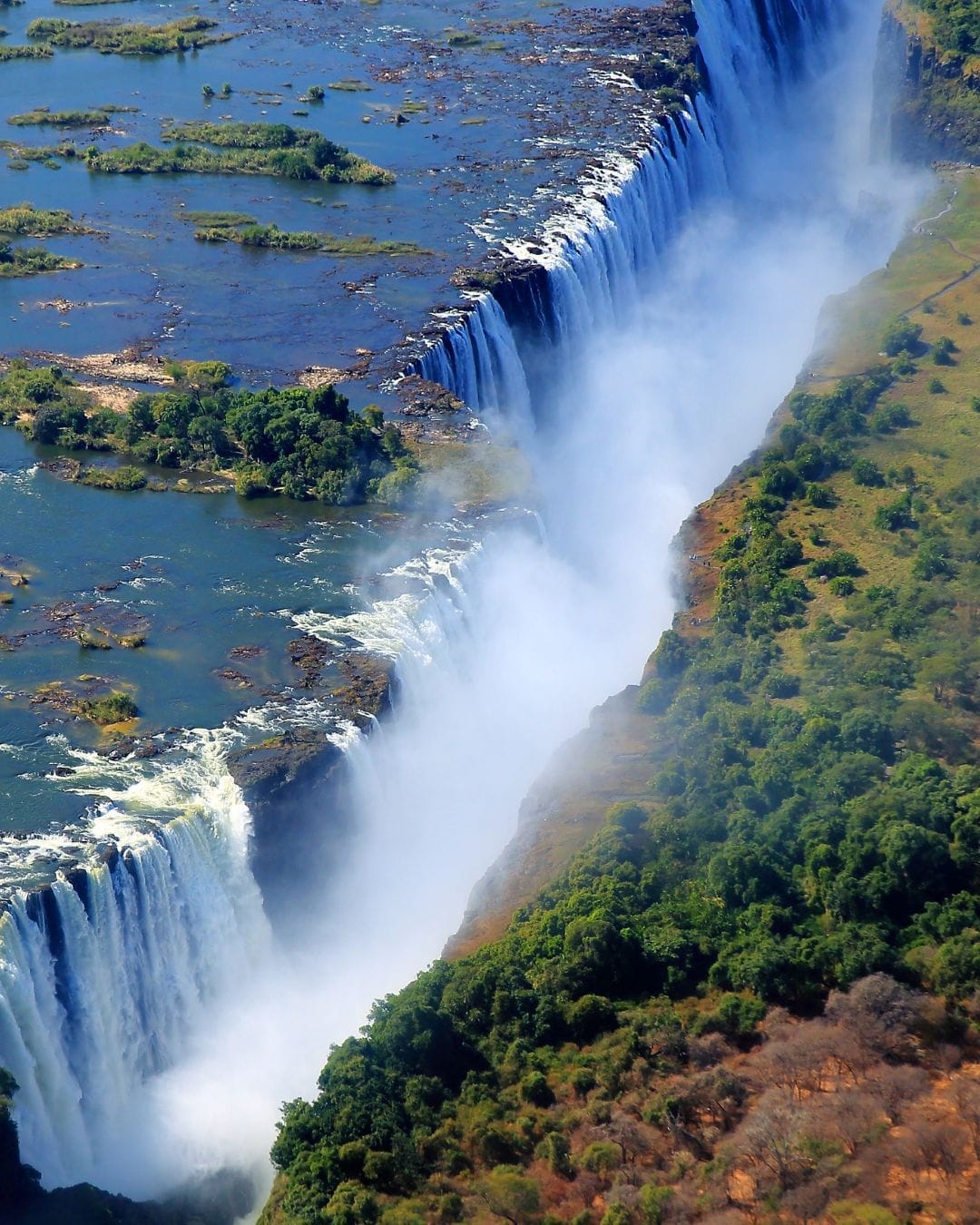
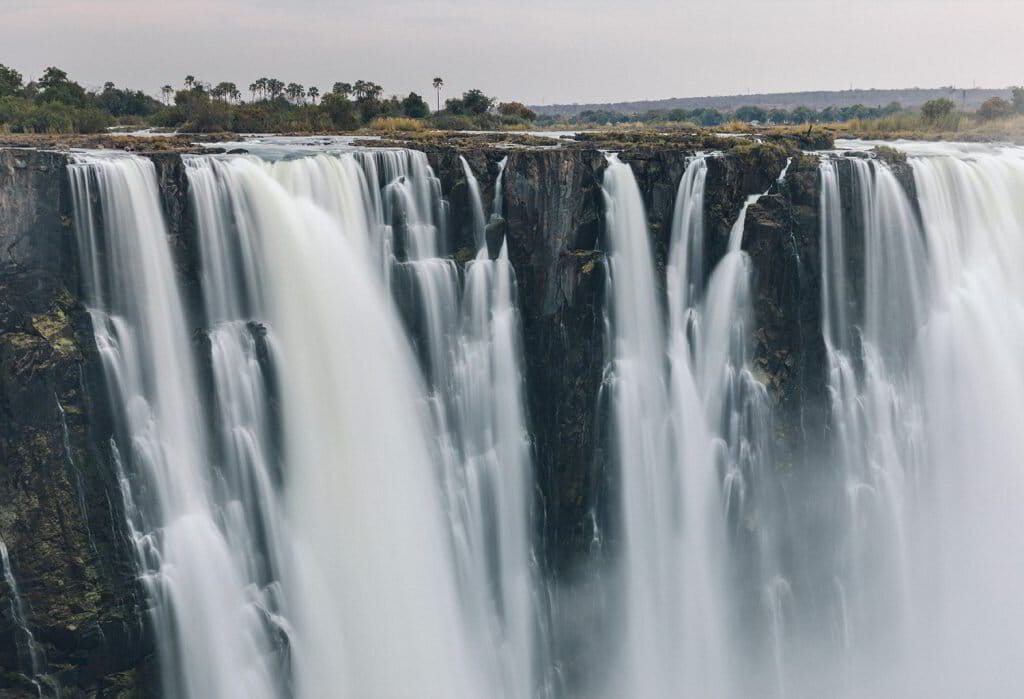
The Zimbabwean side gives you the longer walk along the gorge, the rainforest spray, and the iconic full-frontal photo of the Falls. Pair it with the Matetsi private concession for game viewing on the Zambezi above the Falls. Most clients spend two nights here at the start or end of a trip.

04

The Matetsi private concession

Forty kilometres above Victoria Falls on a private concession of the Matetsi River. Game drives, river cruises, walking, and the kind of quiet stretch of the Zambezi that the Falls themselves do not allow. A strong start or end to a Zimbabwe trip.

05

The Malilangwe Reserve

A 50,000-hectare private wildlife reserve in the south-east, malaria-free and held by a single conservation-led operation. Excellent black rhino sightings, San rock art, and some of the highest-end safari guiding on the continent. Family-friendly, often combined with Sabi Sand on a southern African trip.

06

The Zimbabwean Professional Guides

The four-year qualification produces some of the best safari guides on the continent. Walking with a Pro Guide changes the way you see the bush. We pick camps for the guides on the roster as much as for anything else.

Matetsi River and the Zambezi above Victoria Falls in Zimbabwe

When to be here

We don't ask when you want to go. We ask what you want from it

Zimbabwe is a strongly seasonal country. Most northern camps close for the rains. Four ways to think about it:

For the elephants

Hwange at peak

August to October

The dry season concentrates the elephant population around the pumped waterholes. From August to October you can see herds of several hundred drinking together at the right pan. Cool mornings, hot middays, dry nights. Peak rates.

For the canoes

Mana Pools at flow

May to October

Mana Pools opens in April after the rains and closes again in late October before the next ones. Canoeing and walking activities run throughout. June to October is the strongest window. The river is calmer in the late dry season, the wildlife more concentrated on the banks.

For Victoria Falls in spate

The Falls at full volume

March to June

The Zambezi peaks in March and April after the upstream rains. The Falls are at their loudest and the spray is so thick you cannot see the rock face. The Zambian side becomes near-invisible. The Zimbabwean side still holds. By July the volume has dropped and the photographs are sharper, by October it is quiet enough for swimming at Devil's Pool on the Zambian side.

For the Malilangwe and the south

Year-round flexibility

All year

The Malilangwe Reserve in the south runs year-round and is malaria-free. The southern reserves stay accessible through the rains, and the green-season landscape photographs beautifully. We tend to recommend the south for families and for combining with Sabi Sand on a southern African trip.

Zimbabwe month by month

JanuaryJan
FebruaryFeb
MarchMar
AprilApr
MayMay
JuneJun
JulyJul
AugustAug
SeptemberSep
OctoberOct
NovemberNov
DecemberDec

Hover or tap a month for details.

Peak dryShoulderGreen / summerDry

Where, specifically

Where, specifically

Canoe safari on the Zambezi River through Mana Pools National Park

Mana Pools

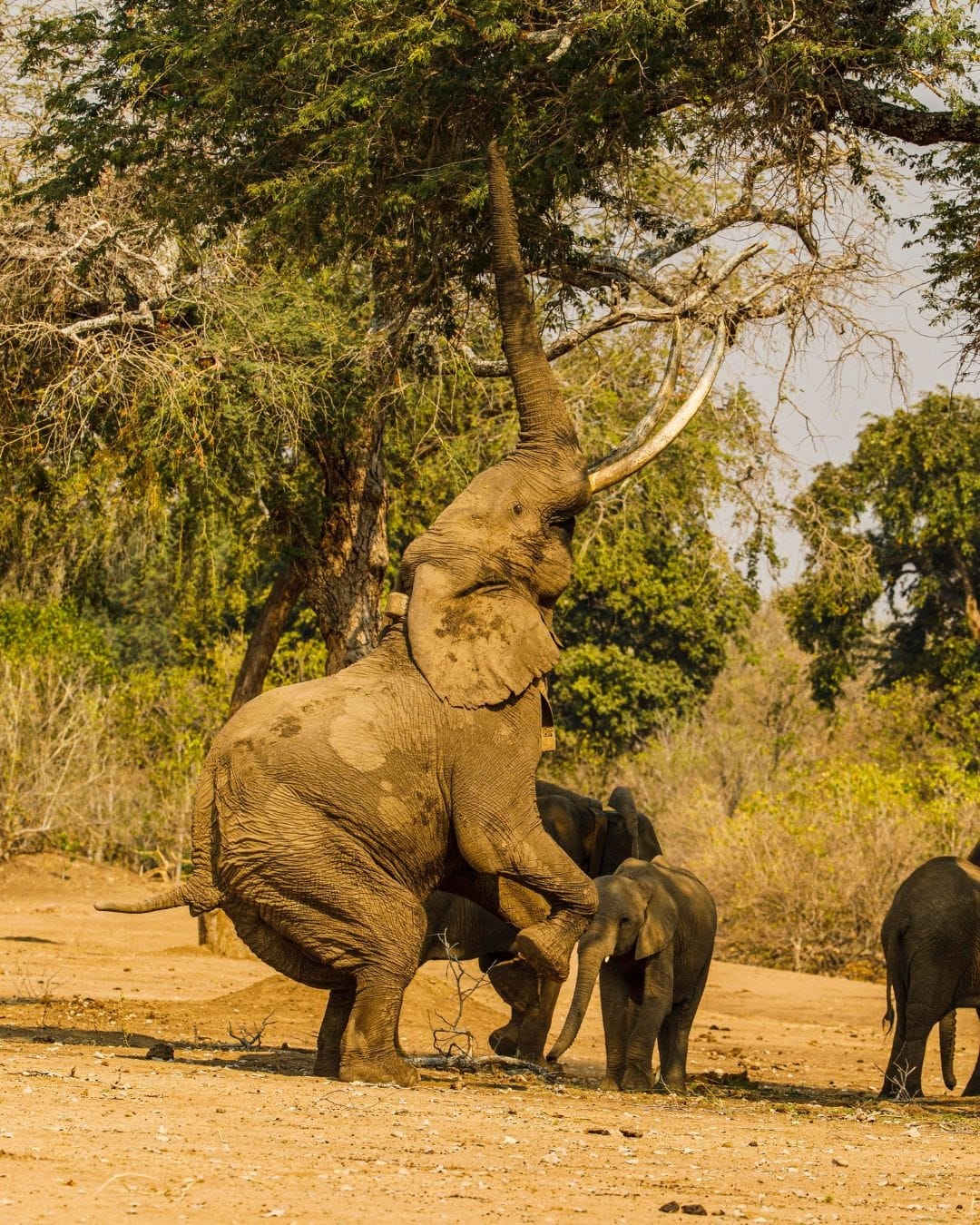
UNESCO World Heritage site on the Zambezi. Canoeing and walking are both permitted, and most camps run a mixture of activities each day. Famous for the giant albida trees and the elephants that stand on their hind legs to feed on the high pods. Three nights minimum at Chikwenya, Nyamatusi or Ruckomechi.

Elephant herd at a Hwange waterhole at golden hour

Hwange National Park

Zimbabwe's largest national park and home to one of the largest elephant populations on the continent. The park has no permanent water, so wildlife concentrates around a network of pumped pans in the dry season. Camps in the private concessions on the park's edge offer off-road driving and walking that the public park does not. Three nights at minimum.

Matetsi River and the Zambezi above Victoria Falls in Zimbabwe

Matetsi & Victoria Falls

The Zimbabwean side of Victoria Falls and the Matetsi private concession that runs forty kilometres up the Zambezi above the Falls. A small group of riverside lodges on the concession offer game drives, river cruises, walking, and a quieter stretch of the Zambezi. The Falls themselves are a half-hour drive south. Two to three nights covers both.

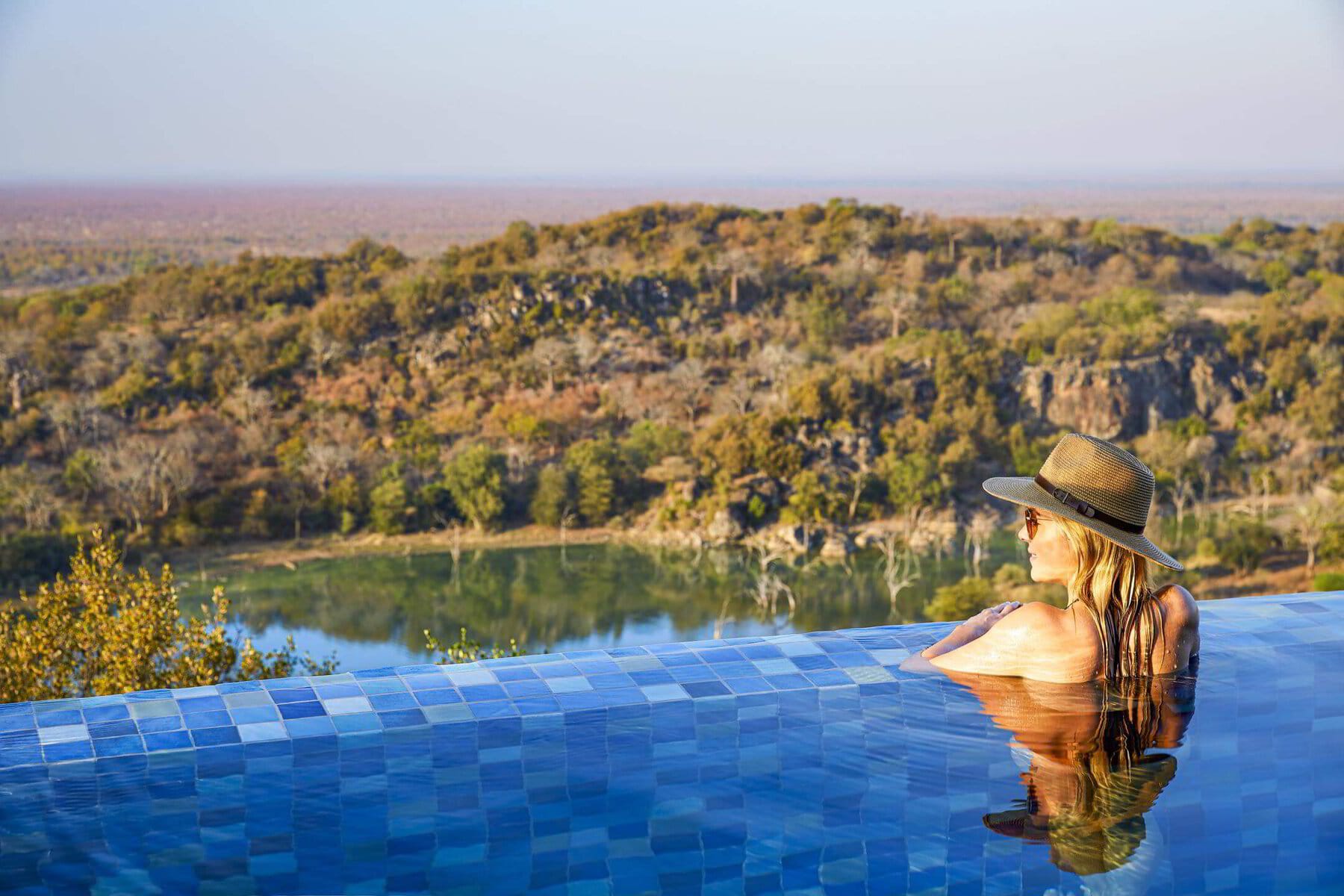
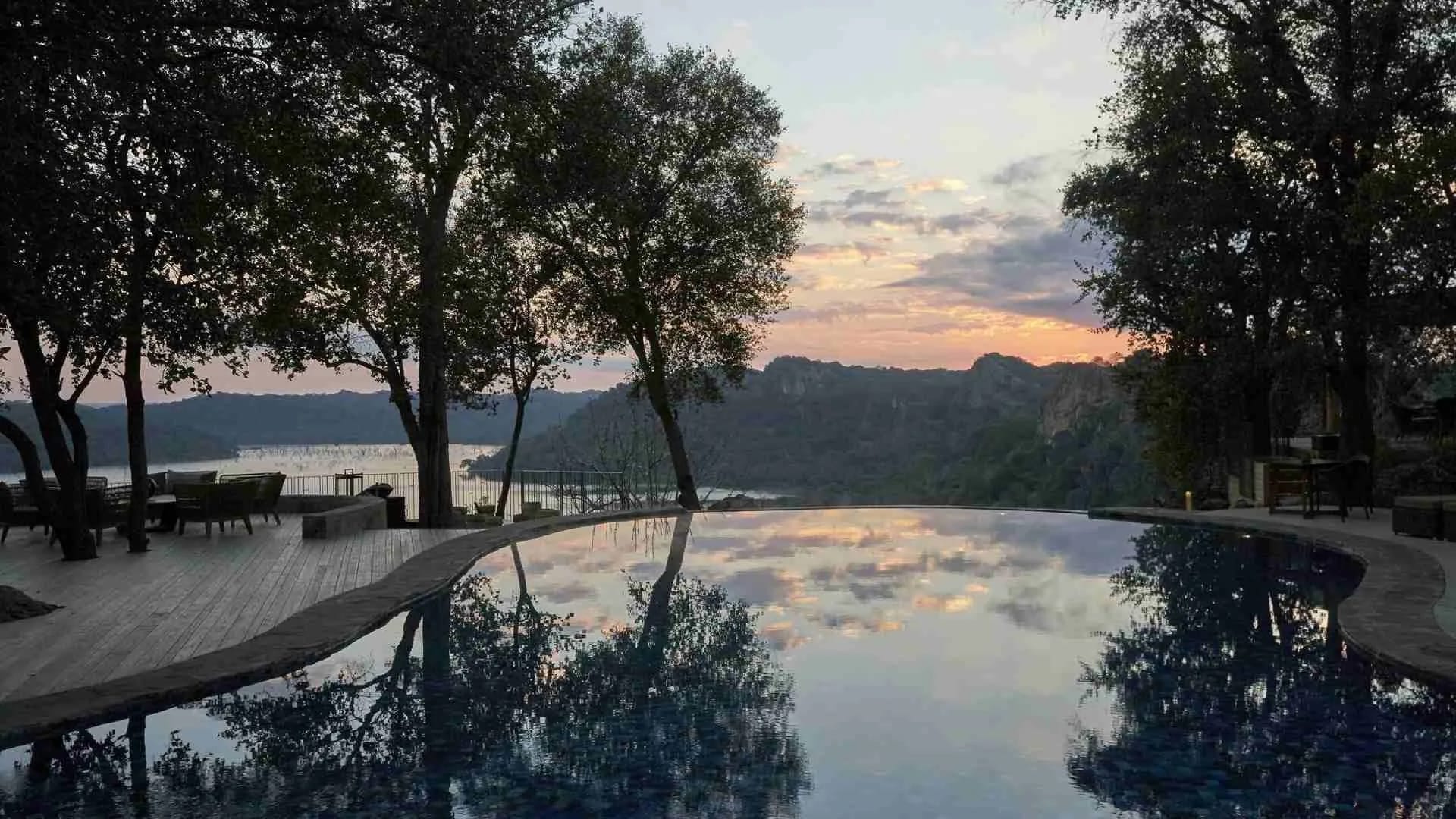
Private villa with infinity pool overlooking the Malilangwe Reserve in south-east Zimbabwe

The Malilangwe & the south-east

A 50,000-hectare private wildlife reserve in the south-east, held by a single conservation operation in partnership with the Malilangwe Trust. Excellent black rhino sightings, San rock art, malaria-free, and family-friendly. Combines well with Sabi Sand and Cape Town on a southern African trip. Three nights is right.

Open Zimbabwean savannah landscape with golden grasses and acacia

Matusadona & Lake Kariba

Lake Kariba is one of the largest man-made lakes in the world, and the Matusadona National Park sits on its southern shore. Boat-based game viewing, walking with armed scouts, and one of the country's quieter parks. Often added on a return trip rather than a first.

Wide editorial photograph of an elephant herd on a Zimbabwean floodplain at golden hour
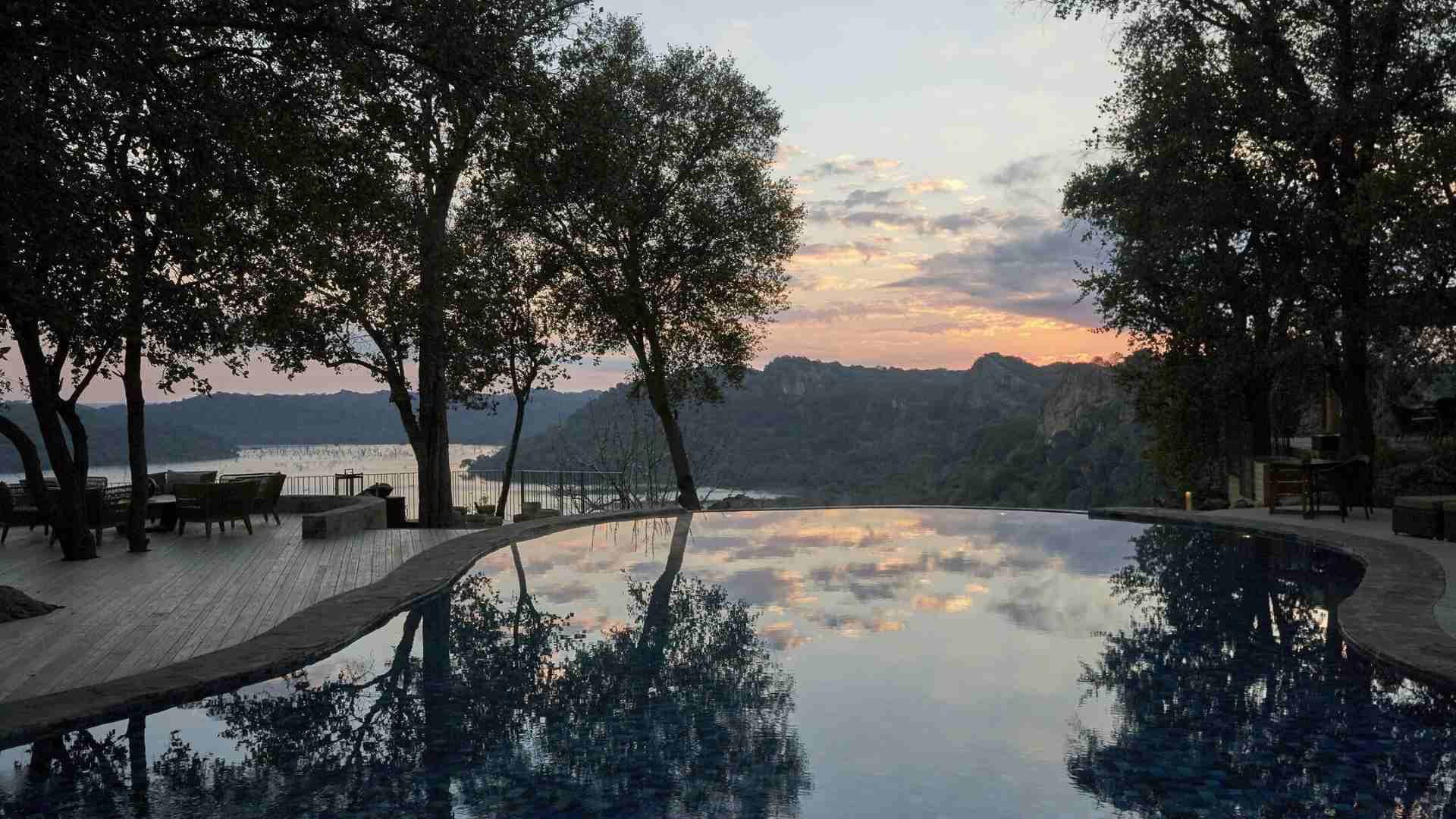
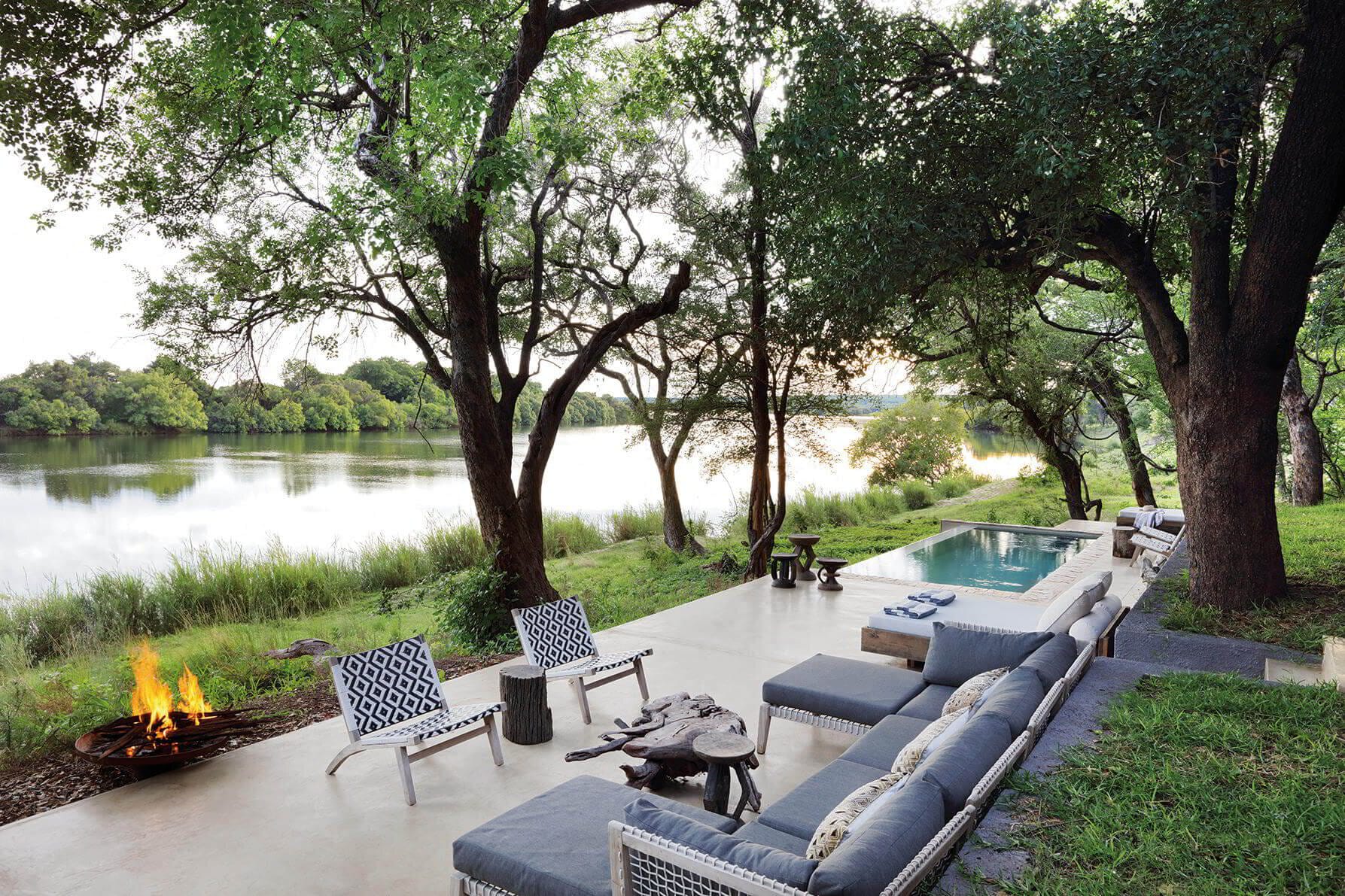
Outdoor living area on the Zambezi inside the Matetsi private concession, the route for our nine-night Zimbabwe itinerary

A signature Zimbabwe journey

Nine nights through Mana Pools, Hwange and the Falls

Canoeing the Zambezi at Mana Pools, watching the elephants of Hwange come to water, ending with two nights at Victoria Falls.

  • Nights9
  • RouteMana Pools → Hwange → Victoria Falls
View the full itinerary →

A starting point, not a fixed package. We rebuild every itinerary around the traveller.

What it costs

What a Zimbabwe safari costs

The pricing is per person per night sharing. All-inclusive of accommodation, meals, drinks, twice-daily activities (game drives, walking, canoeing, boating), park fees and lodge transfers. Light-aircraft transfers between regions add $300 to $600 per person, per leg.

4-star plus

From $700 to $1,200

per person, per night, sharing

Smaller bush camps in Hwange and the Matusadona, and the better lodges around Victoria Falls. Strong walking guides, simpler finishes.

5-star

From $1,200 to $2,500

per person, per night, sharing

The mid-tier of Mana Pools, Hwange and the Matetsi. Polished tented camps, walking and canoeing included, private vehicles on request.

5-star premium

From $2,500 to $4,800

per person, per night, sharing

The flagships. The most exclusive properties on the Malilangwe Reserve in the south, the private Matetsi concession upstream of Victoria Falls, the best Hwange concessions, and the canoeing operations on Mana Pools. Highest game densities, smallest footprints, the country's most experienced licensed guides.

Zimbabwe safari pricing per person, per night, sharing (USD, all-inclusive)
TierPrice (USD per person per night sharing)What this gets you
4-star plusFrom $700 to $1,200Smaller bush camps in Hwange and the Matusadona, and the better lodges around Victoria Falls. Strong walking guides, simpler finishes.
5-starFrom $1,200 to $2,500The mid-tier of Mana Pools, Hwange and the Matetsi. Polished tented camps, walking and canoeing included, private vehicles on request.
5-star premiumFrom $2,500 to $4,800The flagships. The most exclusive properties on the Malilangwe Reserve in the south, the private Matetsi concession upstream of Victoria Falls, the best Hwange concessions, and the canoeing operations on Mana Pools. Highest game densities, smallest footprints, the country's most experienced licensed guides.

Zimbabwe peak season runs late June to October, when the dry season concentrates wildlife on the rivers and pans. Mana Pools is open from April to November and closes during the rains. Green season (December to March) brings the lowest rates but most northern camps close because the access roads become impassable. April and November are the shoulder months.

Most journeys are not one country

What Zimbabwe pairs with

Zimbabwe pairs naturally with Zambia for the full Zambezi (Mana Pools and the Lower Zambezi sit opposite each other), with Botswana for the Delta-Hwange-Falls combination, and with South Africa's Sabi Sand and Cape Town on a longer southern African journey. Most of the journeys we plan combine Zimbabwe with one of these three.

For travellers who want a beach finish, Mozambique's Bazaruto or the islands of the Quirimbas are a short hop south. For families looking for malaria-free options, the Malilangwe Reserve in the south-east of Zimbabwe pairs well with Madikwe in northern South Africa and the Cape. Twelve to sixteen nights covers most pairings comfortably.

Questions we hear most

A few things worth knowing

When is the best time to visit Zimbabwe?

Late June to October is the dry season and the strongest window for game viewing in Hwange and Mana Pools. April-May and November are the shoulder months we tend to recommend most often. December to March is the green season, with most northern camps closed because of the rains. The Zimbabwean side of Victoria Falls is at its most dramatic between March and June when the Zambezi is in flood.

Is Zimbabwe safe to visit?

Yes. The safari areas of Zimbabwe (Hwange, Mana Pools, the Matetsi, the Malilangwe) are well-managed, well-staffed and well-served by experienced operators. We have not had a safety concern with any client trip. Internal political tensions exist but are not present in the bush. We follow current advice from SATSA, the British and US embassies, and our on-the-ground partners.

Should I see Victoria Falls from the Zimbabwean or Zambian side?

The Zimbabwean side gives you the longer view, the iconic full-frontal photograph, and the rainforest walk. The Zambian side gives you the close-up at Knife-Edge Bridge and Devil's Pool from August to December. Most travellers see one. Travellers with three nights at the Falls can comfortably see both with a day-cross. We pick the side based on the rest of the itinerary.

Do you need malaria tablets for Zimbabwe?

Yes for most safari areas, including Hwange, Mana Pools, Matetsi and the Zambezi Valley. The Malilangwe Reserve in the south-east is malaria-free, which is why we recommend it for families with younger children. Standard prophylactics are advised for the malarial regions, along with the usual long sleeves and screened tents.

Can children go on a Zimbabwe safari?

Yes, and the Malilangwe Reserve in particular is set up for it. Hwange and the Matetsi accept children from age six in most camps, with private vehicles and dedicated family programmes. Mana Pools is generally not appropriate for children under twelve because of the canoeing and walking content. We will steer you to the camps that handle families well, and away from those that quietly do not.

Plan it properly

Tell us what you are imagining

Three ways to begin. Pick whichever feels easiest.

By note

Start with a note

Tell us roughly what you are thinking. We come back within a working day, often sooner.

Send a note

By email

Send us an email

Write to Sian directly, with Vikki copied. Same working-day response, no forms in between.

Email us

By WhatsApp

Send a WhatsApp

Quickest if you have a short question. We answer between game drives and meetings, usually within the hour.

Open WhatsApp

Write to us

One of us will write back.

Replies come from Vikki or Sian. No obligation, just a conversation.

Prefer to write to us directly? sian@marulahill.com · WhatsApp +27 82 459 0648