
Bazaruto vs Quirimbas: which Mozambique archipelago is right for you?
How to choose between Mozambique's two great archipelagos for a bush-and-beach trip. Geography, lodge feel, when to go.

If we're being honest, most clients ask us about Mozambique with one of two pictures already in their head. Bazaruto, the dunes and turquoise channels they've seen on Instagram. Or Quirimbas, the name they half-remember from a friend who went a decade ago and won't stop talking about it. They are not the same place. They don't sit on the same coast, they don't pair with the same safari, and they don't suit the same kind of traveller.
Below is how we actually think about it when a Mozambique add-on lands in our inbox. Less guidebook, more the conversation we'd have with you over a coffee.
In short
- Bazaruto. Southern Mozambique. Five islands. Declared a national park in 1971. Calmer water, more established lodges, an easy onward flight from a southern African safari.
- Quirimbas. Far northern Mozambique. 32 islands strung along the coast. Declared a national park in 2002. Wilder, quieter, harder to reach. Pairs naturally with East Africa.
- First-time bush-and-beach traveller: Bazaruto. Almost every time.
- Returning safari traveller who wants the world to go quiet: Quirimbas.
- Both arrive by light aircraft. Neither is a road trip.
What is Bazaruto?
The Bazaruto Archipelago is a cluster of five islands sitting off Vilanculos on the southern Mozambique coast. Bazaruto, Benguerra, Magaruque, Bangue, Santa Carolina. They sit inside a marine national park that was proclaimed in 1971 and expanded later, which makes it the country's oldest marine national park.
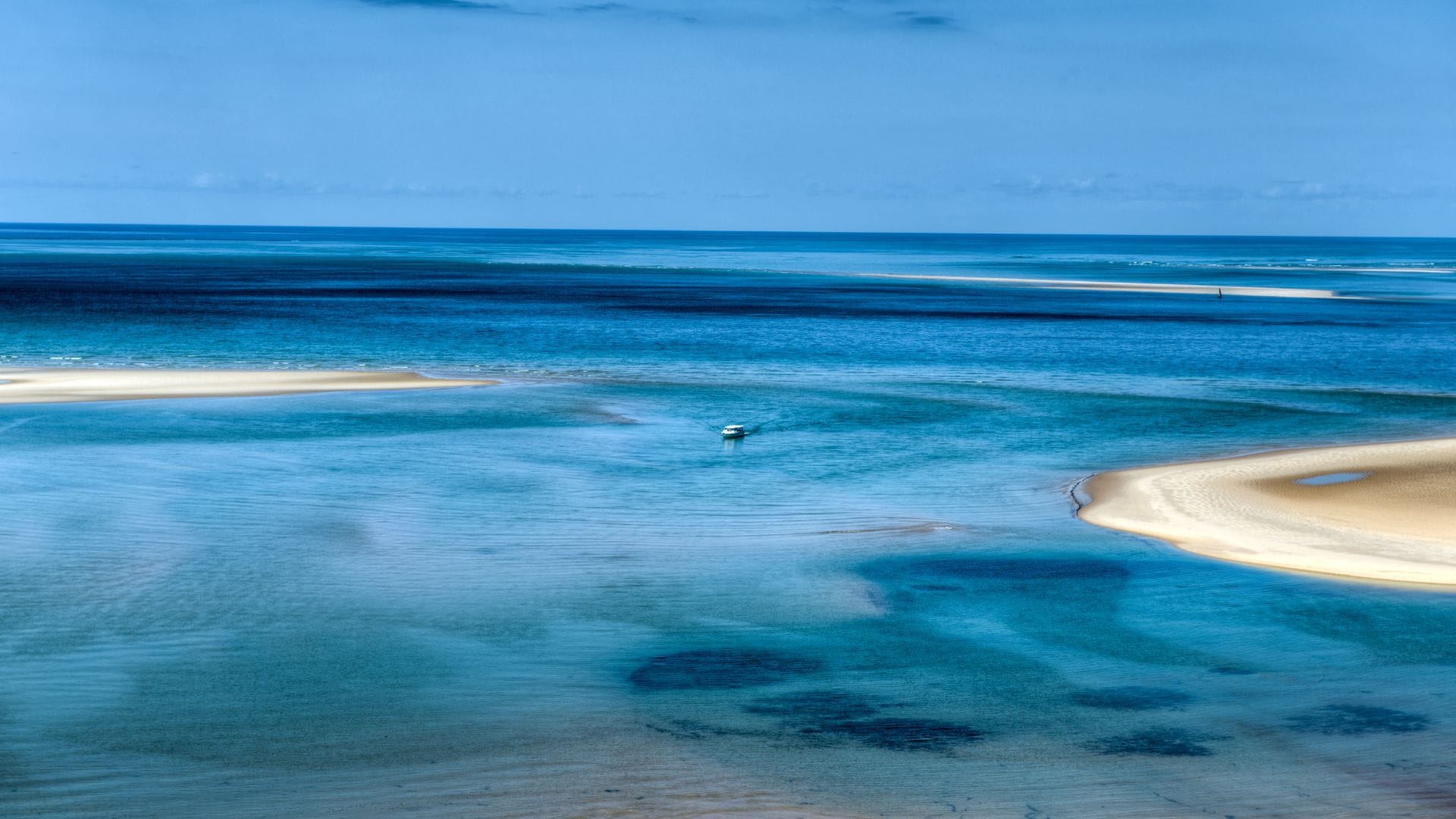
You fly in low over the channel. From the window of the Cessna the water reads as three or four different blues at once, with sandbars surfacing and disappearing on the tide. The first thing that hits you when the door opens is the heat off the runway, and then the salt. After a week in the bush, where everything smells of dust and woodsmoke, salt air is a shock.
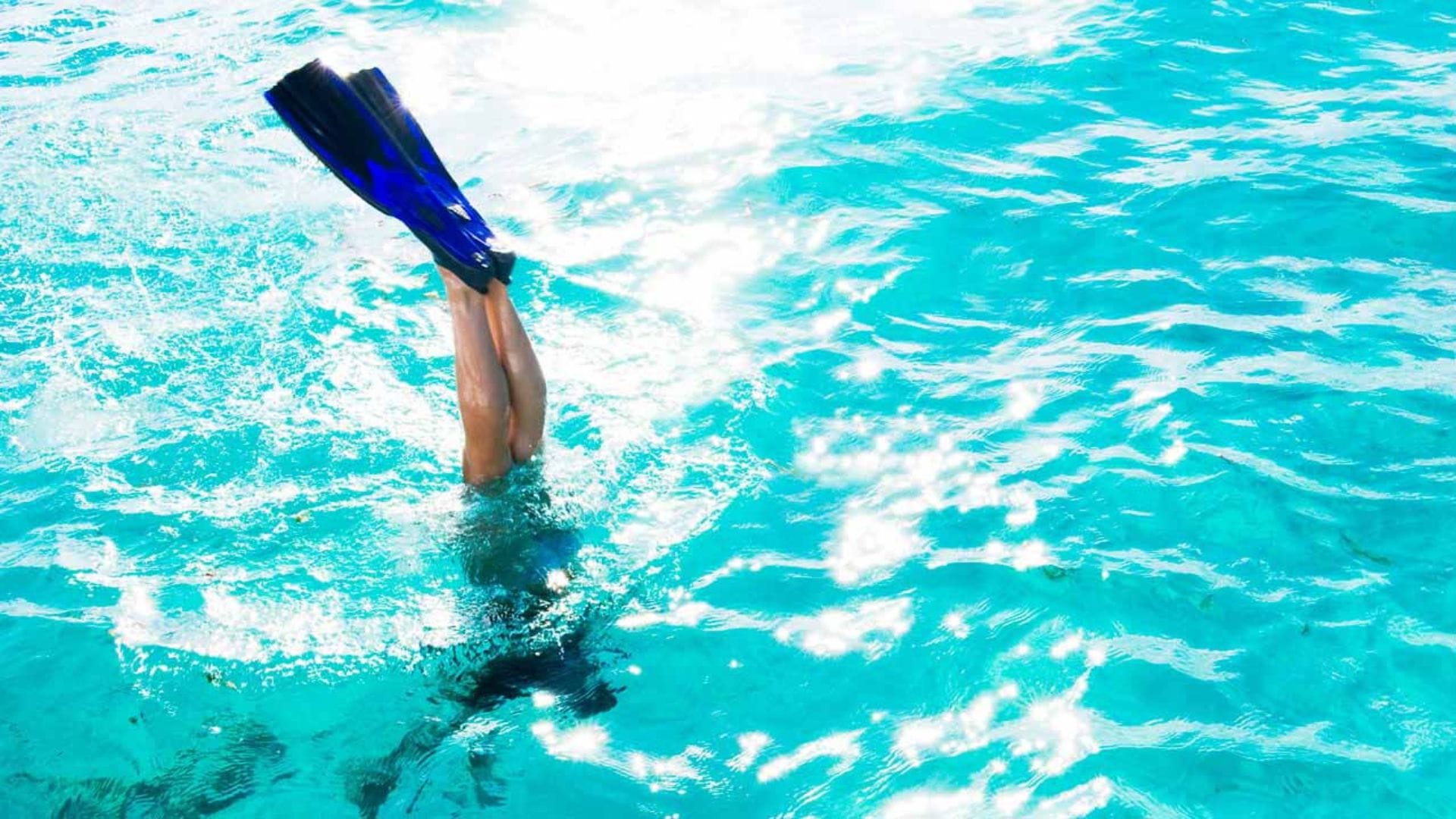
Dugongs still live in these channels. Around 250 of them, the last viable population on the East African coast. You probably won't see one, but you might. Whale sharks pass through in the warmer months. Humpbacks calve in the bays between June and October, close enough that the boatmen kill the engine and let you sit and listen to them breathe. The reefs are healthy enough that snorkelling off the boat is properly worth doing, not a polite suggestion to fill an afternoon.
The lodges on Bazaruto and Benguerra are the most established on the Mozambique coast. Generous suites, deep verandahs, infinity pools that hand themselves over to the channel beyond. Most have been refurbished in the last few years. Service is high-end without being starched. The wine list is better than it has any right to be this far up the coast. The boats are well-kept. The sandbar picnics they send you out on are one of the small pleasures of our job to book.
Who Bazaruto is for
Bazaruto suits the traveller who wants the beach half of the trip to feel as polished as the safari half. It suits honeymooners who want privacy without isolation. It suits families with older children who will dive, kite, fish, or simply disappear into the water for four days. It suits anyone for whom a one-hour charter flight is the comfortable upper limit of how far they want to fly after a week of pre-dawn alarms.
What is Quirimbas?
The Quirimbas Archipelago is at the top of the country, near the Tanzanian border. The national park was declared in 2002. The archipelago runs along a long stretch of the northern coast and includes 32 islands, with the southernmost cluster within the park boundary. UNESCO has since recognised the wider area as a Biosphere Reserve.
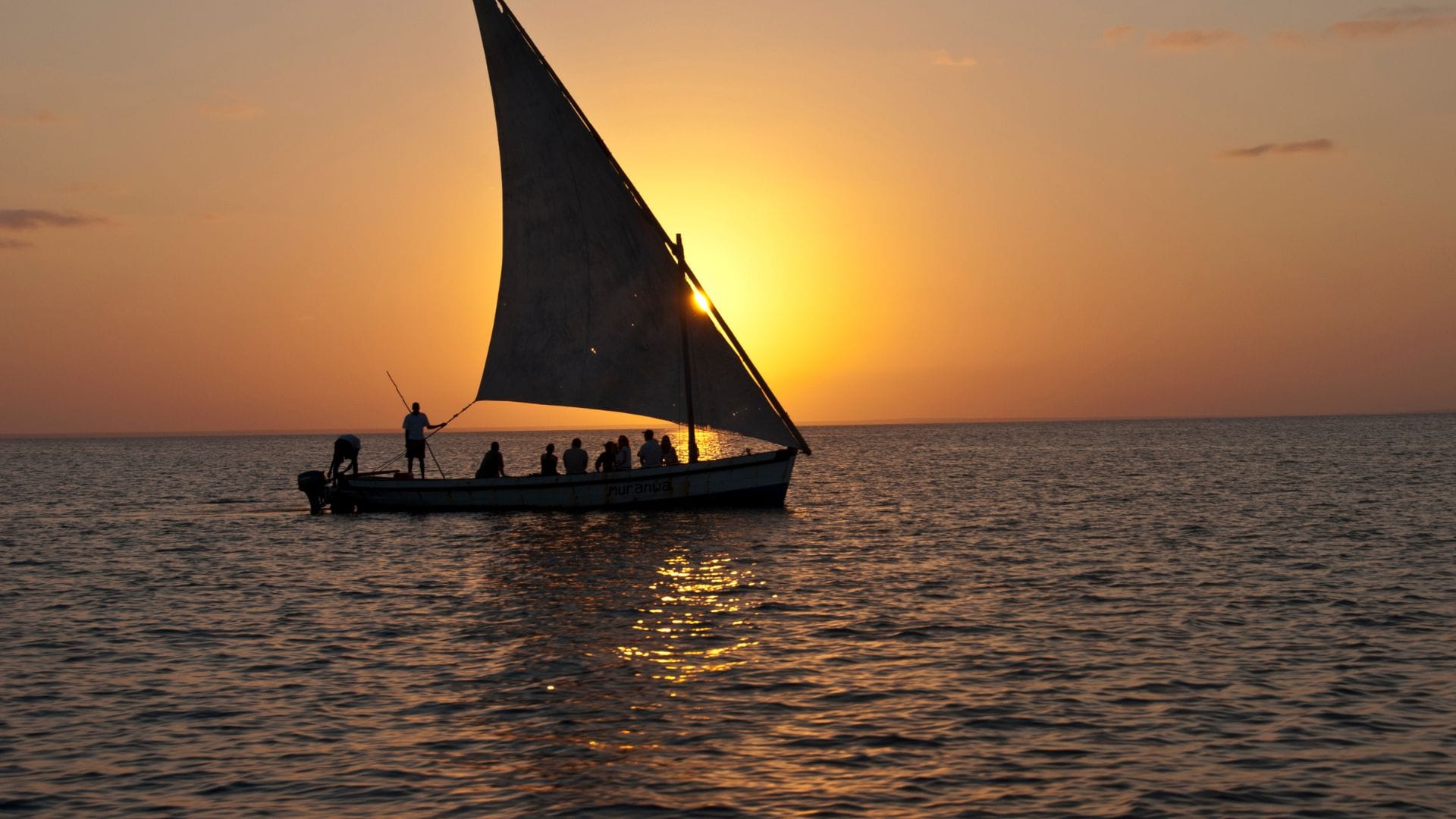
This is a different coastline. The islands are smaller. The reefs are less travelled, the water often clearer than Bazaruto, the colours stranger. There are channels in Quirimbas where the water is the green of bottle glass held up to a window. Ibo Island, a UNESCO-listed Portuguese colonial town, has crumbling forts along the seawall and silversmiths working in back rooms with the doors open. Dhows move between the islands carrying rice and goats and grandmothers. Sailing is what these islands do for a living. The guest version is a polished cousin of the working one.
The lodges are fewer, smaller, more remote. Several are private-island only. One or two are reached by a second light-aircraft hop after the first, or by a dhow transfer that takes most of an afternoon and ends with you stepping into knee-deep water on a beach with no road behind it. You feel a long way from the world here. That is the whole point.
Who Quirimbas is for
Quirimbas suits the traveller who has done a beach holiday before and wants something quieter this time. It suits honeymooners who actively want to be hard to reach for a week. It suits divers who care about reef quality and a real fish population, not a handful tagged with cleaner shrimp. It suits the returning safari client who already knows the East African circuit and wants a coastal week that feels like the same world the Mara just was.
How do you actually choose?
Honestly, geography usually decides for you, and we'd rather you let it. If your safari is in South Africa, Botswana, Zimbabwe or southern Zambia, Bazaruto is the natural next stop. The charter routing is short, the time zone is the same, and the lodge style sits comfortably alongside the safari lodges you've just left. If your safari is in Kenya, Tanzania, Rwanda or Uganda, Quirimbas pairs better. The flights route through Dar es Salaam or Nairobi without the doubling back, and the East African flavour of the coast picks up cleanly from the bush you've just come out of.
After geography, it comes down to what you want from the beach half of the trip. Polished and easy, Bazaruto. Remote and quiet, Quirimbas. Neither is better. They are answering different questions.
Mozambique is the country where a safari finally exhales. The dust settles, the engine cuts, and what's left is salt water and time.Sian Loehrer
What about combining the two?
The flights between southern and northern Mozambique are awkward and often route back through Maputo or Johannesburg. The lodges are different enough in feel that visiting both in one trip blunts what makes each one special. If you have the time, do one properly. Come back for the other.
When to go
Both archipelagos are dry-season destinations. The window from May to October is the safe bet, with mild days, low humidity, and water calm enough that the charter flights and dhow transfers run on schedule almost every day. November to April brings the wet season and the cyclone risk, which closes lodges from time to time on the northern coast. November and March are shoulder months. They can offer real value if you're prepared to give back an afternoon or two to the weather. The month-by-month read sits in our companion piece on when to go to Mozambique.
How we'd build it
For a first-time client doing a southern African safari, we'd route them through Sabi Sand or the Okavango first, then fly them up to Vilanculos and across by light aircraft to Benguerra or Bazaruto Island. Four nights on the coast after a week in the bush is a length that works. Long enough to settle, short enough that nobody starts checking their email. The trip ends on water, not in a vehicle.
For a returning client pairing East Africa with the coast, we'd route them out of the Mara or the Serengeti, through Dar es Salaam or Pemba, and into Quirimbas. Five nights here, because the route is longer and the lodges reward a slower stay. You arrive on Quirimbas time on about day two.
Either way, the order matters. Bush then beach. Always bush then beach. The bush half of the trip is the busy one, the early starts, the dust on your boots. The coast is where it settles.
FAQs
Is Mozambique safe for tourists?
The coastal tourism areas of southern Mozambique, including Bazaruto and Vilanculos, are well-established and considered safe for visitors. Quirimbas in the far north has seen periodic unrest in Cabo Delgado province, and lodge operators monitor the situation closely with the relevant authorities. We only place clients with lodges whose security position we're confident in at the time of booking, and we keep that under review.
Do I need a visa for Mozambique?
Most nationalities can obtain a visa on arrival at major ports of entry, including Vilanculos and Pemba airports. We send every client the current visa guidance for their passport before they travel.
Is Mozambique malarial?
Yes, the whole coast is malarial. Prophylaxis is standard. Lodges spray rooms and provide nets. We brief every client on this before they go.
Can I fly directly to Bazaruto or Quirimbas?
No. Both archipelagos are reached by light aircraft from gateway airports. Bazaruto is served from Vilanculos. Quirimbas is served from Pemba. The charter flight is part of the trip rather than an interruption to it. We'd argue it's where the holiday really starts.
How long should I spend on the coast?
Four nights is the minimum we recommend for either archipelago. Three nights leaves you arriving and departing without ever properly landing. Five to seven nights is the sweet spot for honeymooners.
Are children welcome at the lodges?
Most lodges on Bazaruto welcome children from a young age, with dedicated guides and tailored snorkelling for younger guests. Quirimbas lodges vary, with some operating as adults-only or restricting younger guests. We confirm policy lodge-by-lodge at the planning stage.
Can you dive on both?
Yes. Bazaruto offers excellent snorkelling and gentle diving, with a strong chance of seeing whale sharks and dugongs in season. Quirimbas offers more serious diving on quieter reefs, with several lodges running their own dive operations. If diving is the priority of the trip, Quirimbas usually wins.
Vikki Jackson is co-founder of Marula Hill Travel. We plan boutique safaris across South Africa, Botswana, Zambia, Zimbabwe, Kenya, Tanzania, Rwanda, Uganda, Namibia, and Mozambique. We work only with lodges we know personally or through trusted partners.
If this resonated
The bush has been expecting you
Start with a conversation. We will ask what makes you want to wake up at four-thirty, and build from there.
Begin a conversation
Royal Malewane reopens: what we remember, and what the fact sheet confirms
The original Royal Portfolio property is back after months behind scaffolding. We haven't seen it yet. Here is what we know anyway.

We run on solar and we have not printed since 2019
Vikki and Sian on solar power, paper, and what a small safari company can honestly claim.

Sandringham Private Game Reserve: should you go early, or wait?
Greater Kruger's newest reserve opens in August 2026. Our honest take on who should book Sandringham early, and who should give it a few seasons.

The packing guide
What to bring on safari, what to leave at home, and the one thing no lodge can lend you. An honest packing list from the team in Hoedspruit.

How do you want to feel when you get home?
Why we plan safaris around how you want to feel when you get home, not around a pin on the map.

South Africa's online traveller declaration: what it means for your safari (and what it doesn't)
A five-minute customs form now stands between you and the arrivals hall. Here's what it is, who needs it, and what nothing to declare actually means for a normal safari guest.

Safari After Dark
Night drives reveal a different Africa. Quieter, older, more deliberate. Here's what we love about the bush after the sun goes down.

How we tailor every Marula Hill safari
We don't start with destinations. We start with you: your pace, your family, your idea of a good day in the bush.

When space teaches: what Saseka's refresh tells us about gathering in the bush
What a thoughtful safari lodge refresh tells us about gathering in the bush.

Inside FedAir's new Baobab lounge at Hoedspruit
The new Baobab lounge at Hoedspruit airport changes how a safari begins. Vikki Jackson on the room that holds you before the bush does.

How safari pricing actually works
From the people who build the quotes. What you are really paying for, where the money goes, and how to spend it well.

Monwana, and what coming home actually means
By Vikki Jackson and Sian Loehrer. A week at the Thornybush lodge that has built its whole identity around the word home, and what we found when we tested it against the room, the drives, the afternoons and the bill.

The Mozambique dhow: a slow boat at the end of a fast trip
Why we put a dhow afternoon into almost every Mozambique trip. Sail, salt water and the long breath out after safari.

Why we built the Antarctica page
A short note from Sian on why an African safari business added Antarctica to its destination map, and how we handle a trip neither founder has yet made.

Lion Sands Ivory Lodge. What their redesign gets right
I visited Lion Sands Ivory Lodge in the Sabi Sand. The redesigned spaces are quiet, bold, and rare. Here is what they got right.

Where the money actually goes on a luxury safari
A line-by-line look at what you're actually paying for on a luxury African safari — and what a quote that looks light is usually hiding.

Sabi Sand or Kruger
Two reserves, one fence line, very different mornings

What is the best month to visit Cape Town?
Cape Town rewards you differently in every season, but March to May is the window most of our clients come back to.

What Singita Lebombo's 2026 redesign tells us
Lebombo reopened March 2026 warmer, quieter, more art-led

Gorilla trekking, Uganda or Rwanda
Two countries, the same forest, two very different days

Do you need travel insurance for a safari
What safari travel insurance must cover, and why standard policies fall short

How two women from outside the travel industry built a luxury safari brand from Africa
We are the two women behind Marula Hill. One of us came from IBM, the other from MARS Southern Africa. Here is the long version of how a private safari business gets built from outside the travel industry.

Sole-use villa safaris in Africa
What sole-use villa safaris mean in practice, who they suit, and what to ask

Why Rwanda is the cleanest country in Africa
A plastic-bag ban from 2008. A mandatory community work morning on the last Saturday of every month. The system behind Rwanda's cleanliness, explained.

A family vacation in Cape Town that works for all ages
Cape Town suits kids and grown-ups equally well: beaches, penguins, aquariums, and a city that's easy to move around.