
What Singita Lebombo's 2026 redesign tells us
Lebombo reopened March 2026 warmer, quieter, more art-led

There are very few lodges that have reinvented themselves three times and remained worth talking about. Singita Lebombo is one of them. It closed for a soft refurbishment and reopened earlier this year. I've been studying the images and reading the trade notes, and my immediate thought was: this is a quieter lodge than it was. That's not a criticism. It's actually the most interesting thing about it.
To understand why, you need a little context. Andrew Makin designed the original structure: glass-loft suites on stilts above the N'Wanetsi River, inside Singita's 33,000-acre private concession in the northwest corner of Kruger. The architecture was a provocation. It said we don't need to hide in the bush to belong here. Then in 2016, Cape Town studio Cécile & Boyd took the interiors further toward a clean, contemporary openness. Beautiful, but cooler in temperature. Quite literally.
What changed in 2026
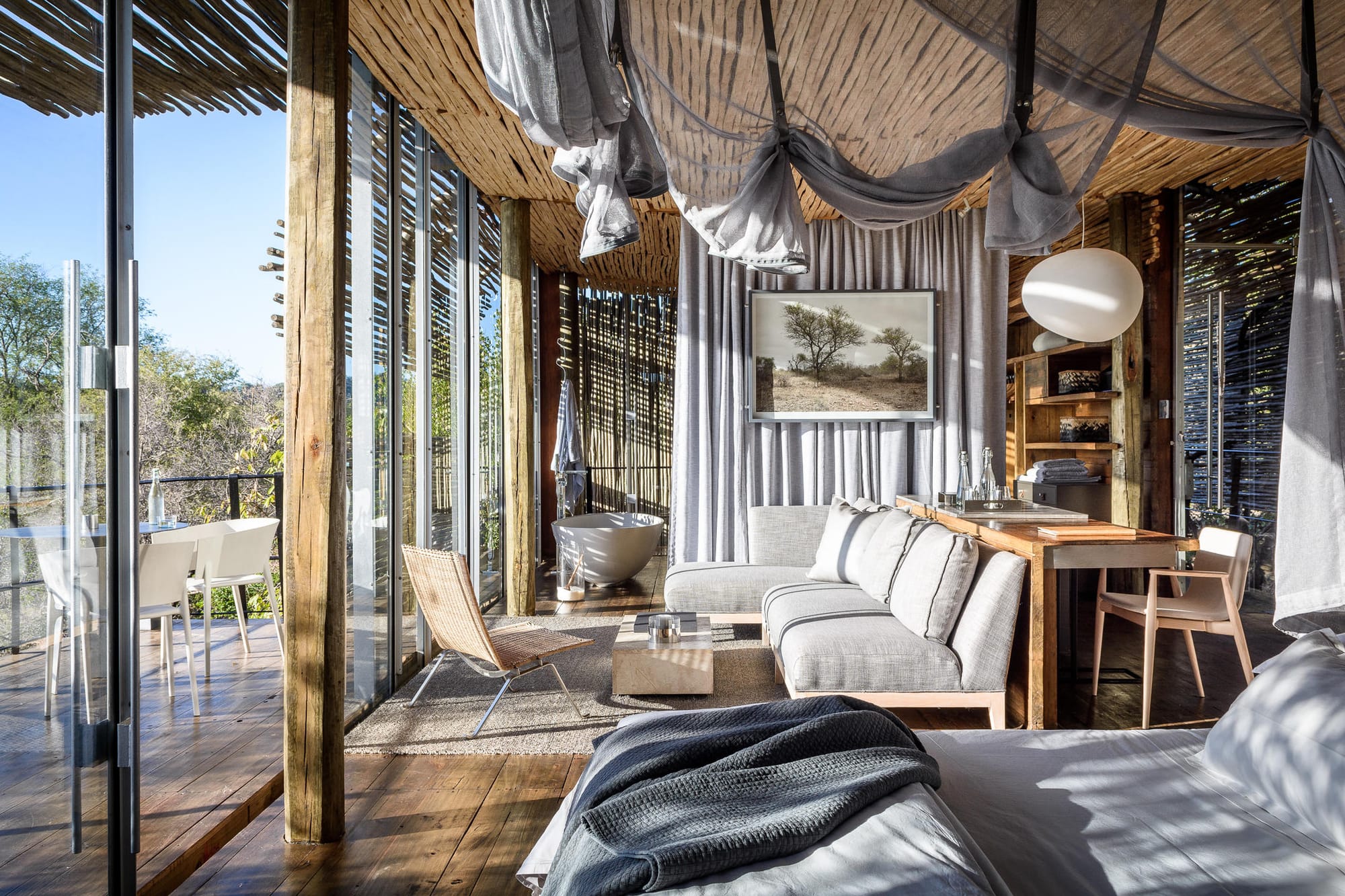
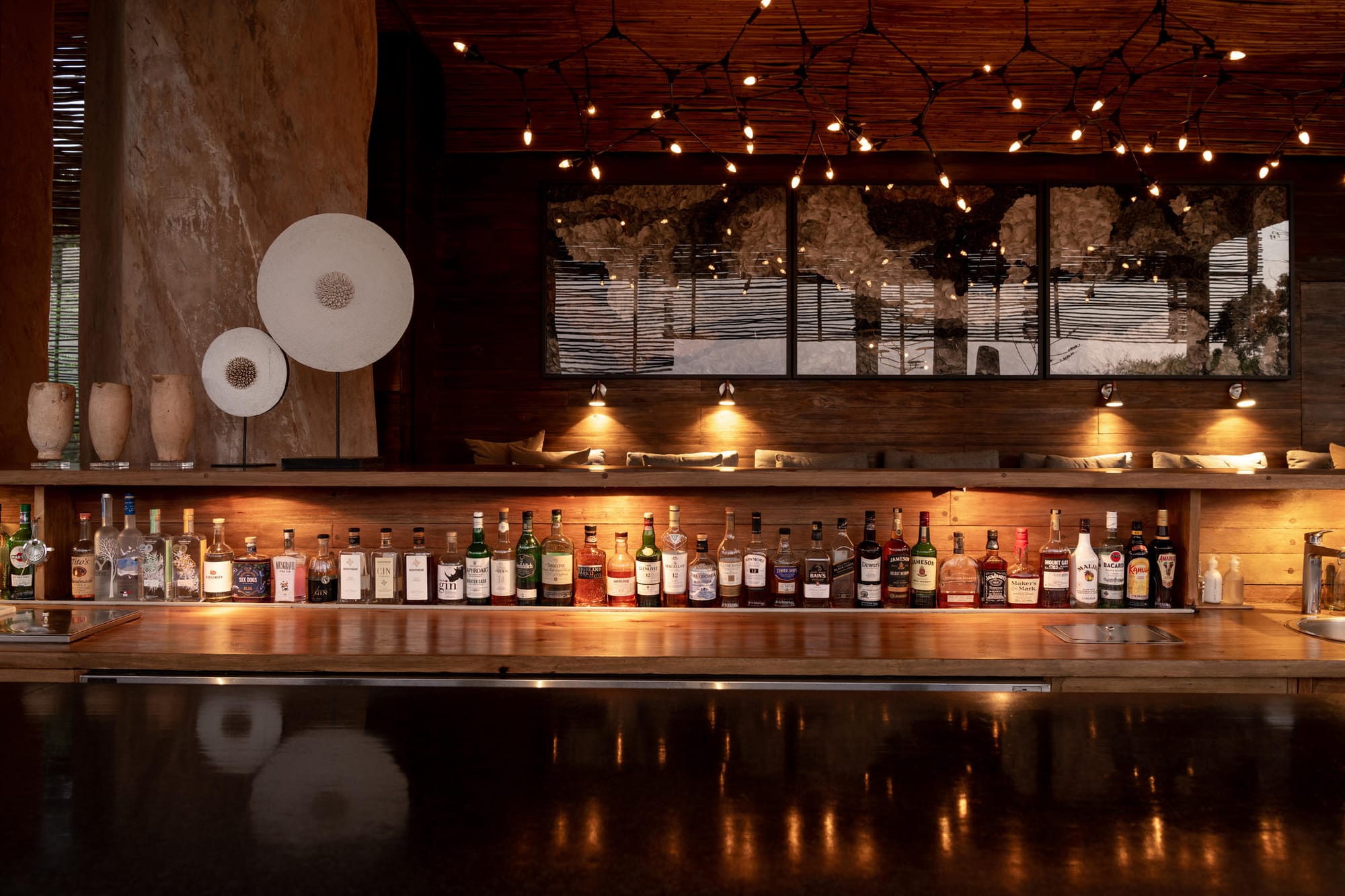
The 2026 update walks some of that coolness back. The new palette is brown and cream. Fabrics, rugs, cushions, curtains, mosquito nets: all earthy tones. The lodge has grown slightly too, from 13 suites to 15. A new lounge and wine pavilion have been added. And the main lodge now has an art gallery showing pieces from across Southern Africa alongside artefacts and objects found on the concession itself.
Read those changes together, and a picture forms. The architecture hasn't moved. The bones are still Makin's glass lofts above the river. But the interior has become warmer and more specifically rooted in this place. The art gallery especially signals something. Safari lodges have spent a decade arguing they belong to the landscape. Now some are arguing they belong to a culture too. That's a different kind of claim.
From a design perspective, the brown-and-cream palette is a sensible choice for this building. The glass-and-steel structure reflects a lot of light, and a warm neutral palette works with that rather than against it. Colder colours would have looked brittle. Earthy tones absorb the brightness and make rooms feel settled rather than clinical. I'd want to sit in one before passing final judgment, but the logic holds.
The quiet sustainability move
There's one detail in the trade notes that deserves more attention than it's getting. All suites are now double-glazed, and opening windows have been added for cross-ventilation. That might sound like a technical footnote, but it's a considered answer to the problem every glass-heavy lodge faces in the African heat: how do you keep rooms cool without running the air conditioning constantly? Double glazing cuts solar gain. Opening windows let the air move. Singita hasn't called this a sustainability initiative, but that's what it is. They've addressed the building's biggest thermal liability without touching the structure.
In October 2025, Singita won the inaugural Johnnie Walker Art of Design award at the World's 50 Best Hotels. The timing is worth noting. Lebombo closed for refurbishment two months later. Singita has been on the 50 Best Hotels list for three consecutive years, and design has now been explicitly named as a reason. The 2026 update reads as a response to that recognition. Not resting on it, but leaning into it with more intention. The art gallery is the clearest expression of that shift.
Where this fits
Looking at Lebombo across its three iterations, there's a clear direction. The 2003 original made a statement of architectural confidence. The 2016 update pulled toward contemporary restraint. The 2026 version is reaching for warmth and cultural rootedness instead: more art, earthier tones, more reference to a specific place in a specific region. Whether that direction stays compelling will depend on execution. Based on what I know of Singita, they're unlikely to overplay it.
If you're weighing Lebombo as an option, it's a structurally unusual lodge in an excellent private concession, and the 2026 work has made it more liveable without losing what made it distinctive. If you're still sorting out whether Kruger is right for your trip, our Sabi Sand or Kruger guide covers the differences. And if the question of cost is still open, our honest breakdown of what a luxury safari actually costs is a good place to start.
Common questions
When did Singita Lebombo reopen after the 2026 refurbishment?
Lebombo closed on 6 January 2026 and reopened on 19 March 2026. Singita described it as a soft refurbishment, meaning the structure was not altered. The work covered new interiors, a lounge, an art gallery in the main lodge, and upgrades to glazing and ventilation.
Who designed the new interiors?
Singita has not confirmed the design lead for the 2026 update publicly. The look continues the language Cape Town studio Cécile & Boyd developed at Singita Ebony and Singita Boulders, but we can't confirm their involvement in this specific project.
How many suites does Singita Lebombo now have?
Lebombo now has 15 suites, up from 13 before the 2026 refurbishment.
What is the art gallery at Lebombo?
The main lodge now includes a gallery displaying artworks from across Southern Africa alongside artefacts and objects found on the concession. It reflects a broader trend among top lodges to connect guests to local cultural history, not only to the surrounding landscape.
Where is Singita Lebombo located?
Lebombo sits in Singita's 33,000-acre private concession in the northwest corner of Kruger National Park, with the suites above the N'Wanetsi River. It's a fly-in property. Our guide to choosing a safari lodge covers the key questions worth asking before booking any private concession property.
If you'd like our read on whether Lebombo is the right fit for your trip, we're happy to talk it through. We know the property well and book it regularly.
If this resonated
The bush has been expecting you
Start with a conversation. We will ask what makes you want to wake up at four-thirty, and build from there.
Begin a conversation
Royal Malewane reopens: what we remember, and what the fact sheet confirms
The original Royal Portfolio property is back after months behind scaffolding. We haven't seen it yet. Here is what we know anyway.

We run on solar and we have not printed since 2019
Vikki and Sian on solar power, paper, and what a small safari company can honestly claim.

Sandringham Private Game Reserve: should you go early, or wait?
Greater Kruger's newest reserve opens in August 2026. Our honest take on who should book Sandringham early, and who should give it a few seasons.

The packing guide
What to bring on safari, what to leave at home, and the one thing no lodge can lend you. An honest packing list from the team in Hoedspruit.

How do you want to feel when you get home?
Why we plan safaris around how you want to feel when you get home, not around a pin on the map.

South Africa's online traveller declaration: what it means for your safari (and what it doesn't)
A five-minute customs form now stands between you and the arrivals hall. Here's what it is, who needs it, and what nothing to declare actually means for a normal safari guest.

Safari After Dark
Night drives reveal a different Africa. Quieter, older, more deliberate. Here's what we love about the bush after the sun goes down.

How we tailor every Marula Hill safari
We don't start with destinations. We start with you: your pace, your family, your idea of a good day in the bush.

When space teaches: what Saseka's refresh tells us about gathering in the bush
What a thoughtful safari lodge refresh tells us about gathering in the bush.

Inside FedAir's new Baobab lounge at Hoedspruit
The new Baobab lounge at Hoedspruit airport changes how a safari begins. Vikki Jackson on the room that holds you before the bush does.

How safari pricing actually works
From the people who build the quotes. What you are really paying for, where the money goes, and how to spend it well.

Monwana, and what coming home actually means
By Vikki Jackson and Sian Loehrer. A week at the Thornybush lodge that has built its whole identity around the word home, and what we found when we tested it against the room, the drives, the afternoons and the bill.

The Mozambique dhow: a slow boat at the end of a fast trip
Why we put a dhow afternoon into almost every Mozambique trip. Sail, salt water and the long breath out after safari.

Why we built the Antarctica page
A short note from Sian on why an African safari business added Antarctica to its destination map, and how we handle a trip neither founder has yet made.

Lion Sands Ivory Lodge. What their redesign gets right
I visited Lion Sands Ivory Lodge in the Sabi Sand. The redesigned spaces are quiet, bold, and rare. Here is what they got right.

Where the money actually goes on a luxury safari
A line-by-line look at what you're actually paying for on a luxury African safari — and what a quote that looks light is usually hiding.

Bazaruto vs Quirimbas: which Mozambique archipelago is right for you?
How to choose between Mozambique's two great archipelagos for a bush-and-beach trip. Geography, lodge feel, when to go.

Sabi Sand or Kruger
Two reserves, one fence line, very different mornings

What is the best month to visit Cape Town?
Cape Town rewards you differently in every season, but March to May is the window most of our clients come back to.

Gorilla trekking, Uganda or Rwanda
Two countries, the same forest, two very different days

Do you need travel insurance for a safari
What safari travel insurance must cover, and why standard policies fall short

How two women from outside the travel industry built a luxury safari brand from Africa
We are the two women behind Marula Hill. One of us came from IBM, the other from MARS Southern Africa. Here is the long version of how a private safari business gets built from outside the travel industry.

Sole-use villa safaris in Africa
What sole-use villa safaris mean in practice, who they suit, and what to ask

Why Rwanda is the cleanest country in Africa
A plastic-bag ban from 2008. A mandatory community work morning on the last Saturday of every month. The system behind Rwanda's cleanliness, explained.

A family vacation in Cape Town that works for all ages
Cape Town suits kids and grown-ups equally well: beaches, penguins, aquariums, and a city that's easy to move around.