
The Mozambique dhow: a slow boat at the end of a fast trip
Why we put a dhow afternoon into almost every Mozambique trip. Sail, salt water and the long breath out after safari.

You step off a Land Rover, then onto a Cessna, then onto a beach. After a week of pre-dawn alarms and the dust working its way into the seams of your boots, the last vehicle of your trip is a wooden sailing boat with a single triangular sail whose shape has not changed for centuries. The dhow is what Mozambique gives you when the safari is over.
This is a Stories piece, so I'll try to keep the practical bits short. But I want to tell you why we put a dhow afternoon into almost every Mozambique trip we plan, even when the lodge has faster, sleeker boats sitting on the slipway. It's not for the photographs. It's for what it does to you.
In short
- What it is: A traditional wooden sailing boat with a single lateen sail, used along the East African and Mozambican coasts for centuries.
- Where you'll meet one: Bazaruto, Benguerra, the Quirimbas, and the mainland villages between Pemba and Ibo Island.
- Best time: Late afternoon, on a falling tide. Wind on the beam.
- Why it matters: The dhow is the slowest thing in your trip. After a week of bush vehicles and charter flights, that is the gift.
The boat itself
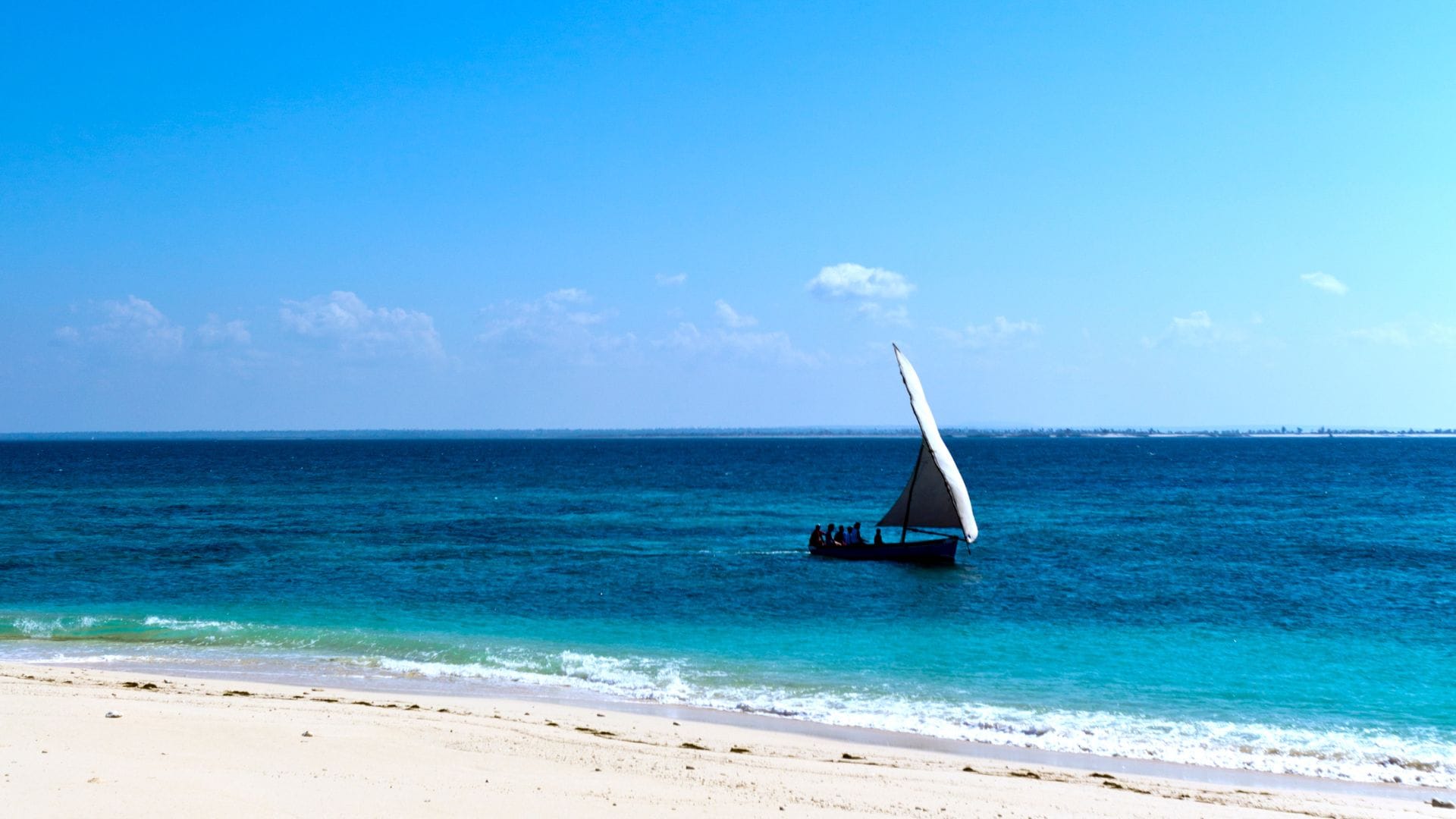
A dhow is a single-masted wooden boat with a triangular lateen sail. The hull is hand-built from local hardwoods. You can see the marks of the adze on the planking if you look down. The sail is patched cotton, sometimes canvas, occasionally a piece of recycled tarpaulin if the boat is a working one. The rigging is rope. The whole thing is held together by skill and habit more than by hardware.
On the Quirimbas coast, the dhows are the supermarket, the school bus, and the post office. They carry rice, charcoal, livestock, and grandmothers between the islands. The dhow you go out on for the afternoon will, the next morning, be carrying a goat to Ibo. You can sometimes smell yesterday's cargo in the boards if you lean close.
Why we put it in the trip
A safari, particularly a good one, is dense. You're up at five, out at five-thirty, back for brunch, out again at four. Drinks at the fire. Bed at nine. Repeat. By day six, you have stored more sensory information than any normal week of life, and your body knows it, even if your head hasn't caught up yet.
Then you fly to the coast. Most clients don't actually relax on the first afternoon at the lodge. They walk on the beach. They check their email. They wonder if they should be doing something. The dhow is the answer to that. It's the activity that isn't really an activity. You sit on flat cushions on a low wooden deck warmed by the sun. The captain raises the sail. The boom swings out. The boat tips, finds the wind, and starts moving at a walking pace. You stop talking. The wake folds out behind you, very slow, very quiet. After a while, somebody on the boat will say, in the kind of voice you only use when you've been outside for a long time, that they hadn't realised how tired they were.
What happens on the boat
Very little. That is the point. The crew, usually two or three men, work the sail and the tiller. Sometimes they sing, low and to each other. Sometimes they don't. The lodge sends you out with a cooler of cold drinks beaded with condensation and a small plate of something. Tropical fruit, perhaps, or pieces of grilled prawn with lime. You sail past a sandbar that wasn't there an hour ago and won't be there an hour from now.
If you're out in the Quirimbas, you might pass a fishing boat with a child sitting on the foredeck waving. You wave back. The water is the colour of a swimming pool nobody has built yet. The dhow does not have an engine. The only sounds are the rigging knocking quietly against the mast, the slap of water under the bow, and somewhere behind you, the sail filling and emptying as the wind shifts.
You come back in time for the light to go gold, then orange, then the colour of weak tea. The captain runs the boat onto the beach. You step off into warm, shallow water and walk up to the lodge with sand sticking to your calves. By the time you sit down for dinner, you are somewhere your safari did not take you. You are slow.
A small note on the working dhow
The dhows you go out on are a polished version of the working dhows that still move along this coast. The polished ones have cushions, shade, and ice. The working ones do not. If you stay long enough on the Quirimbas, particularly near Ibo, you can usually arrange a morning where you sail with a working crew rather than a guest crew. It's rougher, longer, sometimes wet. It's also the closest you will get to seeing the coast as it actually operates, and we have had a handful of clients tell us it was the single best afternoon of their trip. One of them came back with a sunburn on the back of his hands and a story about helping bail seawater with a cut-down oil tin.
We don't push it on people. It's the kind of thing that suits a certain kind of traveller. If you think it might suit you, ask us.
What I took away
The first time I went out on a dhow off Benguerra, I had spent a week on safari in Botswana, and I was so wired that I had to put my phone away inside my bag at the back of the boat to stop checking it. By the time we came back to the beach, I'd forgotten where the bag was. I think that is the entire argument for putting a dhow into your trip. It is a piece of the older time. It is hard to be the version of yourself you arrived as, once you've spent an afternoon on a sailing boat with no engine, the rigging tapping against the mast, the captain barefoot at the tiller, the sun working its way down through the colours that southern hemisphere skies do on the way to dark.
Mozambique is the country where a safari finally exhales. The dhow is the long breath out.
FAQs
Do all lodges in Mozambique offer dhow sailing?
Most coastal lodges offer dhow sailing as a guest activity, included in the rate. Quality varies. The Quirimbas lodges tend to use older, more characterful boats. The Bazaruto lodges run more polished operations with crisp white sails and proper cool boxes.
Is dhow sailing safe?
Yes. Lodge dhows are crewed by experienced sailors who know the local water and the tide patterns intimately. Life jackets are provided. Trips run only in suitable conditions, and the lodges are quick to call them off if the wind picks up.
How long is a typical dhow trip?
An afternoon outing usually runs a couple of hours. Sunset sails are common, and we'd argue they are the version to ask for.
Will I get wet on a dhow?
On a calm afternoon, no, not properly. On a working dhow in a stiffer breeze, yes. Bring a sarong and a hat, and don't wear anything you mind salt water on.
Can I arrange a full-day dhow trip?
Yes, particularly in the Quirimbas. Full-day dhow trips with picnic stops on sandbars or empty islands are a signature of this coast. We build them into the schedule on request, and we'd recommend doing it on the second-to-last day, not the last one. You'll want to be there for the morning after.
Sian Loehrer is co-founder of Marula Hill Travel. She spends most of the year on the ground with guides, trackers, and lodge teams. We plan boutique safaris around the people who actually run the bush.
If this resonated
The bush has been expecting you
Start with a conversation. We will ask what makes you want to wake up at four-thirty, and build from there.
Begin a conversation
Royal Malewane reopens: what we remember, and what the fact sheet confirms
The original Royal Portfolio property is back after months behind scaffolding. We haven't seen it yet. Here is what we know anyway.

We run on solar and we have not printed since 2019
Vikki and Sian on solar power, paper, and what a small safari company can honestly claim.

Sandringham Private Game Reserve: should you go early, or wait?
Greater Kruger's newest reserve opens in August 2026. Our honest take on who should book Sandringham early, and who should give it a few seasons.

The packing guide
What to bring on safari, what to leave at home, and the one thing no lodge can lend you. An honest packing list from the team in Hoedspruit.

How do you want to feel when you get home?
Why we plan safaris around how you want to feel when you get home, not around a pin on the map.

South Africa's online traveller declaration: what it means for your safari (and what it doesn't)
A five-minute customs form now stands between you and the arrivals hall. Here's what it is, who needs it, and what nothing to declare actually means for a normal safari guest.

Safari After Dark
Night drives reveal a different Africa. Quieter, older, more deliberate. Here's what we love about the bush after the sun goes down.

How we tailor every Marula Hill safari
We don't start with destinations. We start with you: your pace, your family, your idea of a good day in the bush.

When space teaches: what Saseka's refresh tells us about gathering in the bush
What a thoughtful safari lodge refresh tells us about gathering in the bush.

Inside FedAir's new Baobab lounge at Hoedspruit
The new Baobab lounge at Hoedspruit airport changes how a safari begins. Vikki Jackson on the room that holds you before the bush does.

How safari pricing actually works
From the people who build the quotes. What you are really paying for, where the money goes, and how to spend it well.

Monwana, and what coming home actually means
By Vikki Jackson and Sian Loehrer. A week at the Thornybush lodge that has built its whole identity around the word home, and what we found when we tested it against the room, the drives, the afternoons and the bill.

Why we built the Antarctica page
A short note from Sian on why an African safari business added Antarctica to its destination map, and how we handle a trip neither founder has yet made.

Lion Sands Ivory Lodge. What their redesign gets right
I visited Lion Sands Ivory Lodge in the Sabi Sand. The redesigned spaces are quiet, bold, and rare. Here is what they got right.

Where the money actually goes on a luxury safari
A line-by-line look at what you're actually paying for on a luxury African safari — and what a quote that looks light is usually hiding.

Bazaruto vs Quirimbas: which Mozambique archipelago is right for you?
How to choose between Mozambique's two great archipelagos for a bush-and-beach trip. Geography, lodge feel, when to go.

Sabi Sand or Kruger
Two reserves, one fence line, very different mornings

What is the best month to visit Cape Town?
Cape Town rewards you differently in every season, but March to May is the window most of our clients come back to.

What Singita Lebombo's 2026 redesign tells us
Lebombo reopened March 2026 warmer, quieter, more art-led

Gorilla trekking, Uganda or Rwanda
Two countries, the same forest, two very different days

Do you need travel insurance for a safari
What safari travel insurance must cover, and why standard policies fall short

How two women from outside the travel industry built a luxury safari brand from Africa
We are the two women behind Marula Hill. One of us came from IBM, the other from MARS Southern Africa. Here is the long version of how a private safari business gets built from outside the travel industry.

Sole-use villa safaris in Africa
What sole-use villa safaris mean in practice, who they suit, and what to ask

Why Rwanda is the cleanest country in Africa
A plastic-bag ban from 2008. A mandatory community work morning on the last Saturday of every month. The system behind Rwanda's cleanliness, explained.

A family vacation in Cape Town that works for all ages
Cape Town suits kids and grown-ups equally well: beaches, penguins, aquariums, and a city that's easy to move around.