
Botswana has water again. Here is what that means for your safari.
Botswana is having a stronger water year. Here is what that changes, and why the right lodge and the right week still matter more than a brochure month.

Botswana is having a stronger water year. Here is what that changes, and why the right lodge and the right week still matter more than a brochure month.
The Okavango is carrying more water this year.
Channels that have been quiet are moving again. Floodplains are holding water further into the season. In the right parts of the Delta, it looks much more like the Botswana people picture when they first imagine a mokoro: reeds, open water, a bird calling somewhere behind you, and nothing much to do for an hour or two.
But this is not a simple story about a good year.
Water in the Okavango does not arrive everywhere at once. It falls as rain in the Angolan highlands, travels south over months, and then works its way through a Delta so flat that a few kilometres can make a meaningful difference. The Panhandle sees the flood first. Further south and east, it can take months for the same water to arrive.
That is why we are careful with Botswana.
One lodge can have enough water for boating, while another, not especially far away, is still a predominantly game-drive safari. A lodge that worked well for a water-focused trip in July may be less right in May. Or September. Or in a season when the flood arrives differently.
The brochure month is useful. It is not the whole answer.
Why this year is different
This has been a stronger water year in the Okavango.
Channels are holding more water. Floodplains are wider. In some places, water activities are possible earlier or for longer than in an average year.
That gives us more options. It does not give us permission to be lazy about them.
High water can make a safari feel more varied. You might leave the lodge by mokoro one morning, take a boat across a lagoon in the afternoon, and spend the following day in a vehicle looking for a leopard. It changes the shape of the place. Elephants cross channels rather than dry plains. Red lechwe stand in shallow water. Islands feel more separate. The distances between things become part of the experience.
It can also change access. Some roads become slower or impassable. Game drives need to work around water rather than through it. A lodge with a reputation for excellent land-based wildlife can remain exactly that, but the routes and the shape of the day may look different.
More water is not automatically better. It is better if water is what you came for.
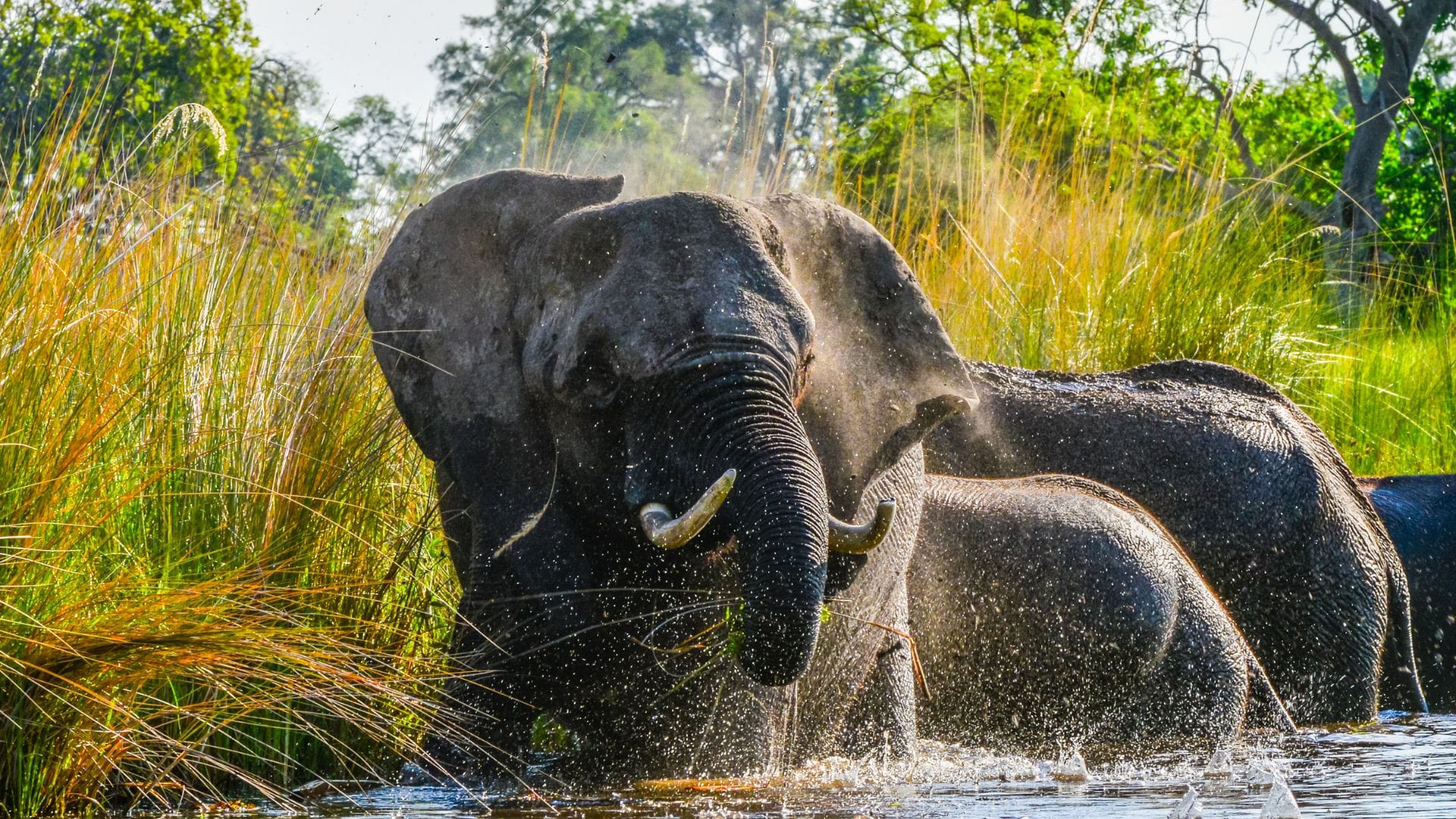
High water changes wildlife movement, the routes guides take, and how a day on safari unfolds.
Choosing the right month
The right month depends on what you mean by “the Delta”.
For clients who want the Delta to feel genuinely aquatic, we usually start with May through August. Water generally spreads through the system over the dry season, but the exact timing depends on the year and, more importantly, where in the Delta you are staying.
May and June
May and June can be a very good answer for travellers who want cooler days and a balance between vehicle-based safari and water activities.
In a stronger year, some areas begin offering boating or mokoro excursions earlier. But this is the point where lodge choice matters most. One lodge may be properly water-based. Another may still be waiting.
July and August
July and August are usually the safest months for the classic high-water Okavango experience.
Water levels are often at their highest. The mornings can be cold enough for an extra layer. The surrounding bush has dried down, and the contrast between water and sand feels especially dramatic.
They are also peak-season months. The best lodges book early and prices are where you would expect them to be.
September
September can be one of Botswana’s most rewarding months, though the weather asks more of you than July does.
Temperatures rise sharply. The water is generally starting to ease. Animals concentrate around the remaining permanent water, and game viewing can be excellent.
It is a strong choice for someone who wants serious wildlife viewing. It is less dependable for someone whose non-negotiable is long, quiet time on a mokoro.
November to March
From November, Botswana turns green.
There are young animals, dramatic skies, excellent birding and, often, better value. For the right traveller, it can be a brilliant time to go.
But it is not the classic high-water Delta. Local summer rain does not create the same experience as the floodwater that has travelled down from Angola. Anyone booking Botswana primarily for boat safaris should not assume that the green season means a water safari.
The right month depends on whether the focus is water time, land-based wildlife viewing, or a balance of the two.
The right Botswana is rarely one lodge
A water lodge and a land lodge are two different kinds of holiday.
For some travellers, the best Botswana trip this year will be a few nights somewhere the channels are the point, followed by a drier concession where the game driving is uncomplicated and the wildlife is close.
For others, especially families or first-time safari guests, we may prioritise good all-round game viewing and treat water activities as a welcome extra rather than build the whole trip around them.
This is the work that happens before anyone gets on a small aircraft.
We look at your dates, where the water is likely to be, how long you want to stay out on a vehicle, whether you would rather glide through reeds than follow a lion track, and whether you are happy for the plan to change slightly with the season.
Then we choose lodges accordingly.
Botswana is having a bigger water year. The right answer is still the one that suits the way you want to travel.
If this resonated
The bush has been expecting you
Start with a conversation. We will ask what makes you want to wake up at four-thirty, and build from there.
Begin a conversation
18 On The Hill review: a luxury tented safari in the Greater Kruger
Read our 18 On The Hill review, a luxury tented safari lodge in Greater Kruger, with excellent food, beautiful scenery and memorable wildlife.

Royal Malewane reopens: what we remember, and what the fact sheet confirms
The original Royal Portfolio property is back after months behind scaffolding. We haven't seen it yet. Here is what we know anyway.

We run on solar and we have not printed since 2019
Vikki and Sian on solar power, paper, and what a small safari company can honestly claim.

Sandringham Private Game Reserve: should you go early, or wait?
Greater Kruger's newest reserve opens in August 2026. Our honest take on who should book Sandringham early, and who should give it a few seasons.

The packing guide
What to bring on safari, what to leave at home, and the one thing no lodge can lend you. An honest packing list from the team in Hoedspruit.

How do you want to feel when you get home?
Why we plan safaris around how you want to feel when you get home, not around a pin on the map.

South Africa's online traveller declaration: what it means for your safari (and what it doesn't)
A five-minute customs form now stands between you and the arrivals hall. Here's what it is, who needs it, and what nothing to declare actually means for a normal safari guest.

Safari After Dark
Night drives reveal a different Africa. Quieter, older, more deliberate. Here's what we love about the bush after the sun goes down.

How we tailor every Marula Hill safari
We don't start with destinations. We start with you: your pace, your family, your idea of a good day in the bush.

When space teaches: what Saseka's refresh tells us about gathering in the bush
What a thoughtful safari lodge refresh tells us about gathering in the bush.

Inside FedAir's new Baobab lounge at Hoedspruit
The new Baobab lounge at Hoedspruit airport changes how a safari begins. Vikki Jackson on the room that holds you before the bush does.

How safari pricing actually works
From the people who build the quotes. What you are really paying for, where the money goes, and how to spend it well.

Monwana, and what coming home actually means
By Vikki Jackson and Sian Loehrer. A week at the Thornybush lodge that has built its whole identity around the word home, and what we found when we tested it against the room, the drives, the afternoons and the bill.

The Mozambique dhow: a slow boat at the end of a fast trip
Why we put a dhow afternoon into almost every Mozambique trip. Sail, salt water and the long breath out after safari.

Why we built the Antarctica page
A short note from Sian on why an African safari business added Antarctica to its destination map, and how we handle a trip neither founder has yet made.

Lion Sands Ivory Lodge. What their redesign gets right
I visited Lion Sands Ivory Lodge in the Sabi Sand. The redesigned spaces are quiet, bold, and rare. Here is what they got right.

Where the money actually goes on a luxury safari
A line-by-line look at what you're actually paying for on a luxury African safari — and what a quote that looks light is usually hiding.

Bazaruto vs Quirimbas: which Mozambique archipelago is right for you?
How to choose between Mozambique's two great archipelagos for a bush-and-beach trip. Geography, lodge feel, when to go.

Sabi Sand or Kruger
Two reserves, one fence line, very different mornings

What is the best month to visit Cape Town?
Cape Town rewards you differently in every season, but March to May is the window most of our clients come back to.

What Singita Lebombo's 2026 redesign tells us
Lebombo reopened March 2026 warmer, quieter, more art-led

Gorilla trekking, Uganda or Rwanda
Two countries, the same forest, two very different days

Do you need travel insurance for a safari
What safari travel insurance must cover, and why standard policies fall short

How two women from outside the travel industry built a luxury safari brand from Africa
We are the two women behind Marula Hill. One of us came from IBM, the other from MARS Southern Africa. Here is the long version of how a private safari business gets built from outside the travel industry.

Sole-use villa safaris in Africa
What sole-use villa safaris mean in practice, who they suit, and what to ask