
When space teaches: what Saseka's refresh tells us about gathering in the bush
What a thoughtful safari lodge refresh tells us about gathering in the bush.

You walk into the new bar at Saseka and the first thing that strikes you is what's not there. No grandstanding. No designed-to-impress moments fighting for attention. Just a space that settled into itself quietly, as if the architects, Silvio Rech and Lesley Carstens, who've been thinking about safari lodges for over three decades, asked one question and stuck with the answer: what does this moment need?
The refurbishment that recently wrapped at Saseka answers that differently than most. Rather than starting from scratch, the team retained what worked and reimagined what didn't. Old decking was repurposed. Materials were chosen for coherence, not novelty. The message is being right, not being new.
The bar itself does the talking
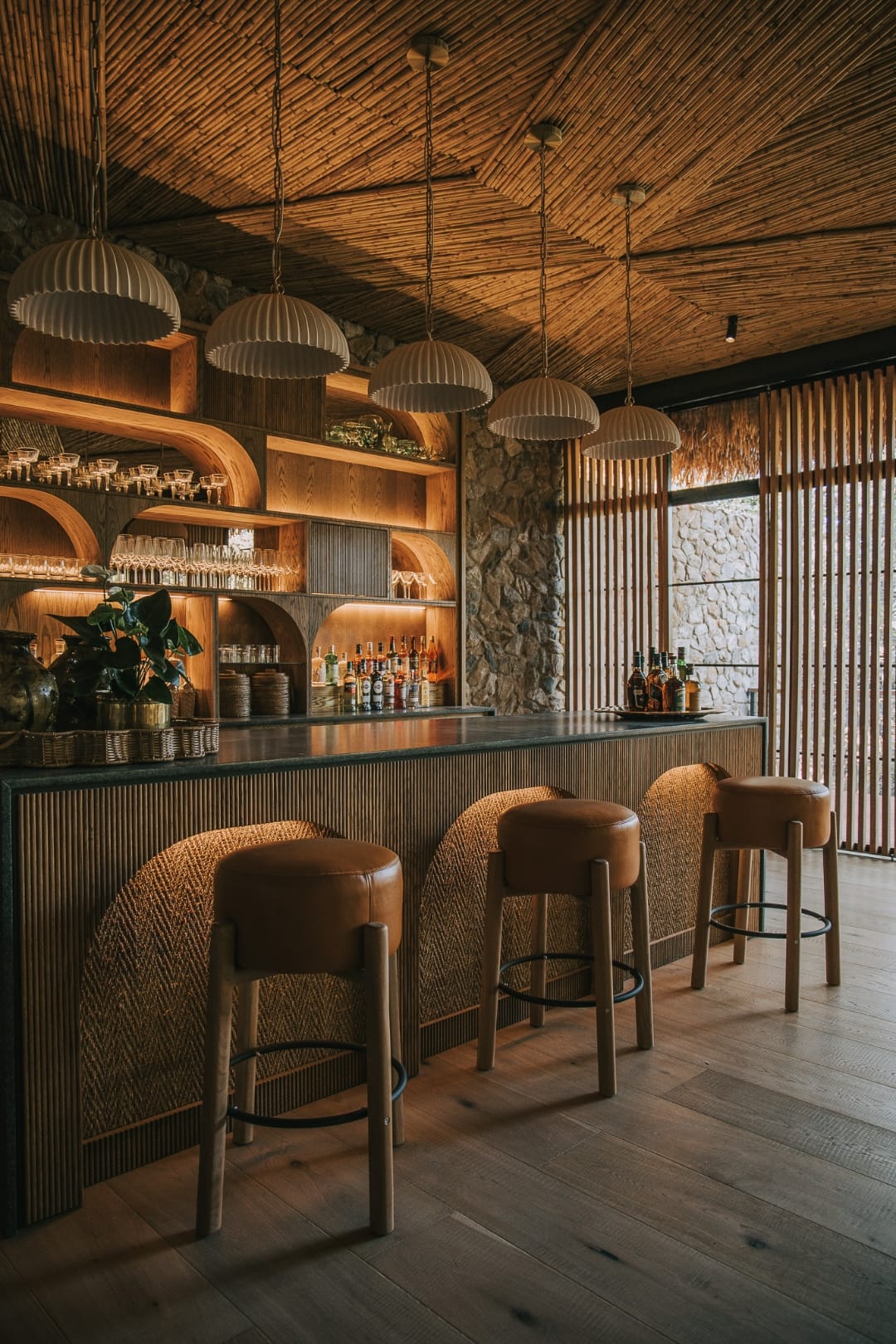
Curved wooden shelving rises behind the counter in gentle arcs. No sharp edges. No showing off. Warm amber lighting runs beneath each shelf, so the bottles and glassware sit in a quiet glow rather than blaring out. The undersides of those shelves are ribbed wood, and the repetition of that detail matters. It feels honest rather than decorative. The message: we used this material because it works here, and we repeated it so you'd feel the logic.
A ceiling that does the work of a canopy
The ceiling matters in a way most interiors don't bother to consider. Above the bar, above the lounge, geometric wooden planes catch light as it moves through the day. They echo a canopy without pretending to be one. They break up volume in a way that makes the space feel held rather than exposed. This is Rech and Carstens' signature move: creating shelter that feels natural rather than imposed.
Colour drawn from the surrounding bush
The colour palette is botanical without being obvious about it. Walls are dark stone. Seating wraps in sage, in dusty green, in charcoal linen. Brass accents (the pendant lights, the bar frame) carry warmth. Nothing competes. Everything supports. Walk through and you're not thinking about the colours. You're feeling them, which is how you know they're right.
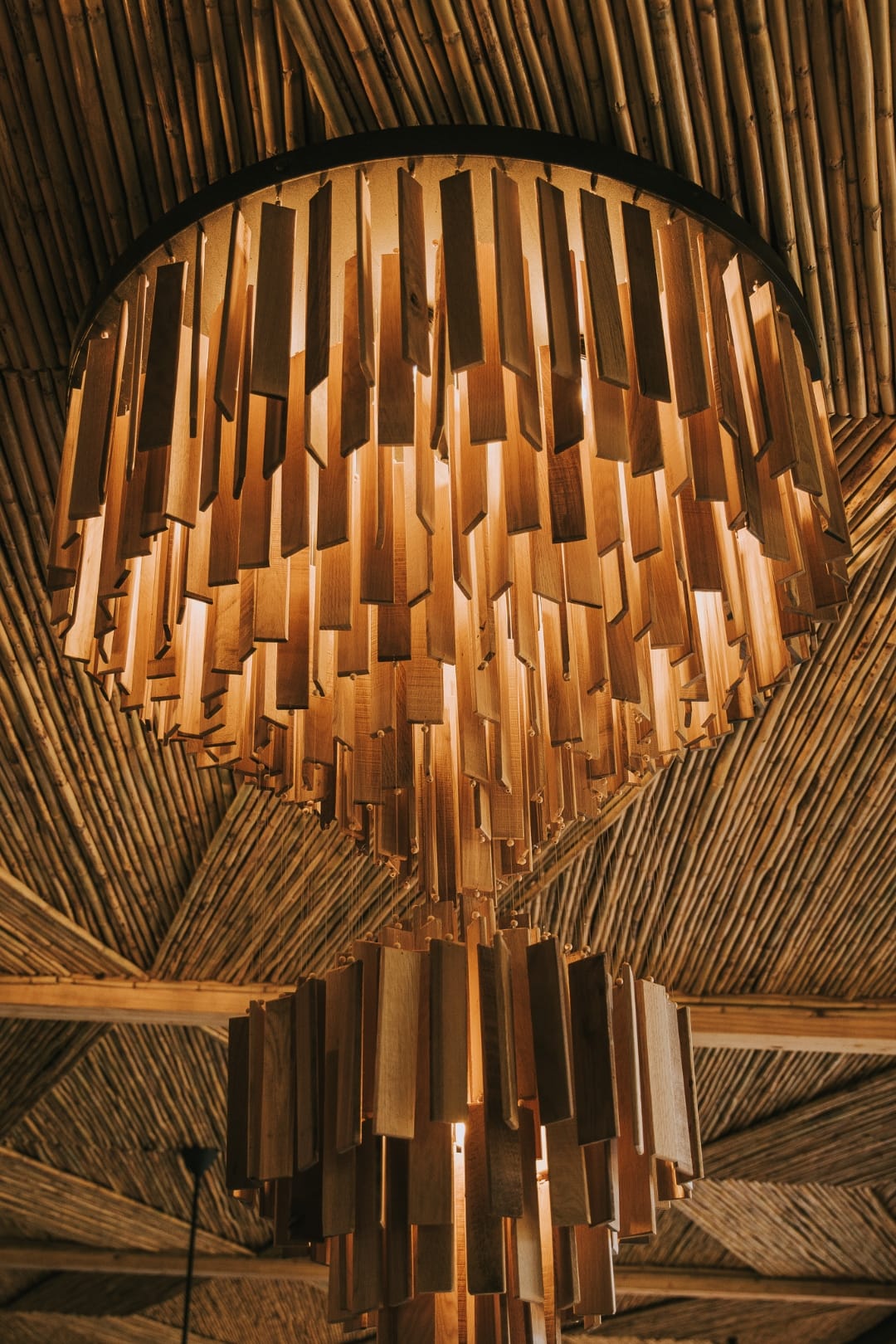
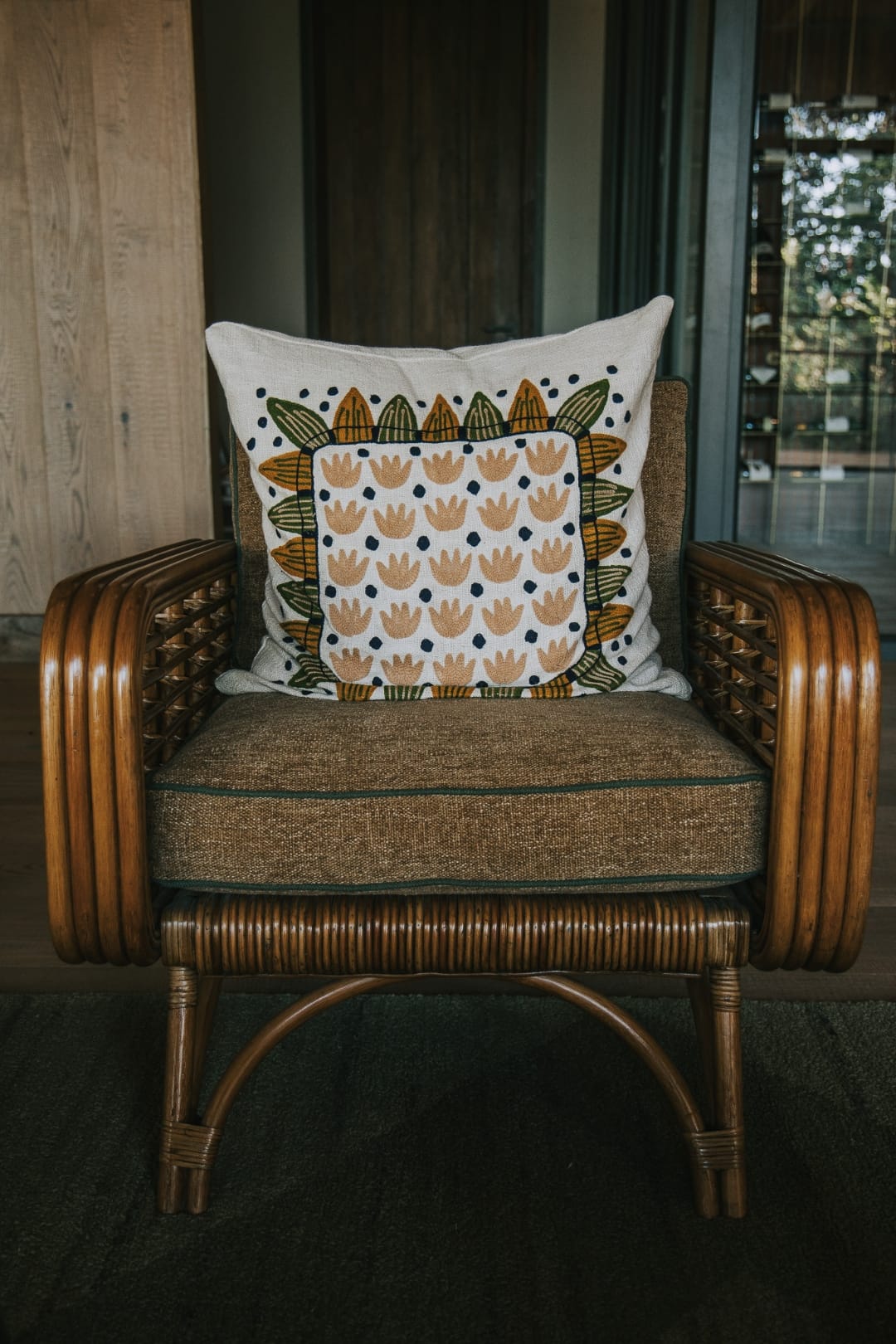
The details do the real work. Rattan-backed chairs, woven placemats, cutlery resting on natural textures, a chandelier made from layered wood strips that catches light and throws it around the room. These aren't afterthoughts. They're proof that someone understood: in a safari lodge, the small things tell you how to settle into a big landscape.
The boma, stripped back
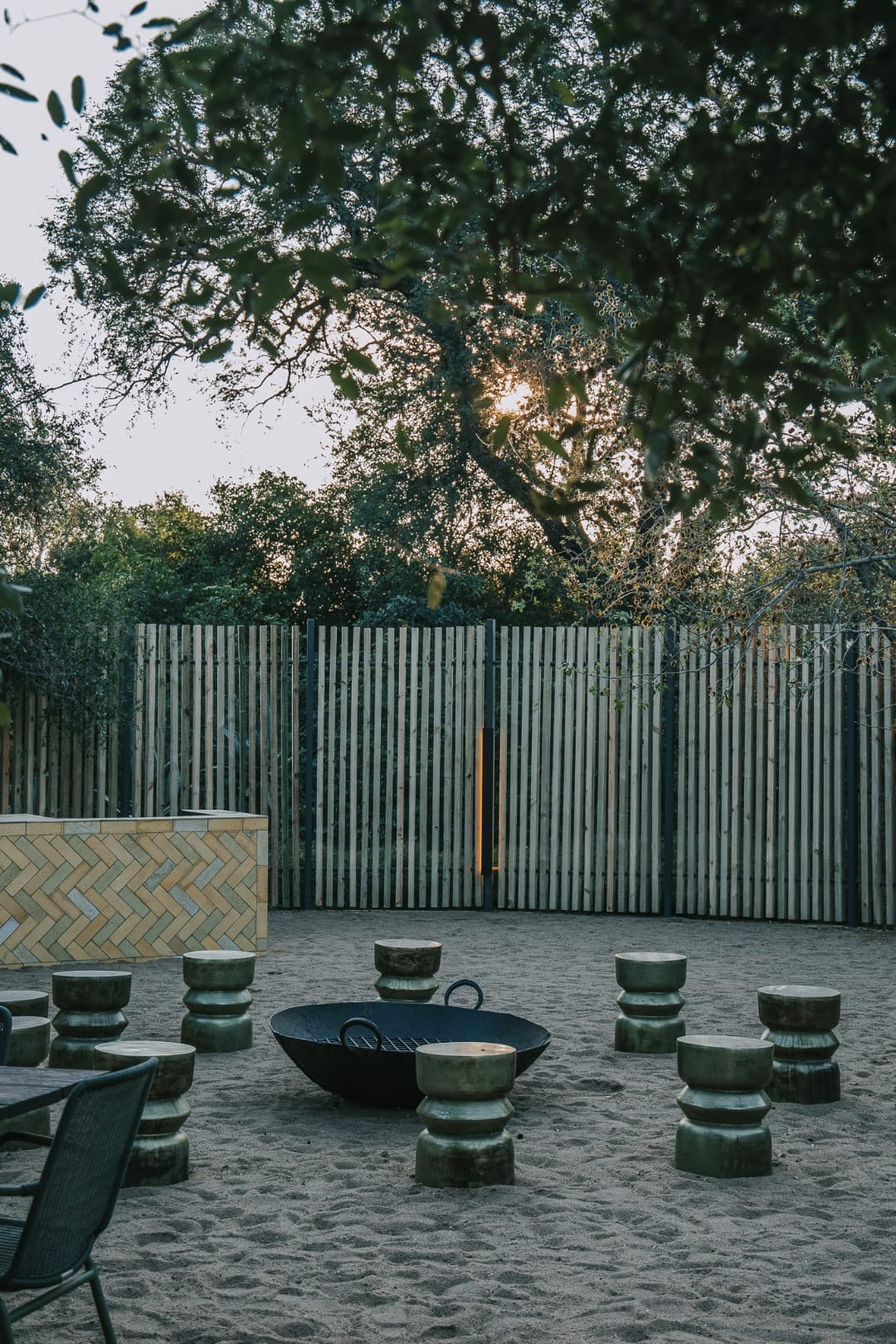
The boma, the outdoor gathering place with a fire pit, is almost aggressively minimal. A few stools. The sky. The trees beyond the open fence. No distraction. This is the opposite of so much safari design, which assumes you need layers of comfort to feel comfortable. Saseka trusts the setting. The design gets out of the way.
What the refresh reveals
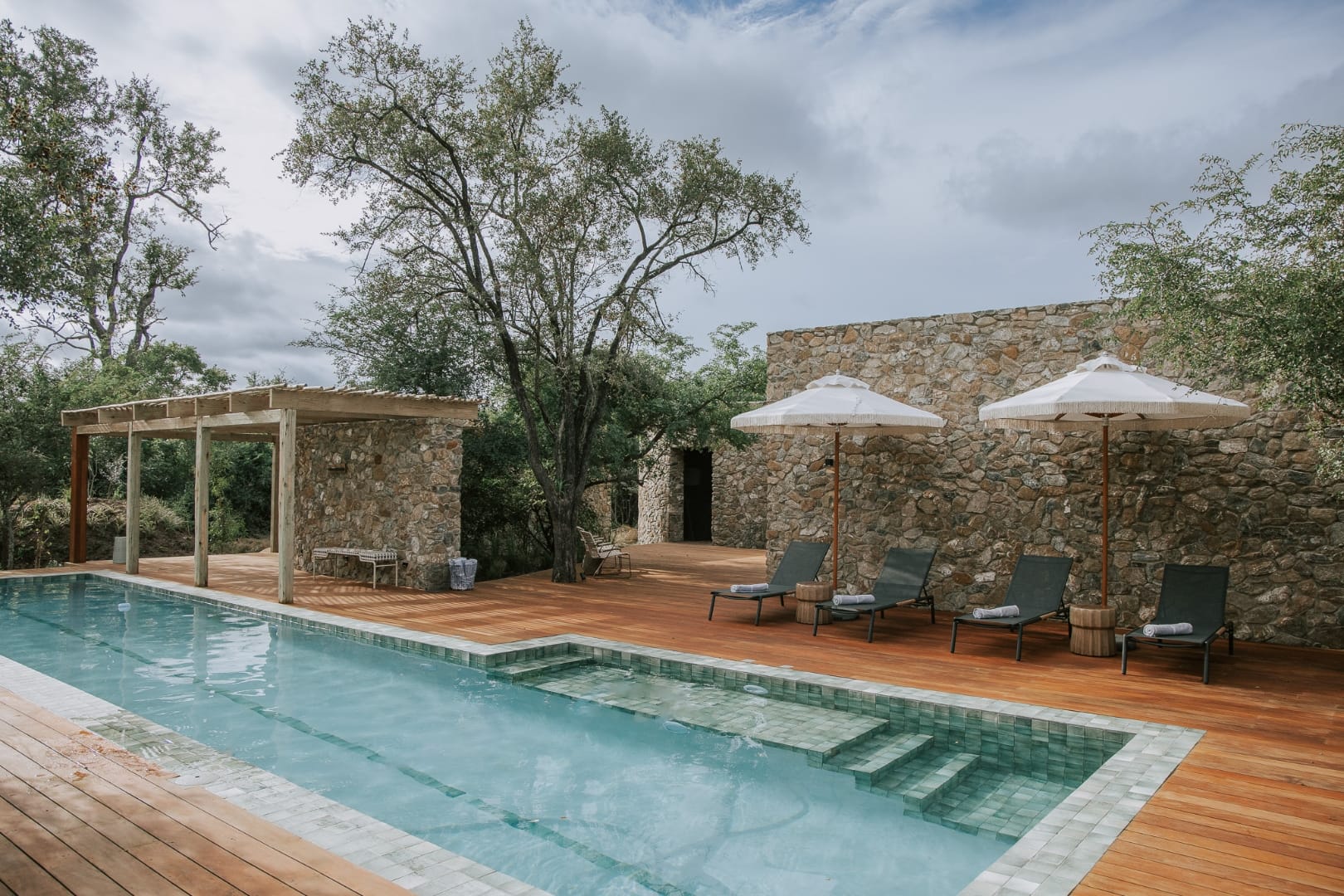
What the refresh reveals is something deeper than aesthetics. It is an approach to how people move through space. The old structures were kept. The new areas added, the gym, the pool, the expanded dining, slot into the existing logic rather than imposing a new one. The materials talk to each other. The sightlines are considered. You don't walk through these spaces and feel designed-to. You feel understood.
This matters for how we think about safari planning itself. When a lodge gets this kind of detail right, when every element speaks the same language, guests feel it. Not consciously. They just feel calmer, more able to actually notice what matters: the river beyond the deck, the light changing through the canopy, the guide's story about the landscape, the small sound of something moving in the bush.
Saseka's refresh isn't a redesign. It's a deepening. That distinction, between replacing and refining, might be the most important design decision of all.
FAQ
What is Saseka Tented Camp?
Saseka is a luxury safari lodge in Thornybush Private Game Reserve, in the Greater Kruger area of South Africa. The name means beautiful in Tsonga. The camp features eight tented suites perched above a bend in the Monwana River, each with a private deck, plunge pool, and outdoor shower. It was designed by Silvio Rech and Lesley Carstens, the architectural duo behind some of Southern Africa's most loved safari properties.
Where is Saseka located?
Saseka sits on a bend of the Monwana River, inside Thornybush Private Game Reserve. Thornybush shares an unfenced boundary with the Kruger National Park, which makes it one of the most wildlife-rich pockets in Southern Africa. The camp is reached via Hoedspruit airport.
What wildlife do you see from Saseka?
The camp's position above the riverbed gives regular sightings of the Big Five, plus smaller mammals and good birding. A female leopard, also called Saseka, is often seen in the area. Game drives run twice daily, early morning and late afternoon, with experienced guides and trackers.
What was included in the recent refurbishment?
Saseka was refreshed rather than rebuilt. The team kept the original structures and repurposed materials including the old decking. The upgrade added a new indoor dining area, an outdoor boma for fireside dining, an expanded bar, and a new wellness area with a gym and pool. The Little Saseka villa was also expanded.
Is Saseka suitable for families?
Children over 12 are welcome at Saseka and can join game drives when accompanied by a responsible adult. For younger families or larger groups, Little Saseka is the exclusive-use villa: it now sleeps up to six guests, with two new suites connected to the main tent by a decked walkway, a private vehicle, and a shared deck and pool.
What design elements define Saseka's aesthetic?
Saseka blends contemporary design with a nostalgic safari sensibility. The signatures are curved wooden shelving, geometric ceiling planes that echo a tree canopy, brass and copper accents, dark stone walls, and a palette drawn from the surrounding landscape: sage, dusty green, charcoal, and soft pink tones. The philosophy is restraint, and material honesty over decoration.
What makes Saseka's refresh different from a typical lodge upgrade?
It is a deepening, not a redesign. Original structures were kept, materials were repurposed, and the new facilities were integrated carefully into the existing architectural logic rather than imposing a new aesthetic. That decision, to refine rather than replace, is the most quietly radical thing about the project.
Vikki Jackson is co-founder of Marula Hill Travel. We plan boutique safaris across South Africa, Botswana, Zambia, Zimbabwe, Kenya, Tanzania, Rwanda, Uganda, Namibia, and Mozambique. We visit every lodge we sell.
If this resonated
The bush has been expecting you
Start with a conversation. We will ask what makes you want to wake up at four-thirty, and build from there.
Begin a conversation
Royal Malewane reopens: what we remember, and what the fact sheet confirms
The original Royal Portfolio property is back after months behind scaffolding. We haven't seen it yet. Here is what we know anyway.

We run on solar and we have not printed since 2019
Vikki and Sian on solar power, paper, and what a small safari company can honestly claim.

Sandringham Private Game Reserve: should you go early, or wait?
Greater Kruger's newest reserve opens in August 2026. Our honest take on who should book Sandringham early, and who should give it a few seasons.

The packing guide
What to bring on safari, what to leave at home, and the one thing no lodge can lend you. An honest packing list from the team in Hoedspruit.

How do you want to feel when you get home?
Why we plan safaris around how you want to feel when you get home, not around a pin on the map.

South Africa's online traveller declaration: what it means for your safari (and what it doesn't)
A five-minute customs form now stands between you and the arrivals hall. Here's what it is, who needs it, and what nothing to declare actually means for a normal safari guest.

Safari After Dark
Night drives reveal a different Africa. Quieter, older, more deliberate. Here's what we love about the bush after the sun goes down.

How we tailor every Marula Hill safari
We don't start with destinations. We start with you: your pace, your family, your idea of a good day in the bush.

Inside FedAir's new Baobab lounge at Hoedspruit
The new Baobab lounge at Hoedspruit airport changes how a safari begins. Vikki Jackson on the room that holds you before the bush does.

How safari pricing actually works
From the people who build the quotes. What you are really paying for, where the money goes, and how to spend it well.

Monwana, and what coming home actually means
By Vikki Jackson and Sian Loehrer. A week at the Thornybush lodge that has built its whole identity around the word home, and what we found when we tested it against the room, the drives, the afternoons and the bill.

The Mozambique dhow: a slow boat at the end of a fast trip
Why we put a dhow afternoon into almost every Mozambique trip. Sail, salt water and the long breath out after safari.

Why we built the Antarctica page
A short note from Sian on why an African safari business added Antarctica to its destination map, and how we handle a trip neither founder has yet made.

Lion Sands Ivory Lodge. What their redesign gets right
I visited Lion Sands Ivory Lodge in the Sabi Sand. The redesigned spaces are quiet, bold, and rare. Here is what they got right.

Where the money actually goes on a luxury safari
A line-by-line look at what you're actually paying for on a luxury African safari — and what a quote that looks light is usually hiding.

Bazaruto vs Quirimbas: which Mozambique archipelago is right for you?
How to choose between Mozambique's two great archipelagos for a bush-and-beach trip. Geography, lodge feel, when to go.

Sabi Sand or Kruger
Two reserves, one fence line, very different mornings

What is the best month to visit Cape Town?
Cape Town rewards you differently in every season, but March to May is the window most of our clients come back to.

What Singita Lebombo's 2026 redesign tells us
Lebombo reopened March 2026 warmer, quieter, more art-led

Gorilla trekking, Uganda or Rwanda
Two countries, the same forest, two very different days

Do you need travel insurance for a safari
What safari travel insurance must cover, and why standard policies fall short

How two women from outside the travel industry built a luxury safari brand from Africa
We are the two women behind Marula Hill. One of us came from IBM, the other from MARS Southern Africa. Here is the long version of how a private safari business gets built from outside the travel industry.

Sole-use villa safaris in Africa
What sole-use villa safaris mean in practice, who they suit, and what to ask

Why Rwanda is the cleanest country in Africa
A plastic-bag ban from 2008. A mandatory community work morning on the last Saturday of every month. The system behind Rwanda's cleanliness, explained.

A family vacation in Cape Town that works for all ages
Cape Town suits kids and grown-ups equally well: beaches, penguins, aquariums, and a city that's easy to move around.