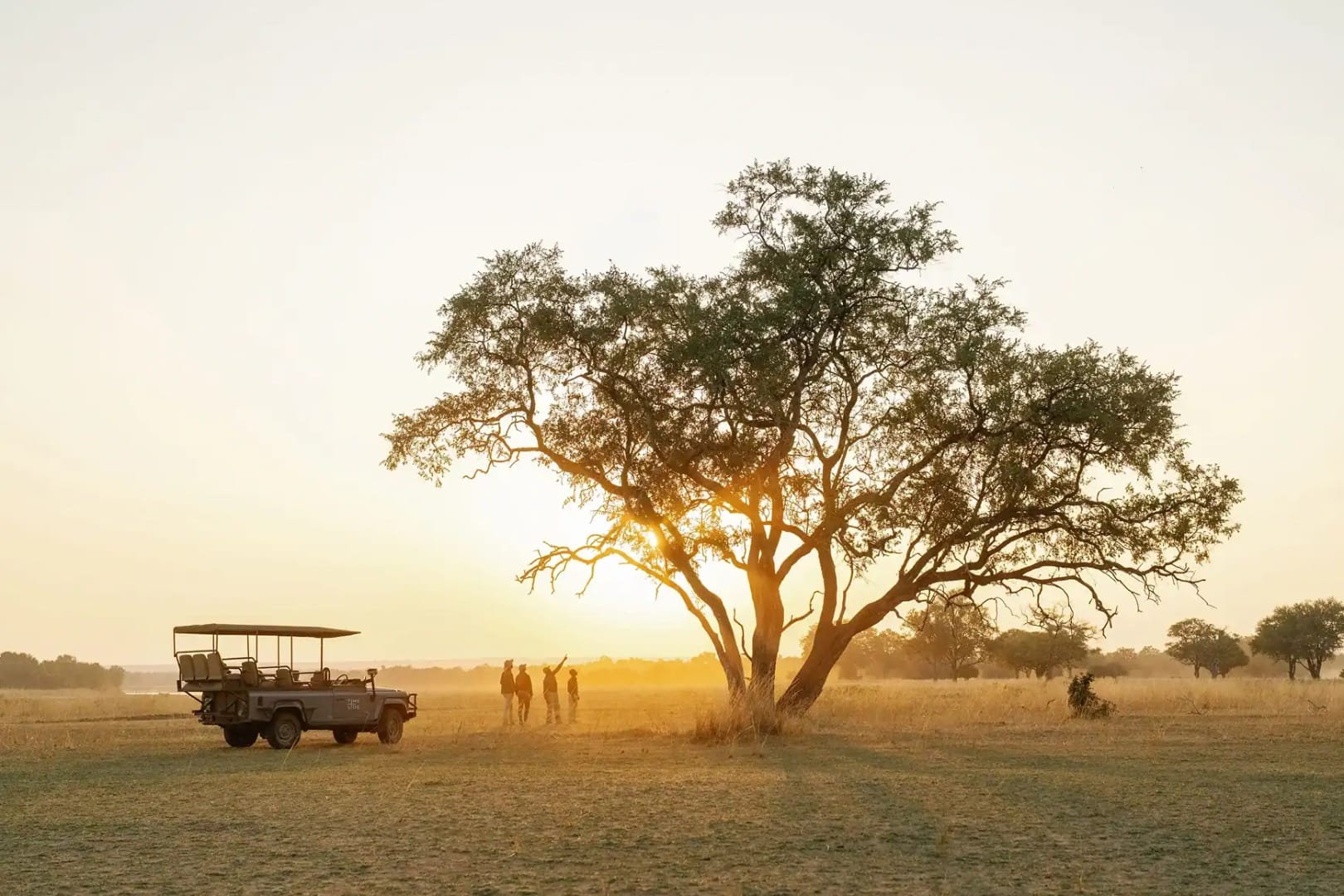
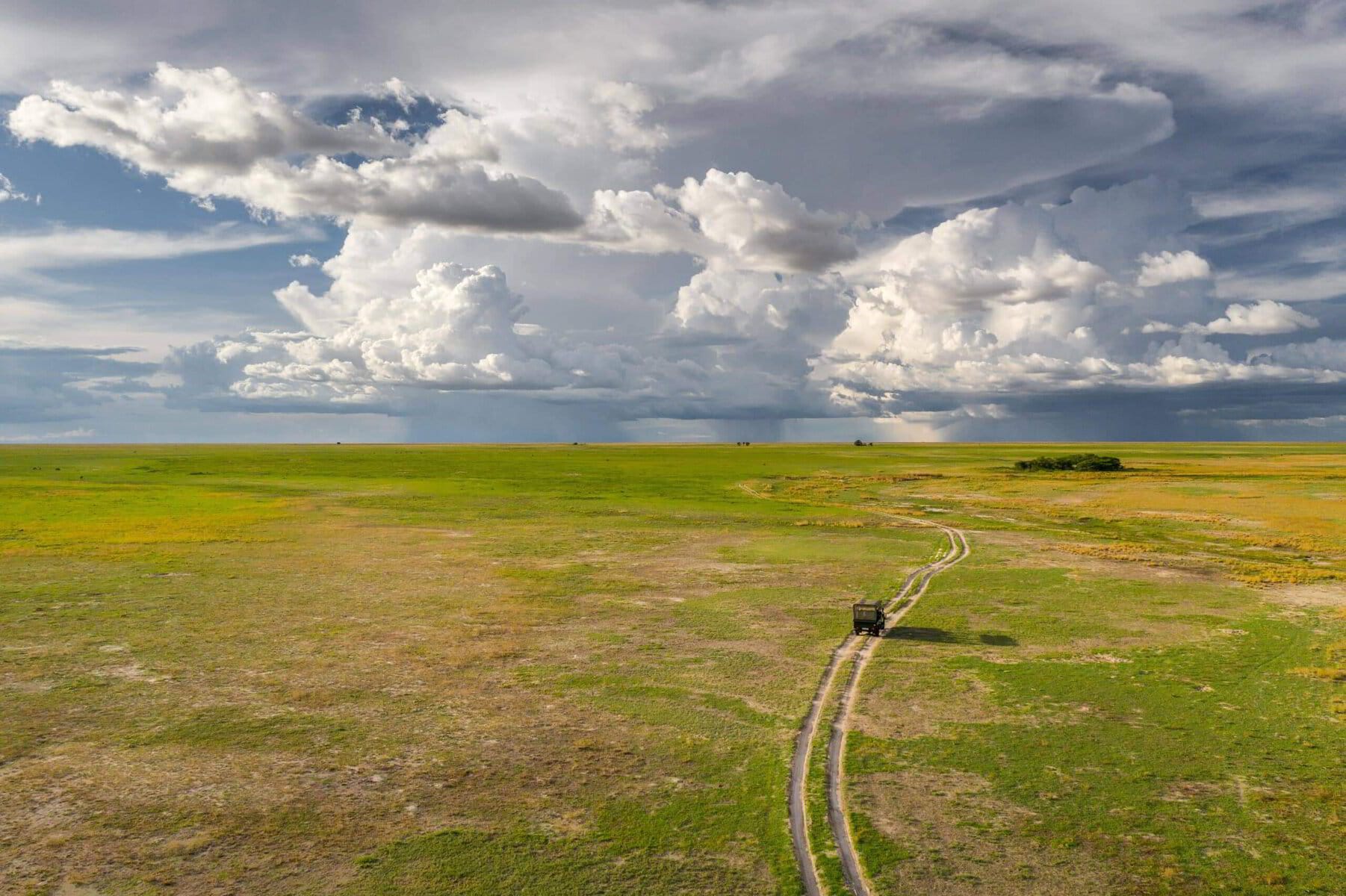
A safari vehicle parked under a sprawling acacia at golden hour, guide and guests on foot beside it in the open Luangwa floor, dust hanging in the backlight

Zambia Safari Guide

Zambia, the home of the walking safari

Smaller lodges, longer mornings, and walking guides with a depth of field experience few places match. Safari at the pace it was meant to be experienced.

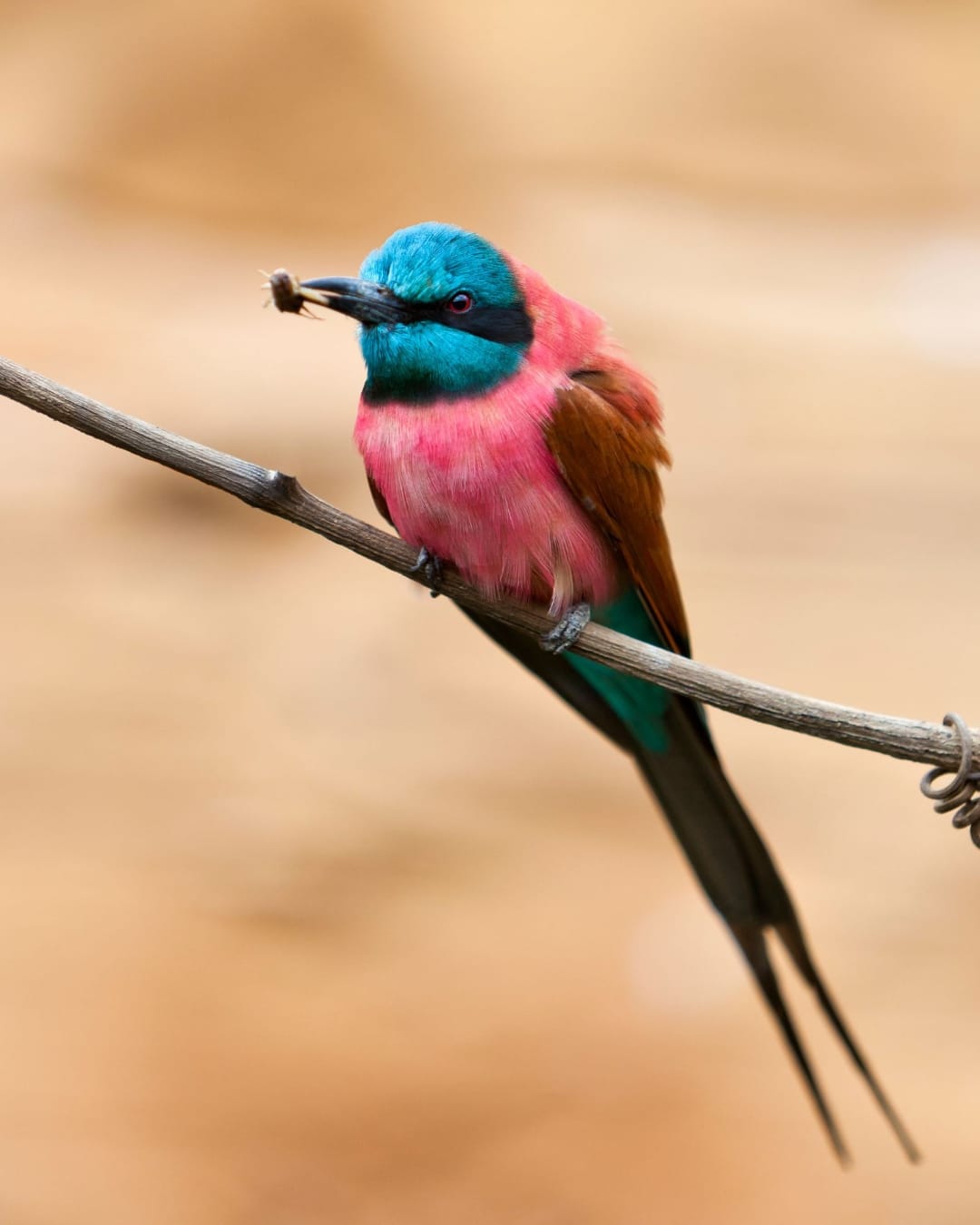
A northern carmine bee-eater on a slender branch with a bee in its beak, the soft pink and ochre wall of the Luangwa River bank behind it

Why Zambia

A country built around three rivers and a waterfall

Zambia is shaped by water. The Zambezi runs along the southern border and over the lip of Victoria Falls. The Luangwa, a tributary of the Zambezi, runs through the eastern valley and supports one of the highest leopard densities in the region. The Kafue runs west and floods the Busanga plain, drawing herds of red lechwe and the lions that follow them. Most of the country's safari lodges sit on one of these rivers.

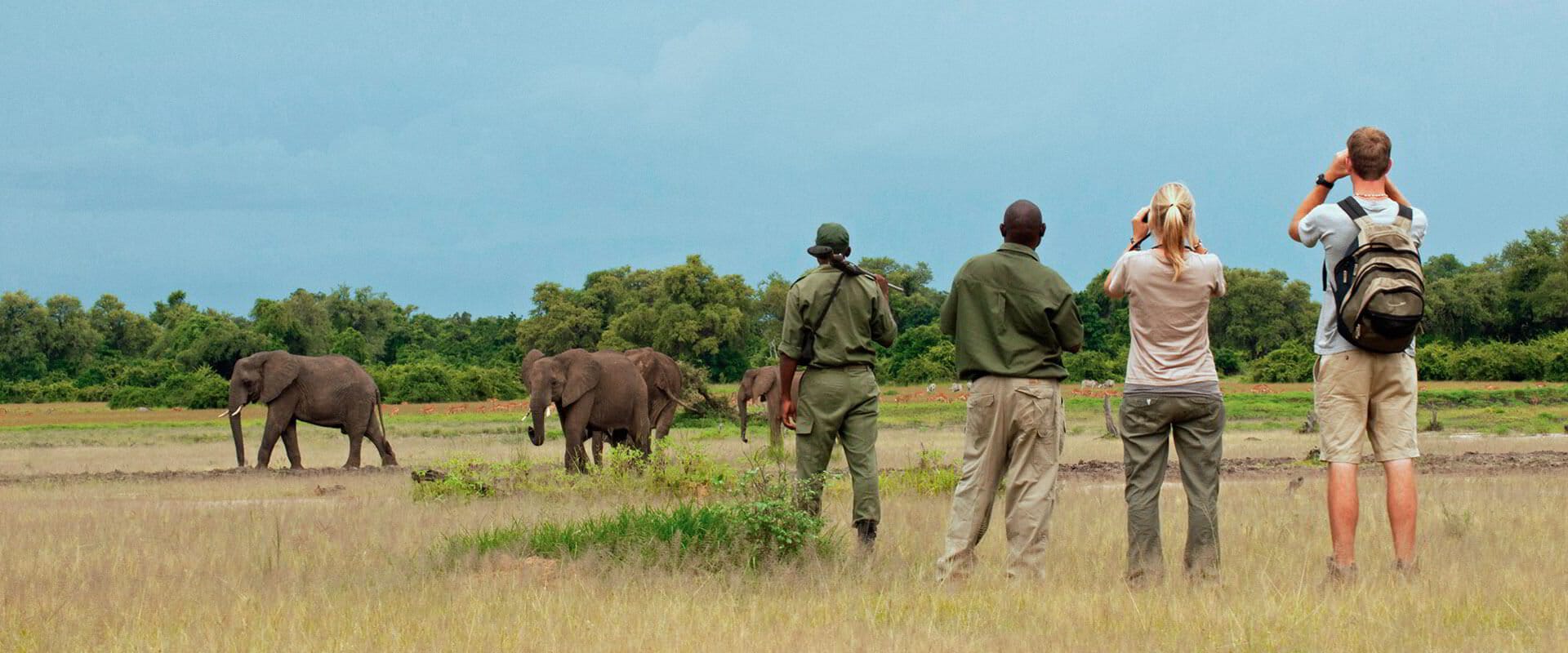
The walking safari was invented here. Norman Carr started leading guests on foot in the South Luangwa in the 1950s, and the practice spread through the country and out to the rest of Africa. Zambian walking guides build their standing over years in the field rather than through a single fixed qualification. Walking three or four mornings out of seven is part of how a Zambia trip is paced, and it changes the way you see the bush.

The country has stayed quieter than most of its neighbours. Camps are small (eight to twelve guests at full capacity, sometimes six), the parks are vast, and you will rarely share a sighting with another vehicle. For travellers who have done the classical East and Southern African trips and want something slower, more intimate, and more skilled, Zambia is the right next country.

Zambia also pairs naturally outward. With Botswana for travellers who want both halves of the great central African ecosystem in one trip. With Zimbabwe for the full Zambezi, where Mana Pools and the Lower Zambezi sit opposite each other across the river. With Malawi for a freshwater finish on the lake. Most of the journeys we plan run twelve to sixteen nights when paired this way.

What this country does best

What Zambia does best

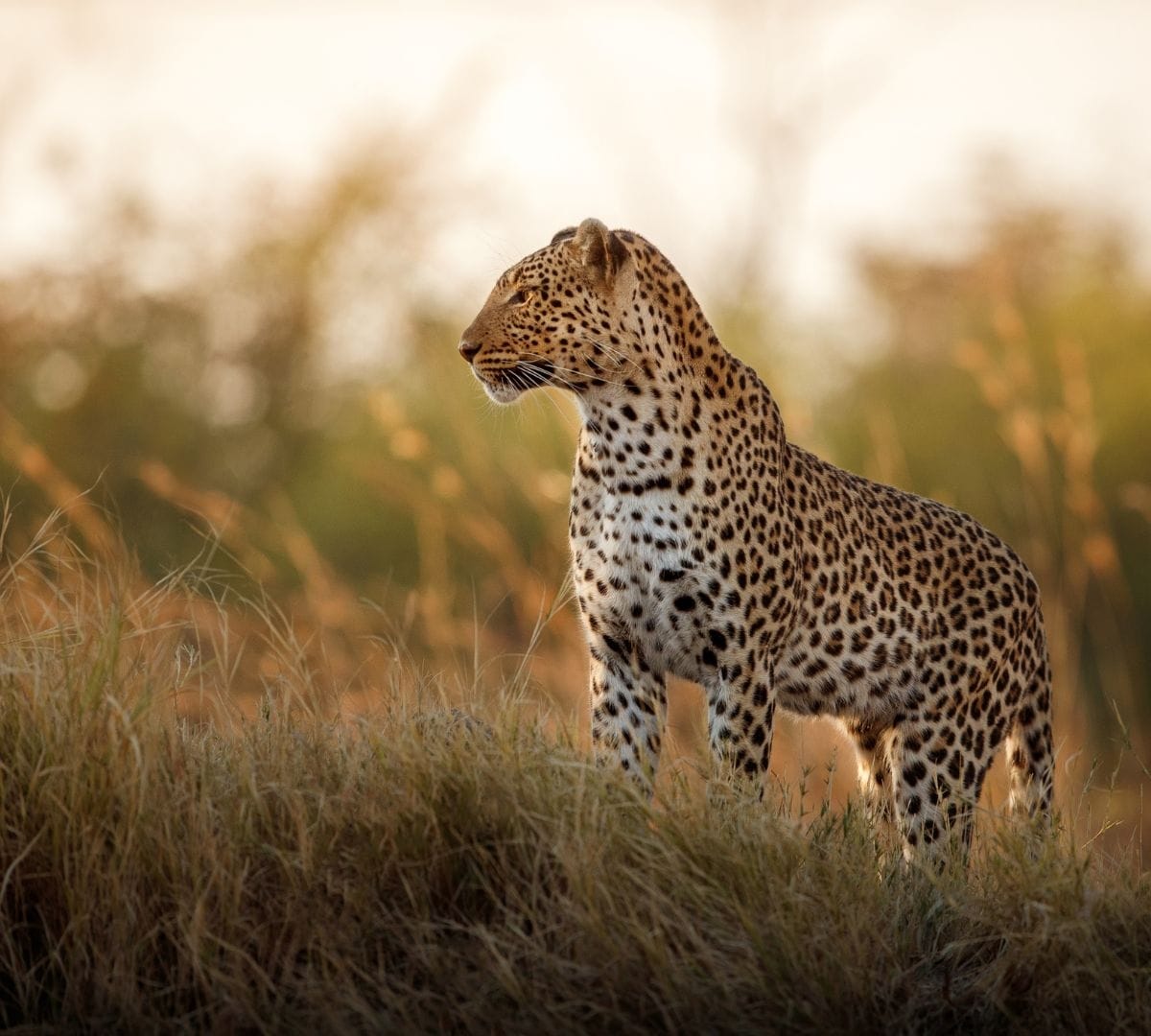
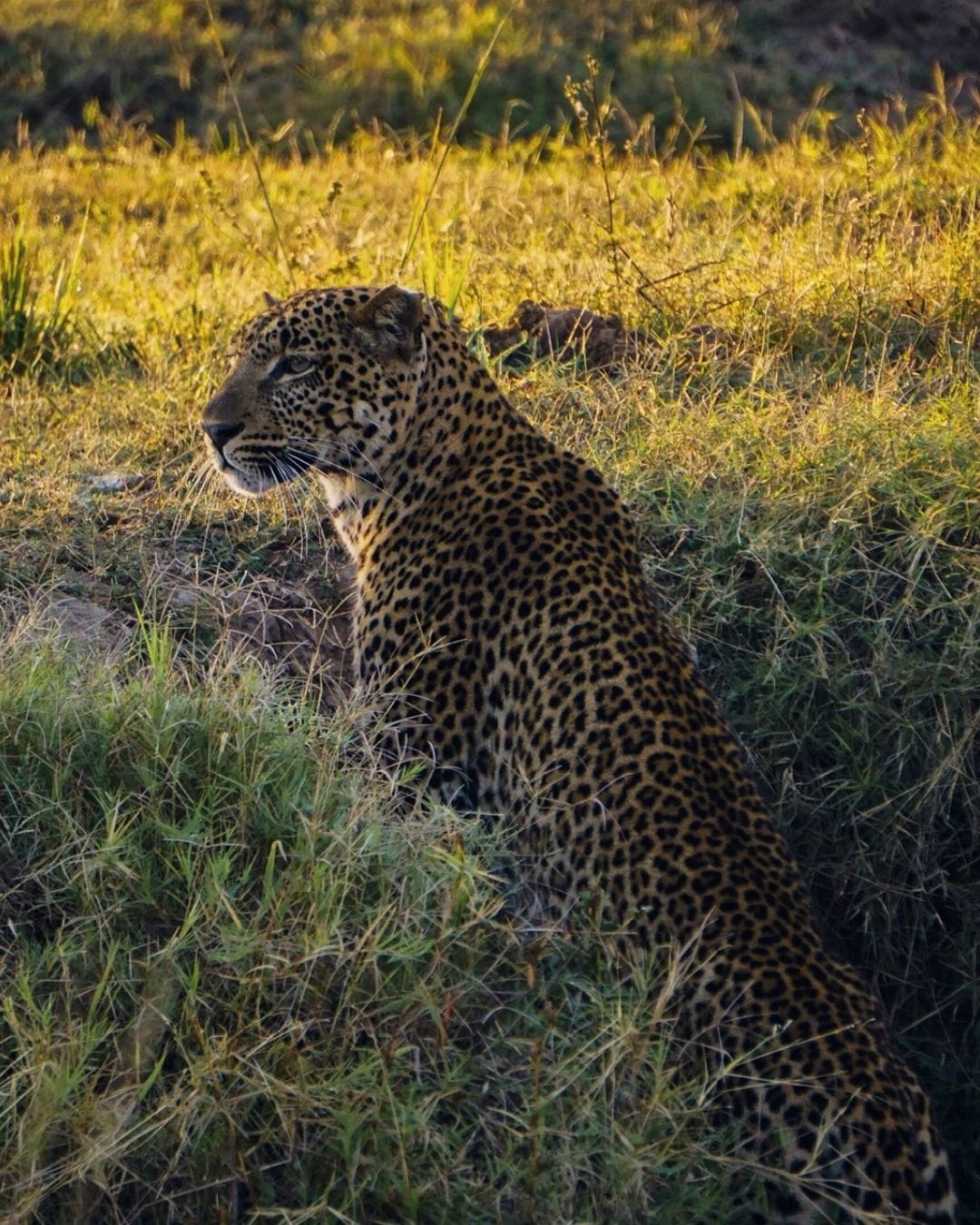
A leopard in profile on a grassy rise in the South Luangwa at golden hour, warm bokeh of dry-season bush behind her
01

South Luangwa for leopards and walking

The country's flagship park. Some of the highest leopard densities in Africa, exceptional walking guides, and night drives that produce regular leopard, hyena, civet and porcupine sightings. The Luangwa River is the spine of it. Three nights minimum, four if you can. We almost always start a Zambia trip here.

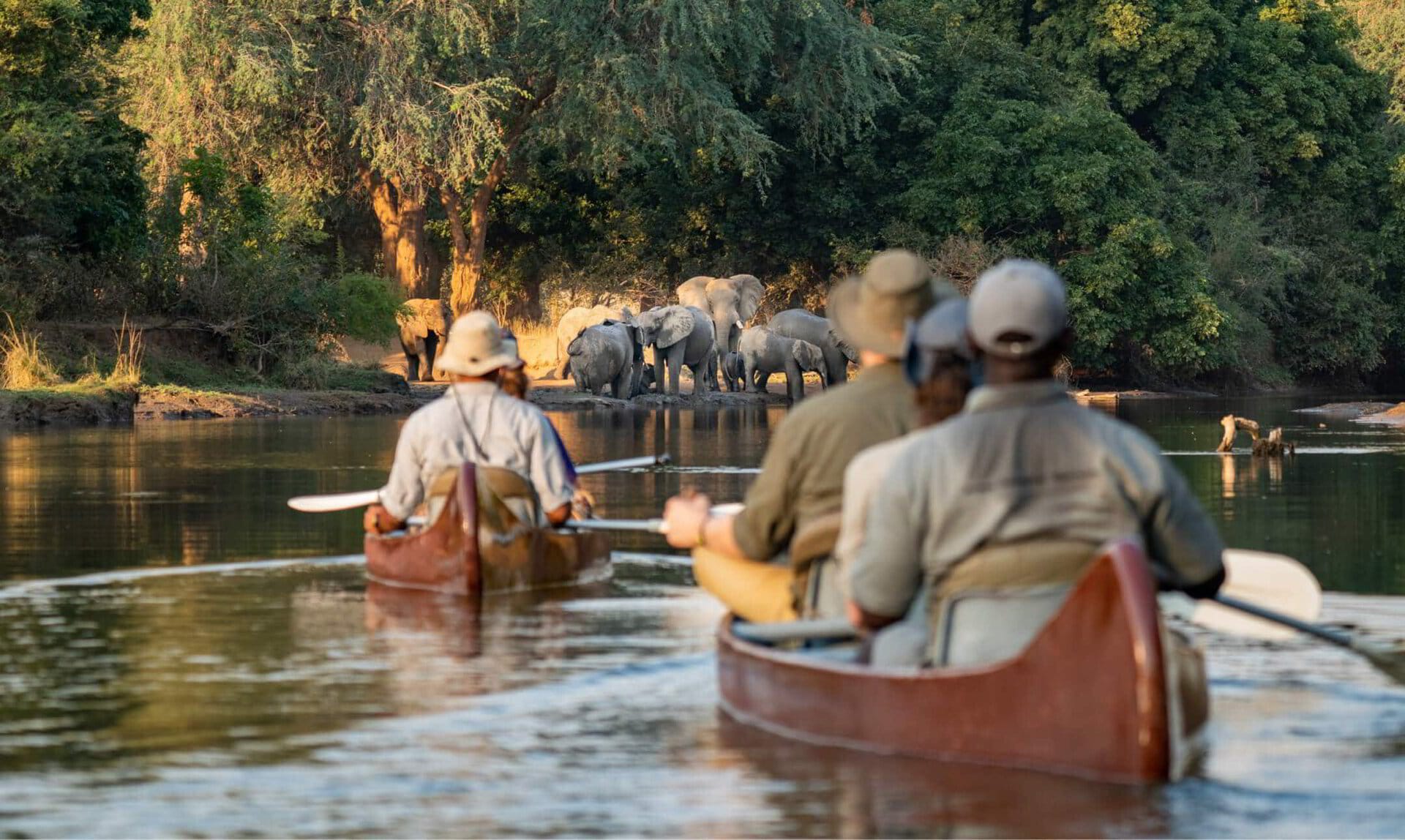
Two canoes paddling on the Lower Zambezi at golden hour towards a herd of elephants drinking at the riverbank, riverine forest behind
02

Canoeing the Lower Zambezi

Mornings paddling between elephants on the riverbank, fish eagles overhead, hippo pods to navigate around. Afternoons on game drives or boats. Few activities on the continent feel as quietly dramatic. The Lower Zambezi is also Zambia's strongest big-cat park after the Luangwa.

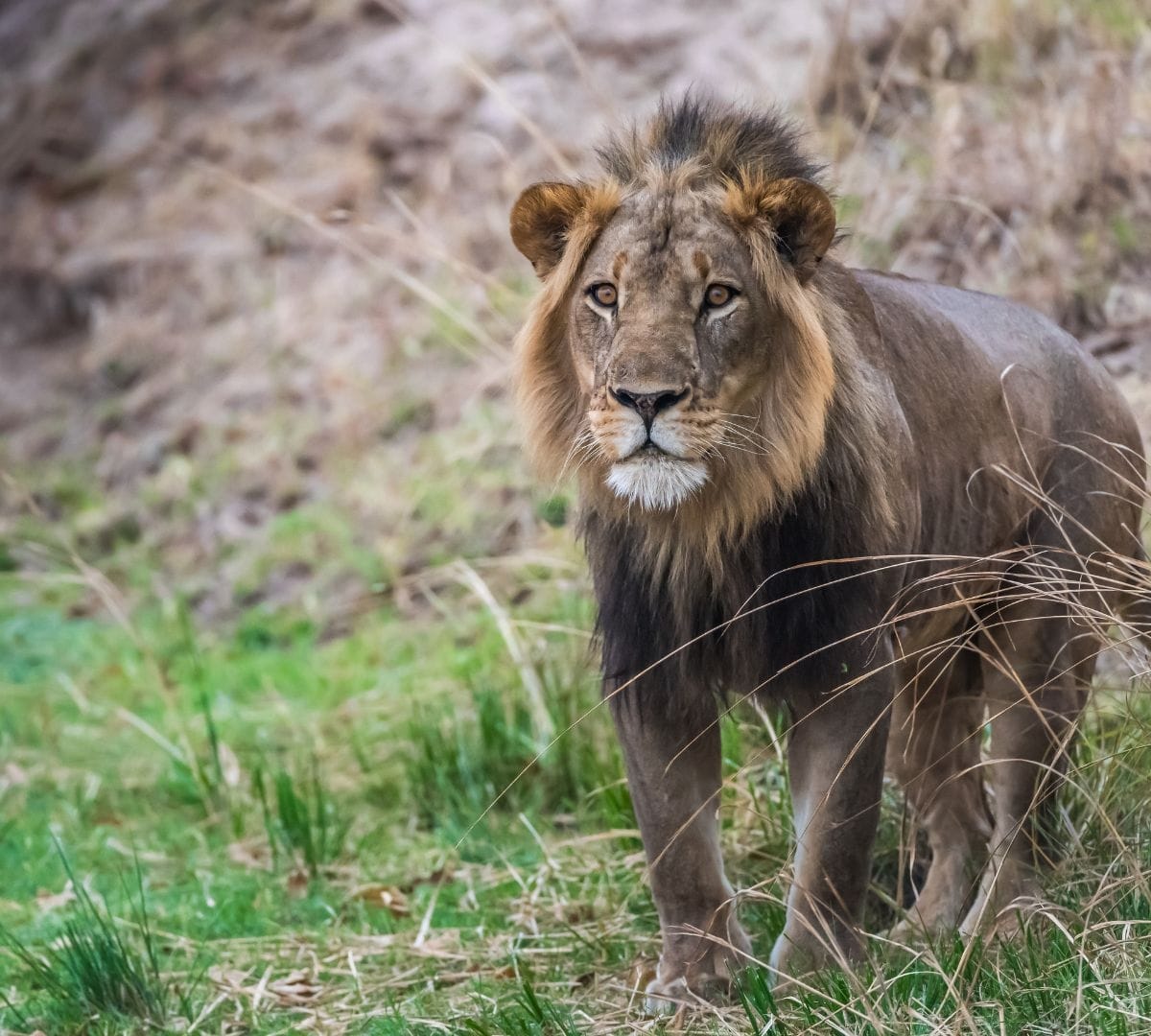
Dark-maned male lion standing on the dry edge of the Busanga floodplain in Kafue, fresh green grass coming through after the floodwaters
03

The Busanga floodplain in Kafue

A vast seasonal grassland in the north of Kafue National Park. Herds of red lechwe, resident lion, cheetah on the open plains. Reachable for only four months of the year, July to October. The country's most cinematic single landscape, and the kind of place that justifies a flying camp.

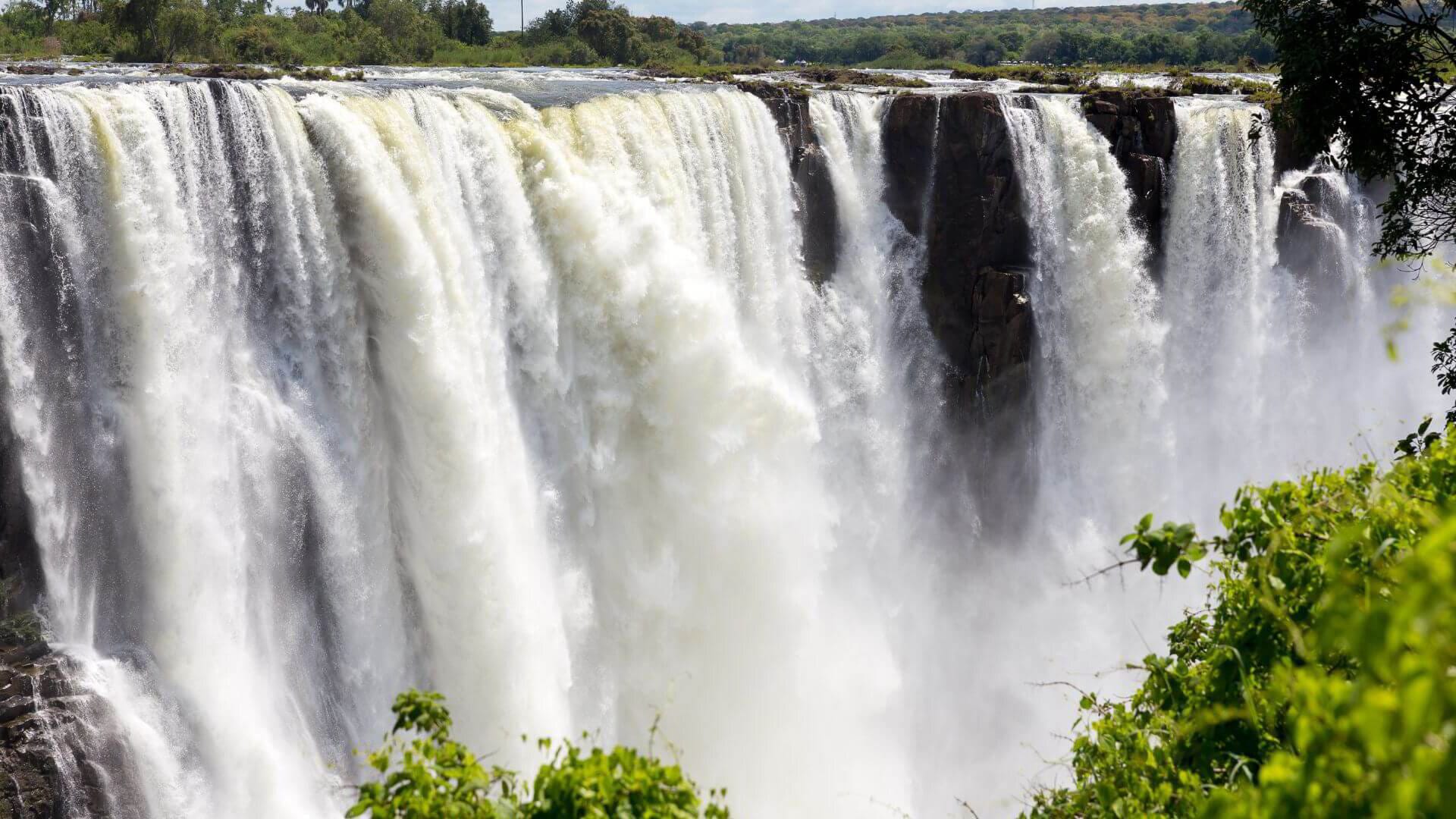
Victoria Falls viewed from the Zambian side with mist rising from the gorge
04

Victoria Falls from the Zambian side

The Zambian side gives you Knife-Edge Bridge, Devil's Pool in low water from August to December, and a quieter, less commercial experience than the Zimbabwean side. Most clients spend two or three nights at Royal Chundu or Tongabezi at the start or end of a Zambia trip.

South Luangwa game drive in the dry season with the riverine bush and an open vehicle
05

Walking with the country's best guides

South Luangwa's walking guides are among the most experienced on the continent. Three-hour morning walks at a pace that lets you read the bush properly. Tracks, signs, smaller wildlife, and the way the bush tells you what has been moving through it. We pair walking and driving across most Zambia itineraries.

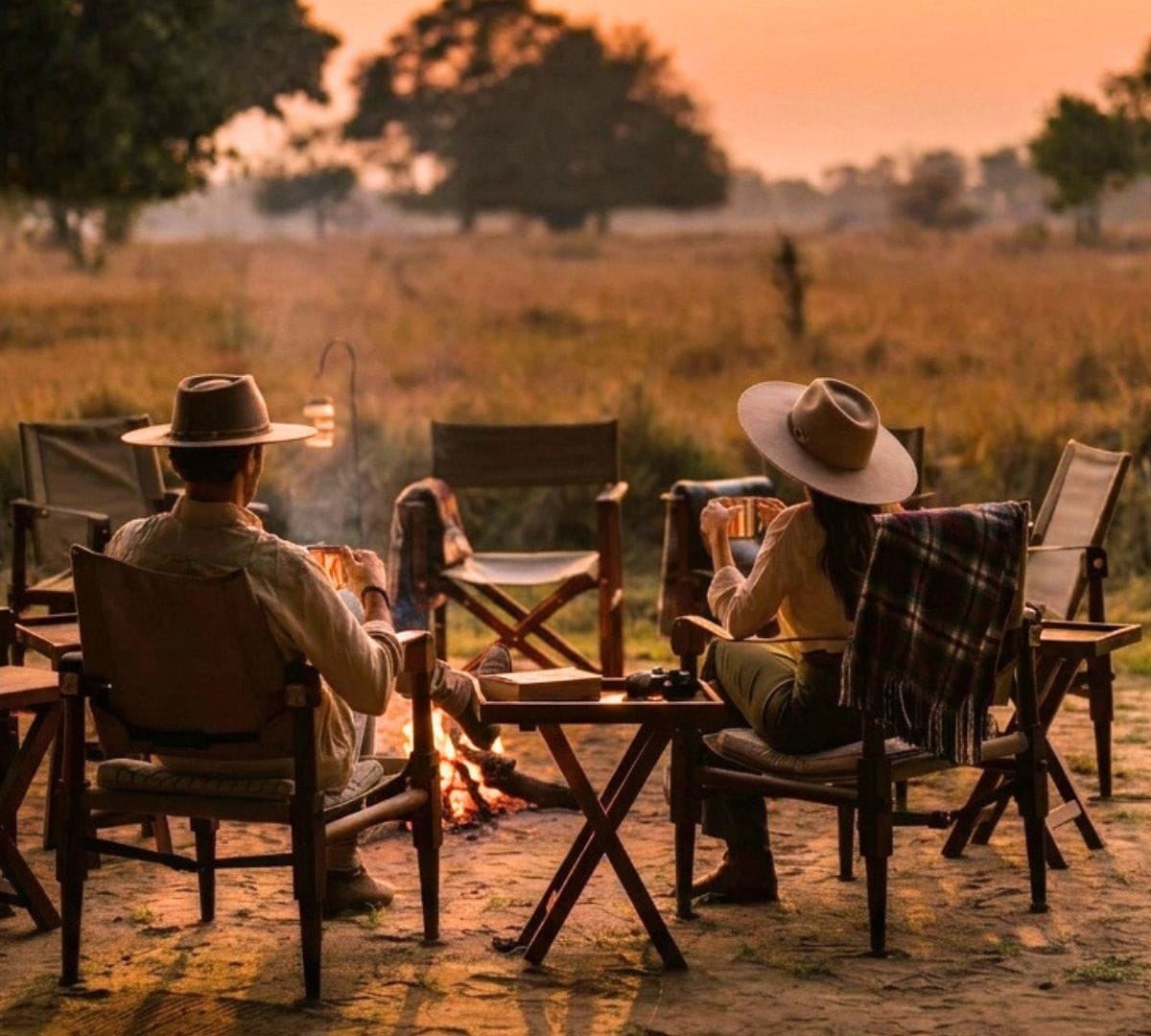
Two guests in safari hats sitting by a small fire at a properly small bush camp at golden hour, lantern lit, open floodplain stretching out behind
06

Bush camps that are properly small

Properly small bush camps. Eight guests at full capacity, often less. Cold beers around the fire, dinner at one long table, the bush ten metres from your tent. The way safari is meant to be.

Wide editorial photograph of the Zambezi River at golden hour, the spine of Zambia's safari country

Where, specifically

Where, specifically

Leopard sitting upright in tall golden grass at the edge of the Luangwa Valley, classic South Luangwa profile in the late afternoon light

01 · The walking valley

South Luangwa

The flagship park and the headquarters of the walking safari. Some of the highest leopard densities in Africa, exceptional night drives, and a network of small bush camps that move walking guests between them. Three to four nights at minimum.
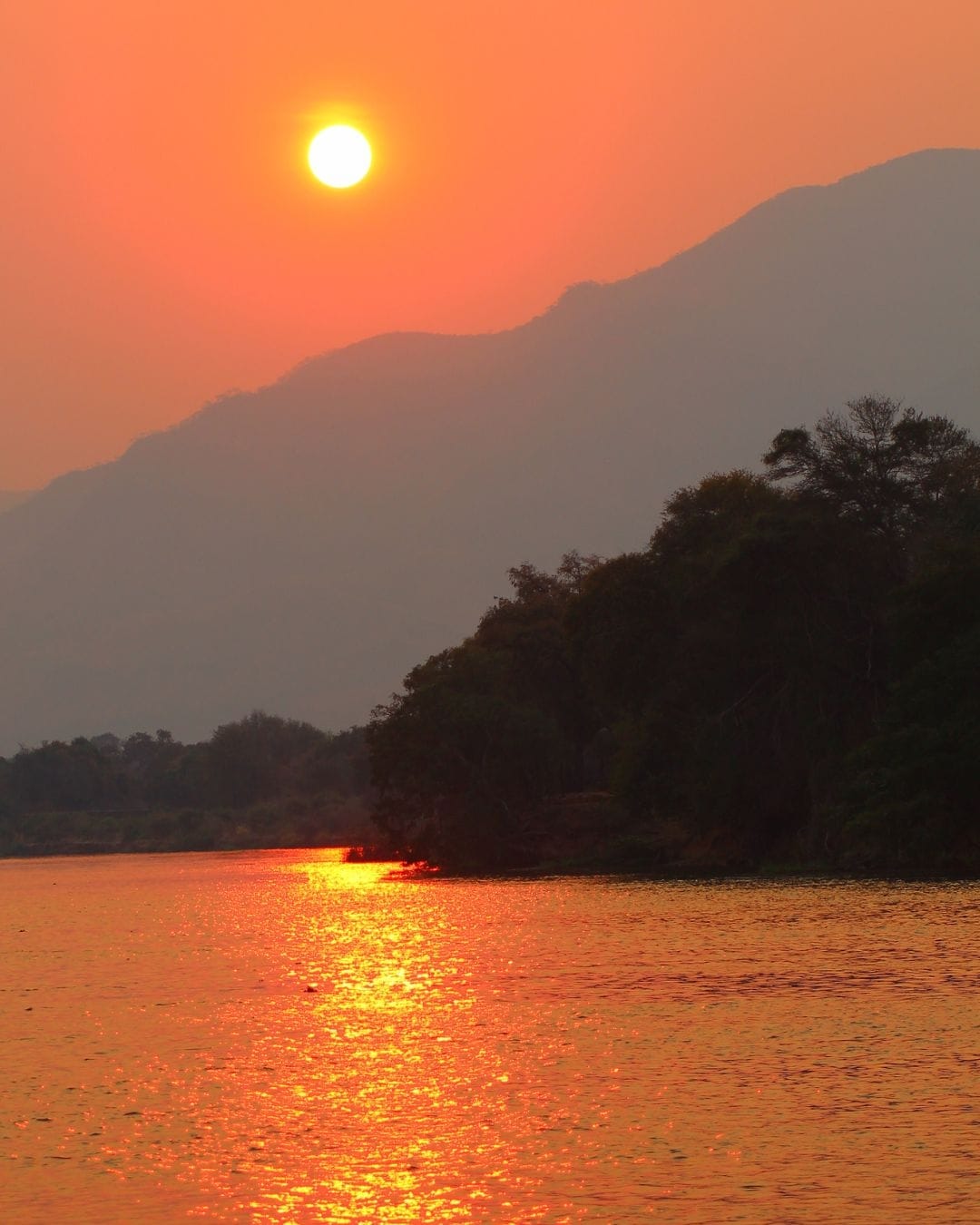
Sunset over the Lower Zambezi River with the escarpment silhouetted behind and riverine forest on the bank, the sun reflecting off the water

02 · The canoe country

Lower Zambezi

Canoeing, fishing, boating, game drives. The Lower Zambezi National Park sits opposite Mana Pools in Zimbabwe and shares the same wildlife. Strong elephant numbers, leopard along the riverine forest, and one of the most peaceful safari experiences on the continent.

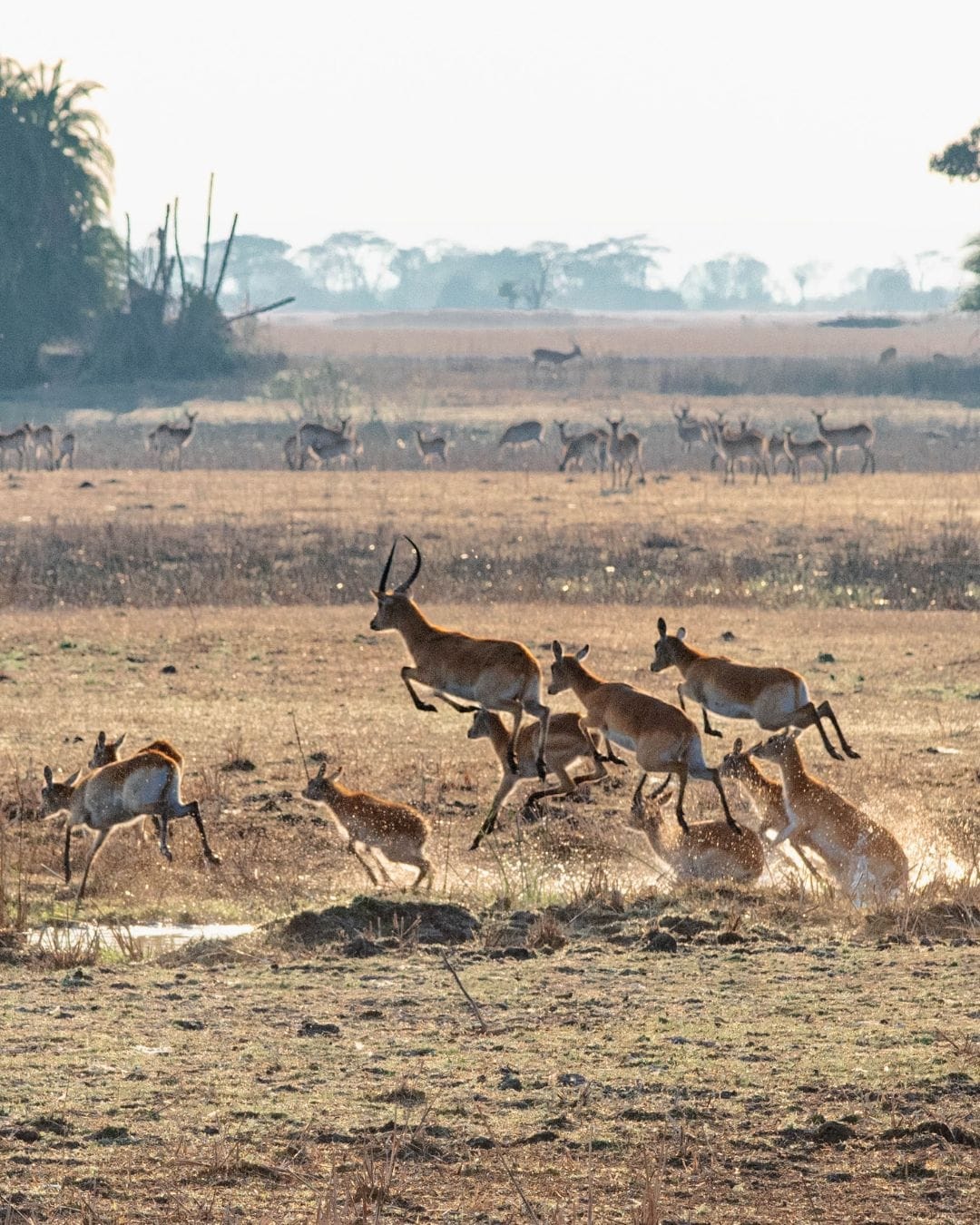
Red lechwe leaping across the Busanga floodplain in Kafue at golden hour, palm islands and a larger herd grazing in the distance

03 · The floodplain

Kafue & the Busanga plains

Zambia's largest national park. The Busanga floodplain opens up July to October, drawing red lechwe, large lion prides and cheetah onto the seasonal grassland. Reachable only by light aircraft. The southern Kafue offers river-based lodges for a quieter alternative.

Victoria Falls viewed from the Zambian side with mist rising from the gorge

04 · The Falls and the city

Victoria Falls & Livingstone

The Zambian side of Victoria Falls. Knife-Edge Bridge, Devil's Pool from August to December, microlight flights over the gorge. Quieter than the Zimbabwean side and a strong start or end to a Zambia trip. Two nights is enough.

Leopard sitting upright in tall golden grass at the edge of the Luangwa Valley, classic South Luangwa profile in the late afternoon light
Sunset over the Lower Zambezi River with the escarpment silhouetted behind and riverine forest on the bank, the sun reflecting off the water
Red lechwe leaping across the Busanga floodplain in Kafue at golden hour, palm islands and a larger herd grazing in the distance
Victoria Falls viewed from the Zambian side with mist rising from the gorge

01 · The walking valley

South Luangwa

The flagship park and the headquarters of the walking safari. Some of the highest leopard densities in Africa, exceptional night drives, and a network of small bush camps that move walking guests between them. The Luangwa River is the spine of the valley, and most camps sit on its banks or on the oxbow lagoons left by old river channels. We almost always start a Zambia trip here. Three to four nights at minimum, and many of our clients add a fifth once they understand the pace of the place.

02 · The canoe country

Lower Zambezi

Canoeing, fishing, boating, game drives. The Lower Zambezi National Park sits opposite Mana Pools in Zimbabwe and shares the same wildlife and the same stretch of river. Strong elephant numbers, leopard along the riverine forest, and one of the most peaceful safari experiences anywhere on the continent. Three nights pairs well with three nights in the Luangwa. The flagship lodges sit along the river, and the canoeing programme is the activity to plan around.

03 · The floodplain

Kafue & the Busanga plains

Zambia's largest national park, at some 22,400 square kilometres. The Busanga floodplain in the north opens up between July and October, drawing red lechwe, large lion prides and cheetah onto the seasonal grassland. A small number of established lodges sit on the plains here, reachable only by light aircraft. The southern Kafue offers river-based lodges on the Kafue and Lufupa rivers. A specialist destination, often added on a return trip.

04 · The Falls and the city

Victoria Falls & Livingstone

The Zambian side of Victoria Falls. Knife-Edge Bridge for the close-up view, Devil's Pool from August to December, microlight flights over the gorge, and the colonial bones of Livingstone town for a city day. Quieter than the Zimbabwean side and a strong start or end to a Zambia trip. Two nights is enough. The lodging is Royal Chundu, Tongabezi or the Royal Livingstone, and we pair this stop with a flight straight into the Luangwa or the Lower Zambezi for the bush leg.

When to be here

We don't ask when you want to go. We ask what you want from it

Zambia is a strongly seasonal country. Three or four windows work, and most camps close outside them. Four ways to think about it.

For the walking

Luangwa at peak

July – October

Dry season established. Bush thinning, game concentrating on the river, walking and night drives at their best. Cool mornings, hot middays, dry nights. Peak rates and our most-recommended window for first-time Zambia travellers.

For Busanga

Kafue's floodplain in season

August – October

The Busanga camps in northern Kafue are reachable only by light aircraft and only when the floodwaters have receded. Lechwe herds, lion prides, the country's most cinematic landscape. Three to four nights, paired with the Luangwa or Lower Zambezi.

For the canoes

Lower Zambezi at flow

April – November

The Lower Zambezi is workable from April when the rains end through November before the next rains begin. June to October is the strongest window, with cool mornings and concentrated game on the riverbanks. Canoe activities run throughout this period.

For the green country

Emerald season specialists

December – March

The rains turn the country a deep green and most safari lodges close because the roads become impassable. A handful of specialist emerald-season camps stay open in the South Luangwa for the lush landscapes, the calving wildlife, and the lowest rates of the year. A specialist's window with strong rewards for the right traveller.

Zambia month by month

JanuaryJan
FebruaryFeb
MarchMar
AprilApr
MayMay
JuneJun
JulyJul
AugustAug
SeptemberSep
OctoberOct
NovemberNov
DecemberDec
  • Peak dry · Jul, Aug, Sep, Oct · walking and game viewing at their best, Busanga open, highest rates
  • Dry begins · Jun · cool mornings, bush thinning, strong value before peak
  • Shoulder · Apr, May, Nov · rains ending or beginning, lower rates, quieter camps
  • Emerald season · Dec, Jan, Feb, Mar · rains, lush bush, most camps closed, specialist windows only
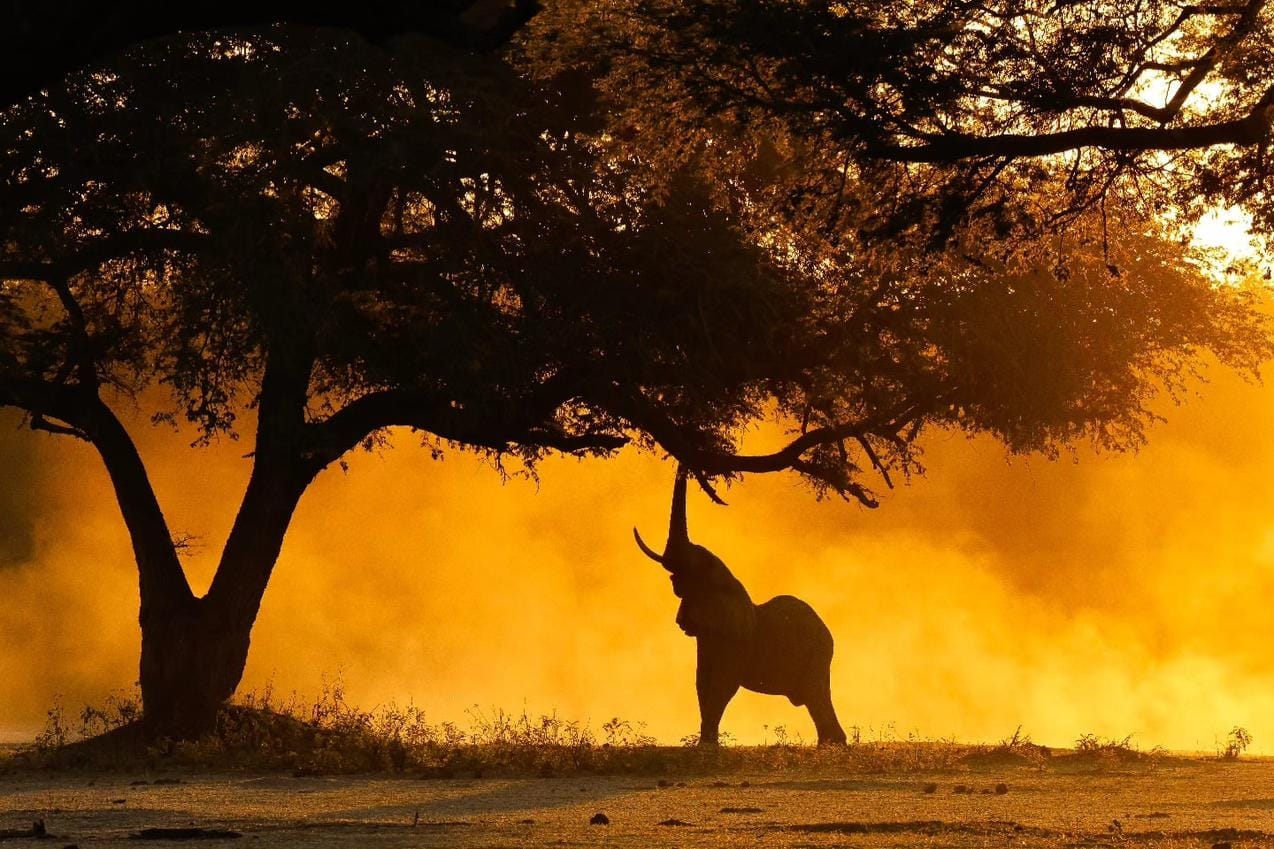
Bull elephant silhouetted under a winterthorn tree at sunset, dust catching the golden light, classic Zambia riverine scene

A signature Zambia itinerary

Ten nights on the Luangwa and the Zambezi

Five nights at Chinzombo on a private bend of the Luangwa River, walking the valley where the walking safari was invented, then a scenic flight south to Chongwe on the Lower Zambezi for canoeing past buffalo herds, tiger fishing at dusk, and game drives through the floodplains. Two of the great riverine reserves, paced properly.

  • Nights10
  • RouteSouth Luangwa · Lower Zambezi
View sample itinerary →

A starting point, not a fixed package. We rebuild every Zambia itinerary around the traveller.

What it costs

What a Zambia safari costs

Per person, per night, sharing. Fully inclusive of accommodation, meals, drinks, twice-daily activities (game drives, walking, boating, canoeing), park fees and lodge transfers. Light-aircraft transfers between regions add $300 to $600 per person per leg, and the better itineraries use them.

4-star plus

From $700 to $1,200

per person, per night, sharing

5-star

From $1,200 to $2,400

per person, per night, sharing

5-star premium

From $2,400 to $4,200

per person, per night, sharing

Zambia peak season runs late June to October, when the dry season concentrates wildlife on the rivers and walking is at its best. Park fees of $25 to $35 per person per day sit on top of camp rates and are typically included. Emerald season (December to March) brings the lowest rates but most camps close briefly because the access roads become impassable. A 9 to 12 night 5-star Zambia itinerary works out at roughly $11,000 to $18,000 per person all-in including internal flights.

Is Zambia right for you

Best for, and not ideal for

Walking-safari travellers If walking is the activity you most want from a safari, Zambia is the country built for it. The guides carry a depth of walking experience few places match, the walking is built into every itinerary rather than added as a side activity, and the Luangwa Valley is the place where the genre was invented.
First-timers wanting Big Five every day Zambia delivers exceptional leopard and high elephant numbers, but rhino are scarce and the parks are walked rather than driven heavily. First-time safari clients who want sheer wildlife abundance and a guaranteed Big Five are usually better off starting in Botswana, Kenya or South Africa.
Repeat safari travellers Most of our Zambia bookings are second, third or fourth African trips. Clients who already know what they like, who want smaller camps, fewer vehicles, and more skilled guiding. Zambia rewards experience, and the experience changes how you read the bush for every safari that follows.
Travellers wanting variety in landscape Zambia is mostly riverine miombo woodland and floodplain. It does not offer the dunes of Namibia, the highland forests of Rwanda, or the coastal contrast of Kenya. For landscape variety on a single trip, we pair Zambia with one of its neighbours rather than building everything inside the country.
Photographers and naturalists The leopard density in South Luangwa, the bird life along the rivers, and the small-camp culture that lets you stay out longer with a single subject all combine into one of the strongest photography destinations on the continent. The walking guides are also naturalists in the older sense of the word, and the briefings reflect it.
Travellers on a tight schedule Zambia takes time. Getting to South Luangwa or the Lower Zambezi involves a connection through Lusaka and a light aircraft, and the camps reward longer stays rather than overnights. Seven nights is the practical minimum. For shorter African breaks, South Africa's Sabi Sand or Kruger area is a better fit.
Conservation-minded travellers Zambia's safari sector is dominated by small, owner-operated camps with long-standing conservation partnerships. Conservation South Luangwa, the Kafue Conservation Group, the African Parks model at Liuwa Plain. Your bed-night fees fund the model directly. Few destinations on the continent let your safari budget do as much practical conservation work.
Travellers wanting a beach finish in the same country Zambia is landlocked. The classical bush-and-beach pairing requires a connecting flight to Mozambique, Mauritius, the Seychelles or the Kenyan coast. We plan this regularly, and the routings work, but it adds a day at each end and a separate set of malaria considerations.

Typical length: 7 to 12 nights, across two or three regions.

Most trips are not one country

What Zambia pairs with

Botswana is the natural first pairing. The Okavango Delta and the Luangwa Valley together cover the two great water-based safari ecosystems of central Africa, and the contrast between mokoro mornings in the Delta and walking mornings in the Luangwa is one of the most rewarding fortnights we plan. We tend to send clients to Botswana first, Zambia second. The flights connect through Livingstone or Maun, and a 12 to 14 night routing across both countries works smoothly.

Zimbabwe for the full Zambezi, where Mana Pools and the Lower Zambezi sit opposite each other across the river and share the same wildlife. Malawi for a freshwater finish on the lake, a short light-aircraft hop from the Luangwa. For longer trips, we pair Zambia with Tanzania's southern circuit (Nyerere, Ruaha) for walking safaris in two different ecosystems, or with South Africa's Sabi Sand for the leopard contrast. Twelve to sixteen nights covers most pairings comfortably.

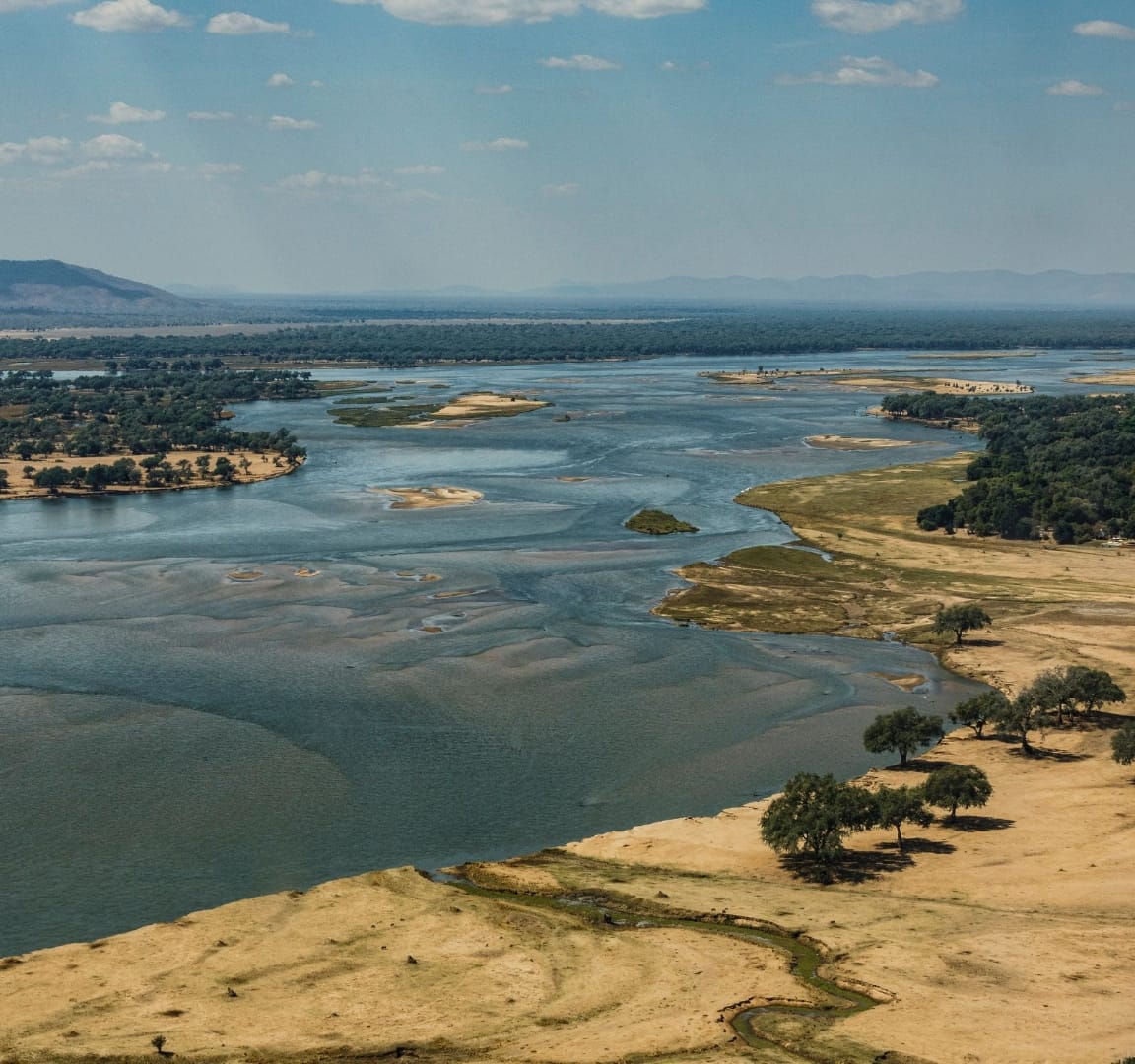
Aerial view of the Lower Zambezi River with sandbars and riverine forest, the Zambian bank in the foreground and the Mana Pools escarpment of Zimbabwe rising in the distance

Questions we hear most

A few things worth knowing

When is the best time to visit Zambia?

Late June to October is the dry season and the strongest window for walking, canoeing and game viewing. July to October opens up the Busanga floodplain in Kafue, which is reachable only by light aircraft and only when the floodwaters have receded. April and November are the shoulder months we tend to recommend most often for travellers wanting strong value with the bush still active. December to March is the emerald season, with the country at its greenest, lowest rates, and most camps closed.

What makes Zambia different from Botswana or Tanzania?

Three things. First, the walking safari is part of every itinerary, not a side activity. Second, camps are smaller, with eight to twelve guests at full capacity, often less. Third, the country is quieter. Fewer vehicles, fewer crowds, lower commercial pressure. The wildlife densities are strong but not always as extravagant as Botswana's Delta or the Serengeti. The trade-off is depth of experience over sheer volume.

How many days do you need for a Zambia safari?

Seven nights is the practical minimum, combining South Luangwa with either Lower Zambezi or Victoria Falls. A typical trip runs nine to twelve nights and combines South Luangwa, Lower Zambezi or Kafue, and the Falls. Adding Botswana, Malawi or Mozambique on the same trip is straightforward, and we plan multi-country Zambia routings regularly. Twelve to sixteen nights covers most pairings comfortably.

Do you need malaria tablets for Zambia?

Yes. All of Zambia is a malaria area, including South Luangwa, the Lower Zambezi and Kafue. Standard prophylactics are recommended, along with long sleeves at dusk and the screened tents most camps now provide. Your travel doctor will advise on the right tablets for you, and we confirm the conversation in the pre-departure briefing six to eight weeks before the trip.

Is Zambia good for first-time safari travellers?

It can be, with the right planning. First-timers who want walking and a quieter, more intimate safari often do well in Zambia. First-timers who want sheer wildlife abundance and the Big Five every day are usually better off starting in Botswana, Kenya or South Africa. We tend to recommend Zambia as a second or third African trip, when clients know what they like and want the pace and the skill that the country is built around.

What is a walking safari?

A walking safari is a guided trek through the bush on foot, accompanied by a licensed safari guide and an armed national parks scout. It was pioneered in the South Luangwa by Norman Carr in the 1950s and remains one of Zambia's signature experiences. Walks typically last three to four hours, leave camp at dawn, and focus on tracks, signs, smaller wildlife, and reading the bush at a different scale than from a vehicle. The walking guides of South Luangwa are widely held to be among the most experienced on the continent.

Plan your Zambia safariPlan your safari

From the journal

Field notes

Stories, guides and voices from the African bush, written by the people who plan these trips.

Plan it properly

Tell us what you are imagining

Tell us roughly what you are thinking. We come back within a working day, often sooner.

Write to us

One of us will write back.

Replies come from Vikki or Sian. No obligation, just a conversation.

Prefer to write to us directly? sian@marulahill.com · WhatsApp +27 82 459 0648