
When to go to Namibia on safari
Not every season delivers the same Namibia. Here's how to match your travel dates to what you actually want from this extraordinary country.

The light hits first. Before the engine cuts out on the landing strip, before the dust settles, before you've said a word to the person next to you. The light arrives first. Flat and pale at dawn, white-gold by mid-morning, and by late afternoon it turns copper. Namibia does this all year. What changes, season to season, is everything else.
For the cats: May to October
The dry season is when Etosha earns its reputation. Water disappears from most of the park and concentrates around a handful of waterholes, and animals follow. You can sit at a floodlit waterhole at Okaukuejo after dark and watch lions, rhino, and elephant arrive in loose procession, each species holding its own quiet protocol. The patience required is nil. You just wait.
This is also the best window for Okonjima, where AfriCat runs its cheetah and leopard work. The bush is open. Sightlines are long, and you're not fighting against green season vegetation. If big cats are the reason you're going, the dry months give you the clearest shot at them.
Days are warm, around 25 to 30 degrees in most areas, but nights in the desert drop fast. Layers matter more than you'd expect.
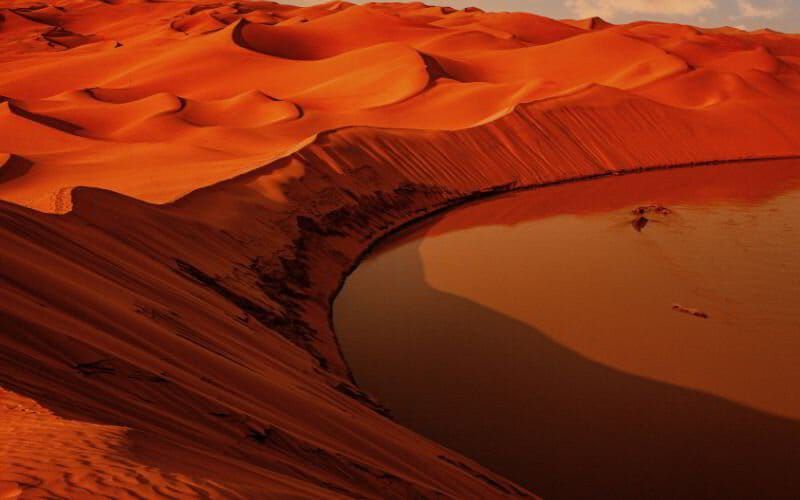
For the dunes: any month, but know what you're walking into
Sossusvlei doesn't follow the same seasonal logic as the rest of Namibia. The dunes are always there. The dead trees of Deadvlei are always there, bleached white against orange sand and blue sky. But the experience shifts significantly depending on when you arrive.
In the dry season, the air is clear and the colours are sharp. The famous Dune 45 at sunrise is achingly photogenic and, in peak season, also crowded. In the green months, the crowds thin and the light softens. You might find the entire vlei to yourself before 7am. Both versions are worth knowing about. We help clients choose based on what matters more to them: the photograph, or the solitude.
Heat is always a factor. Temperatures regularly exceed 40 degrees in the midday hours. Go early. Go slow. Be back at camp before noon.
For the green silence: November to April
November is when the first rains arrive and the country changes colour almost overnight. The Namib goes from bone-pale to something approaching green. It's brief and extraordinary. It's also when the newborns appear: impala across Etosha, oryx calves in the open gravel plains, zebra foals already testing their legs. If you want to see a country in the process of becoming itself again, November is the month.
December through March is full green season. The wildlife is harder to locate because animals spread out across the land when water is everywhere. But this is the time for birds. Etosha pulls in migrants from Europe, the Palearctic, and central Africa in numbers that surprise most people who haven't birded here before. If you have binoculars and patience, the number of species visible during these months is genuinely startling.
Crowds are thin. Rates at many camps drop. The experience is quieter and slower in the best possible way.
For the coast: the Skeleton Coast has its own calendar
The Skeleton Coast doesn't behave like the interior. Cold Benguela Current air keeps the shoreline cool year-round, and the coastal fog rolls in regardless of what season it technically is. Seals breed in large colonies from November onward, and the brown hyena sightings along the shore are some of the most unusual wildlife experiences this continent offers.
We tend to route clients along the coast in August or September, when the interior dry season lines up with the best light on the Atlantic. The combination works well as a two-week itinerary: Etosha, then a fly-in to Skeleton Coast, then out through Sossusvlei. It's how we usually build Namibia.
For Damaraland: join the desert elephants in the dry months
Damaraland sits between Etosha and the coast, and it operates on its own terms. The desert-adapted elephants here have evolved to move extraordinary distances in search of water, and finding them is partly luck, partly good guiding. The dry season concentrates them around the seasonal rivers, which makes sightings more consistent from June through September.
The rock formations, the ancient San rock engravings at Twyfelfontein, the silence when the vehicle engine is off. Damaraland rewards visitors who slow down. It's not a place for ticking boxes. The people who love it most are the ones who weren't entirely sure what they were looking for.
How we think about timing
There is no bad month for Namibia. There is only a misalignment between expectation and season. That's what we help clients work through before they book a single flight.
If you want dense wildlife and a full Etosha experience, go in July or August. If the green season's quietness appeals, or if birds are your main interest, December to February opens up a different country entirely. If you're pairing Namibia with another destination, the shoulder months of April and November often thread the needle well.
Namibia is a long-haul commitment for most South African travellers, and it rewards the effort. The scale of it, the silence, the quality of light at the end of the day. These things stay with you in a way that's hard to explain to someone who hasn't been.
If you're starting to think seriously about when to go, we'd love to talk it through.
Written by the Marula Hill team. We plan tailor-made safaris across Namibia and southern Africa.
Read next
If this resonated
The bush has been expecting you
Start with a conversation. We will ask what makes you want to wake up at four-thirty, and build from there.
Begin a conversation
Royal Malewane reopens: what we remember, and what the fact sheet confirms
The original Royal Portfolio property is back after months behind scaffolding. We haven't seen it yet. Here is what we know anyway.

We run on solar and we have not printed since 2019
Vikki and Sian on solar power, paper, and what a small safari company can honestly claim.

Sandringham Private Game Reserve: should you go early, or wait?
Greater Kruger's newest reserve opens in August 2026. Our honest take on who should book Sandringham early, and who should give it a few seasons.

The packing guide
What to bring on safari, what to leave at home, and the one thing no lodge can lend you. An honest packing list from the team in Hoedspruit.

How do you want to feel when you get home?
Why we plan safaris around how you want to feel when you get home, not around a pin on the map.

South Africa's online traveller declaration: what it means for your safari (and what it doesn't)
A five-minute customs form now stands between you and the arrivals hall. Here's what it is, who needs it, and what nothing to declare actually means for a normal safari guest.

Safari After Dark
Night drives reveal a different Africa. Quieter, older, more deliberate. Here's what we love about the bush after the sun goes down.

How we tailor every Marula Hill safari
We don't start with destinations. We start with you: your pace, your family, your idea of a good day in the bush.

When space teaches: what Saseka's refresh tells us about gathering in the bush
What a thoughtful safari lodge refresh tells us about gathering in the bush.

Inside FedAir's new Baobab lounge at Hoedspruit
The new Baobab lounge at Hoedspruit airport changes how a safari begins. Vikki Jackson on the room that holds you before the bush does.

How safari pricing actually works
From the people who build the quotes. What you are really paying for, where the money goes, and how to spend it well.

Monwana, and what coming home actually means
By Vikki Jackson and Sian Loehrer. A week at the Thornybush lodge that has built its whole identity around the word home, and what we found when we tested it against the room, the drives, the afternoons and the bill.

The Mozambique dhow: a slow boat at the end of a fast trip
Why we put a dhow afternoon into almost every Mozambique trip. Sail, salt water and the long breath out after safari.

Why we built the Antarctica page
A short note from Sian on why an African safari business added Antarctica to its destination map, and how we handle a trip neither founder has yet made.

Lion Sands Ivory Lodge. What their redesign gets right
I visited Lion Sands Ivory Lodge in the Sabi Sand. The redesigned spaces are quiet, bold, and rare. Here is what they got right.

Where the money actually goes on a luxury safari
A line-by-line look at what you're actually paying for on a luxury African safari — and what a quote that looks light is usually hiding.

Bazaruto vs Quirimbas: which Mozambique archipelago is right for you?
How to choose between Mozambique's two great archipelagos for a bush-and-beach trip. Geography, lodge feel, when to go.

Sabi Sand or Kruger
Two reserves, one fence line, very different mornings

What is the best month to visit Cape Town?
Cape Town rewards you differently in every season, but March to May is the window most of our clients come back to.

What Singita Lebombo's 2026 redesign tells us
Lebombo reopened March 2026 warmer, quieter, more art-led

Gorilla trekking, Uganda or Rwanda
Two countries, the same forest, two very different days

Do you need travel insurance for a safari
What safari travel insurance must cover, and why standard policies fall short

How two women from outside the travel industry built a luxury safari brand from Africa
We are the two women behind Marula Hill. One of us came from IBM, the other from MARS Southern Africa. Here is the long version of how a private safari business gets built from outside the travel industry.

Sole-use villa safaris in Africa
What sole-use villa safaris mean in practice, who they suit, and what to ask

Why Rwanda is the cleanest country in Africa
A plastic-bag ban from 2008. A mandatory community work morning on the last Saturday of every month. The system behind Rwanda's cleanliness, explained.