
What dinner at a safari lodge is really like
Bush breakfasts, boma fires, gourmet meals in the wild: what food at a safari lodge actually looks like.

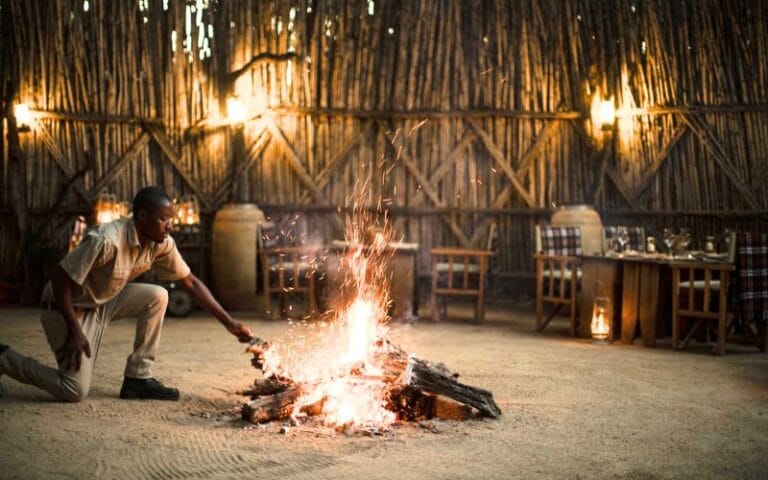
The fire in the boma has been going for an hour by the time you sit down. The smoke drifts low over the table and somewhere out past the fence line, something calls in the dark. A francolin, maybe, or a nightjar. The food arrives: a clay pot of chakalaka, grilled impala, and pap still steaming from the kitchen. You're hungry in a way you haven't been all year.
That's how we'd describe a boma dinner at its best. But it's only one of the ways a safari lodge feeds you well.
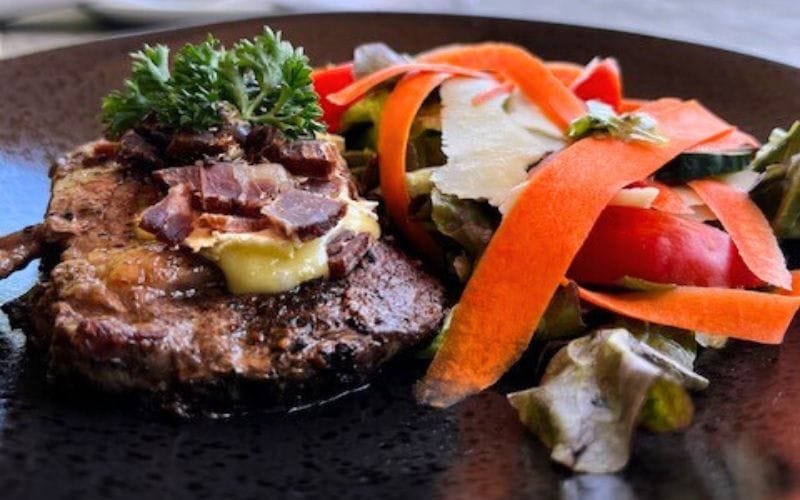
The food is better than you're expecting
Most guests are pleasantly surprised. The assumption, especially on a first safari, is that a remote lodge equals a compromised kitchen. The reality is almost always the opposite. Top lodges in the Sabi Sand, Kruger, the Waterberg, and beyond source fresh produce locally, keep skilled kitchen teams, and run menus that change with what's in season.
We've had impala carpaccio at a Sabi Sand lodge that would hold its own at a Cape Town restaurant. We've also had a simple curry at a smaller bush camp that we still talk about years later. The quality isn't tied to the price bracket. It's tied to whether the lodge takes food seriously, and most do.
What you'll generally eat leans South African in spirit. Braai-cooked meats, local herbs, marula-based desserts, and locally sourced venison. International dishes are also on the menu, particularly at lodges that draw guests from across Europe and the US. Breakfast tends to be generous: eggs cooked to order, fruit, fresh bread, and good coffee. The morning game drive usually finishes famished.
Bush breakfasts and the ritual of eating outside
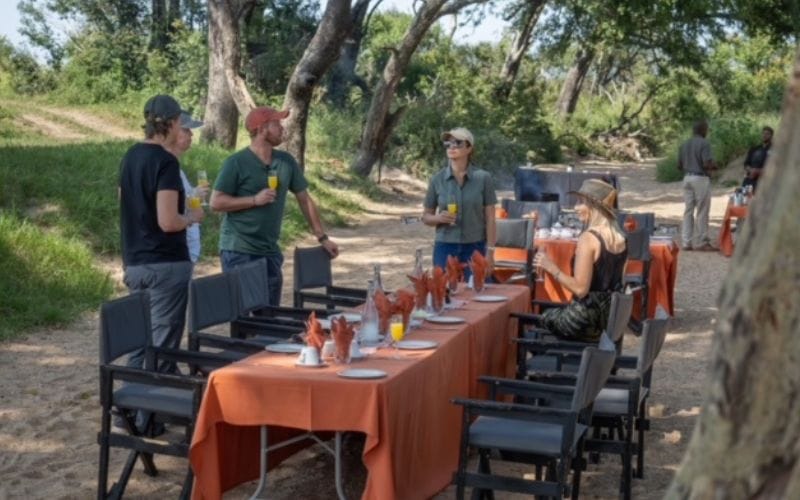
On longer drives, lodges set up a stop in the field. This is the bush breakfast, and it's one of those small things that guests mention more often than almost anything else.
A folding table appears in a dry riverbed or under a tree with a view. The tea is rooibos or strong filter coffee. The food is simple: warm pastries, sliced fruit, perhaps a flask of scrambled eggs. What makes it is the context. You've just watched a herd of elephants drink at sunrise. The Lowveld air is still cool. Nobody is looking at their phone.
It sounds small on paper, and it doesn't feel small at all.
Boma nights
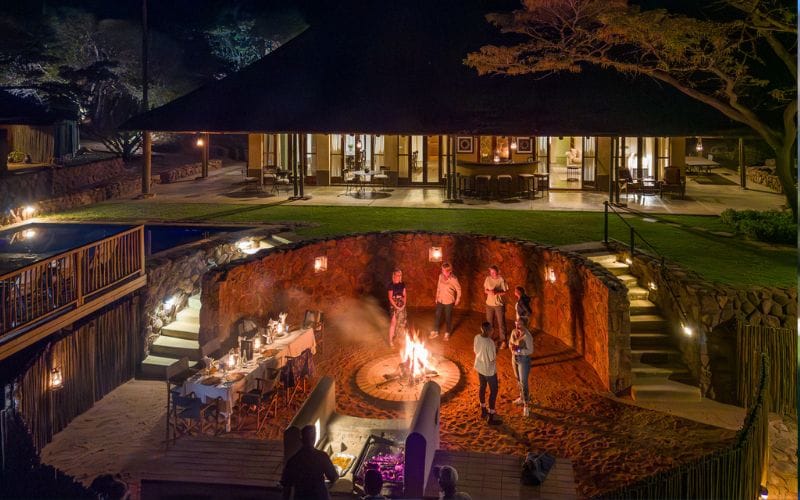
The boma dinner is the centrepiece of most lodge stays. A boma is an enclosure, traditionally made from wooden poles, built specifically for communal evening meals. Guests arrive after the evening drive, which means appetites are sharp and everyone has something to talk about.
The format varies by lodge. Some do elaborate multi-course service with wine pairings. Others keep it casual: a fire, a braai, drums, and long tables where you end up talking to people you'd never normally meet. Both work. The more formal boma dinners can be extraordinary, particularly when the menu leans into local flavour rather than generic "fine dining." The informal ones tend to generate the better stories.
Drums are common. Cultural performances show up occasionally. What's consistent is the fire, the smell of woodsmoke, and the particular feeling of eating outdoors in the dark with the bush right there.
Dietary needs: how lodges actually handle this
This is one of the questions we get most often, and the honest answer is: well-run lodges handle it without fuss.
When we book a trip, we collect dietary information upfront as part of the planning process. That list goes to the lodge in advance. Vegetarian and vegan guests are well catered for at the vast majority of South African properties. It isn't new territory for kitchen teams. Gluten-free, dairy-free, nut allergies: all manageable with notice. We'd always recommend flagging anything serious as early as possible rather than arriving and hoping.
Where it gets more nuanced is at very remote camps. A fly-in camp in a concession that receives supplies twice a week has real constraints. It won't run out of good food, but it may not stock specialist items. For guests with coeliac disease or severe allergies, we always check with the specific lodge rather than making a general assumption. We'd rather over-communicate that detail than leave it to chance.
One thing to know: lodges cook largely from scratch. That actually helps with dietary flexibility, because the kitchen isn't relying on pre-made products full of hidden ingredients. A chef who's building a dish from local vegetables and fresh protein can usually accommodate a request more easily than a city restaurant working from a fixed menu.
Private dinners and special occasions
If there's a birthday, anniversary, or reason to make an evening memorable, most lodges will arrange something separate from the main boma. A table set up at a viewpoint, candles on a private deck, a menu discussed in advance. It doesn't require much notice and it doesn't usually cost extra. That's just what good hospitality looks like out here.
We've helped guests arrange lunches at a waterhole with hippos about fifty metres away, and a breakfast where the guests watched a lion cross the road on the way back to camp. The setting does a lot of the work. The food just needs to be good.
What this means for planning
If food matters to you (whether that's dietary requirements, a love of wine, an interest in local cooking, or simply wanting to know what you're walking into), it's worth telling us. Some lodges are outstanding on the food side and we'd point you there specifically. Others are wonderful for wildlife and wildlife alone, and their kitchen is reliable but not the thing you'll be writing home about.
We know the difference, because we've eaten at most of them. If you're putting a trip together and want to make sure the food side is right, it's one of the easier things to get sorted when you're talking to us early.
If this resonated
The bush has been expecting you
Start with a conversation. We will ask what makes you want to wake up at four-thirty, and build from there.
Begin a conversation
Royal Malewane reopens: what we remember, and what the fact sheet confirms
The original Royal Portfolio property is back after months behind scaffolding. We haven't seen it yet. Here is what we know anyway.

We run on solar and we have not printed since 2019
Vikki and Sian on solar power, paper, and what a small safari company can honestly claim.

Sandringham Private Game Reserve: should you go early, or wait?
Greater Kruger's newest reserve opens in August 2026. Our honest take on who should book Sandringham early, and who should give it a few seasons.

The packing guide
What to bring on safari, what to leave at home, and the one thing no lodge can lend you. An honest packing list from the team in Hoedspruit.

How do you want to feel when you get home?
Why we plan safaris around how you want to feel when you get home, not around a pin on the map.

South Africa's online traveller declaration: what it means for your safari (and what it doesn't)
A five-minute customs form now stands between you and the arrivals hall. Here's what it is, who needs it, and what nothing to declare actually means for a normal safari guest.

Safari After Dark
Night drives reveal a different Africa. Quieter, older, more deliberate. Here's what we love about the bush after the sun goes down.

How we tailor every Marula Hill safari
We don't start with destinations. We start with you: your pace, your family, your idea of a good day in the bush.

When space teaches: what Saseka's refresh tells us about gathering in the bush
What a thoughtful safari lodge refresh tells us about gathering in the bush.

Inside FedAir's new Baobab lounge at Hoedspruit
The new Baobab lounge at Hoedspruit airport changes how a safari begins. Vikki Jackson on the room that holds you before the bush does.

How safari pricing actually works
From the people who build the quotes. What you are really paying for, where the money goes, and how to spend it well.

Monwana, and what coming home actually means
By Vikki Jackson and Sian Loehrer. A week at the Thornybush lodge that has built its whole identity around the word home, and what we found when we tested it against the room, the drives, the afternoons and the bill.

The Mozambique dhow: a slow boat at the end of a fast trip
Why we put a dhow afternoon into almost every Mozambique trip. Sail, salt water and the long breath out after safari.

Why we built the Antarctica page
A short note from Sian on why an African safari business added Antarctica to its destination map, and how we handle a trip neither founder has yet made.

Lion Sands Ivory Lodge. What their redesign gets right
I visited Lion Sands Ivory Lodge in the Sabi Sand. The redesigned spaces are quiet, bold, and rare. Here is what they got right.

Where the money actually goes on a luxury safari
A line-by-line look at what you're actually paying for on a luxury African safari — and what a quote that looks light is usually hiding.

Bazaruto vs Quirimbas: which Mozambique archipelago is right for you?
How to choose between Mozambique's two great archipelagos for a bush-and-beach trip. Geography, lodge feel, when to go.

Sabi Sand or Kruger
Two reserves, one fence line, very different mornings

What is the best month to visit Cape Town?
Cape Town rewards you differently in every season, but March to May is the window most of our clients come back to.

What Singita Lebombo's 2026 redesign tells us
Lebombo reopened March 2026 warmer, quieter, more art-led

Gorilla trekking, Uganda or Rwanda
Two countries, the same forest, two very different days

Do you need travel insurance for a safari
What safari travel insurance must cover, and why standard policies fall short

How two women from outside the travel industry built a luxury safari brand from Africa
We are the two women behind Marula Hill. One of us came from IBM, the other from MARS Southern Africa. Here is the long version of how a private safari business gets built from outside the travel industry.

Sole-use villa safaris in Africa
What sole-use villa safaris mean in practice, who they suit, and what to ask

Why Rwanda is the cleanest country in Africa
A plastic-bag ban from 2008. A mandatory community work morning on the last Saturday of every month. The system behind Rwanda's cleanliness, explained.