
Safari activities for kids: what to expect on a family bush trip
Kids don't need screens on safari. Here's what keeps them busy, curious and out of trouble in the bush.

The ranger crouches low in the red dirt and says nothing for a moment. He holds up one finger, then points at the ground. Your nine-year-old leans in, eyes wide, and sees it too: the splayed print of a leopard, pressed clean into the soil sometime before sunrise. The ranger asks what they notice. The kid answers. Then they keep walking.
That moment costs nothing. It happens on an ordinary morning game walk. And it is, reliably, the thing your child talks about for weeks afterwards.
Planning a safari around kids does take thought. The activities that hold their attention are different from the ones that hold yours. The good news is that most well-run bush lodges in South Africa have this sorted, and the range of what kids can actually get stuck into is wider than most families expect before they arrive.
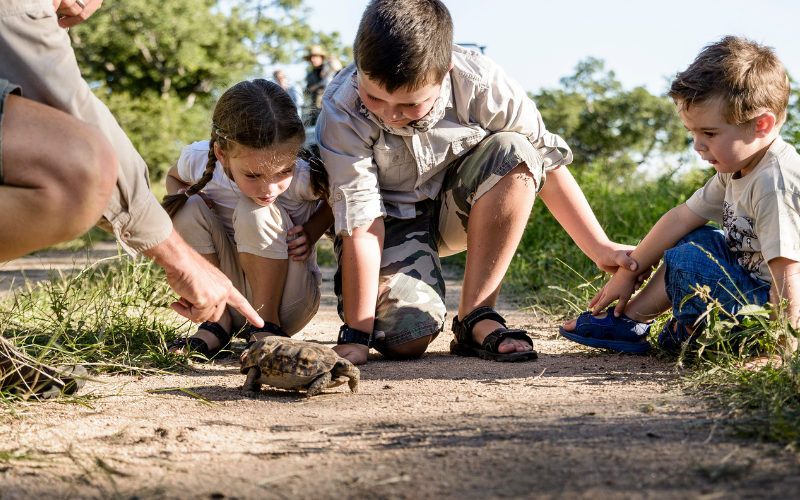
Junior Ranger Programmes
Most lodges with a real family focus run some version of this. Kids receive their own activity booklet, spend time with a ranger learning to read the bush, and earn badges as they work through skills. It gives them a sense of ownership over the trip that a seat on a game drive doesn't quite replicate.
The programmes vary considerably by lodge. Some are loose and informal, built around morning walks. Others are structured over two or three days, with a proper sign-off ceremony at the end. We can tell you which lodges run the versions that actually land with kids versus the ones that feel like afterthoughts.
Tracking and Reading the Bush
Footprints, droppings, broken bark, bent grass. A skilled ranger turns the whole bush into a story, and children tend to read those stories faster than adults do. There is something about a child's brain that locks onto a fresh lion track in a way that no amount of explaining can replicate.
Tracking walks are typically offered to kids from around eight years old. Younger children can join shorter, slower walks in non-predator areas where the focus shifts to insects, plants, and birdlife. These are not lesser experiences. A praying mantis up close or the sharp smell of a wild sage leaf, rubbed between fingers, is the kind of thing that sticks.
Bush Skills Workshops
How to start a fire without matches. How to read wind direction. Which plant sap can treat a sting. These workshops pull from generations of traditional Shangaan knowledge, and the rangers who run them are good at pitching it to kids without being condescending.
Children leave these sessions with practical things they can actually do, which matters enormously at that age. There is also a quiet cultural dimension here that does not need to be laboured. Spending an hour with a guide who grew up reading this land is its own kind of education.
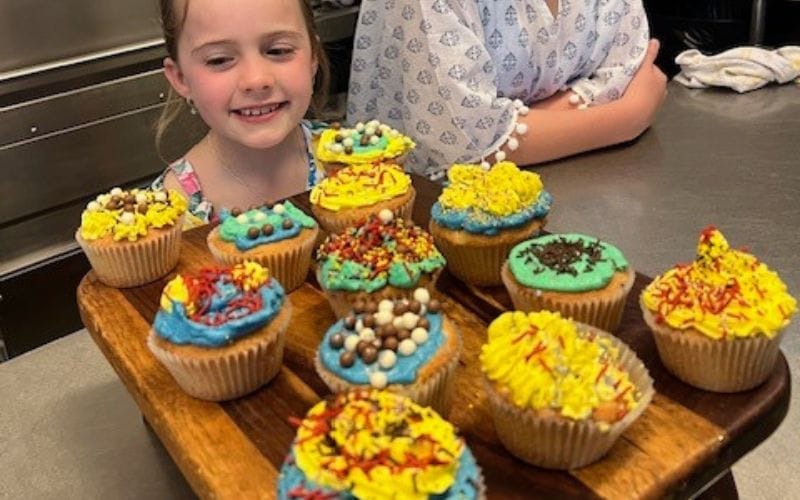
Cooking in the Bush Kitchen
Several lodges offer kids a proper session in the kitchen, not a token activity where they decorate a cupcake. Junior chefs learn to prepare simple local dishes, work with ingredients from the lodge garden, and eat what they make. Lion Sands Ivory Lodge does this well, and the kids' version of their kitchen session has been a hit with families we've sent there.
Food is one of those universal connectors. Children who refuse to try anything at home often eat with more confidence when they've had a hand in making it.
Stargazing and Night Sky Sessions
Away from city light, the southern African sky at night is startling in a way that catches most people off guard. Rangers walk families through the constellations visible from the southern hemisphere, many of which are different from what northern visitors are used to, and share the stories behind them. The Southern Cross, Scorpius sitting low on the horizon, the Milky Way as a visible band above you.
For children who have never seen a proper night sky, this moment lands hard. It is one of those safari experiences that requires no special effort from anyone. You just have to be there.
Wildlife Art and Photography
Lodges with a photography programme will often run a junior version alongside the main workshop. Kids are given simple cameras or use their own phones, go out with a guide who helps them frame shots, and come back with something real to show for the afternoon.
Drawing sessions focused on wildlife identification are another option. Some lodges keep sketchbooks for young guests to record what they've spotted, building a kind of personal field guide over the course of the stay.
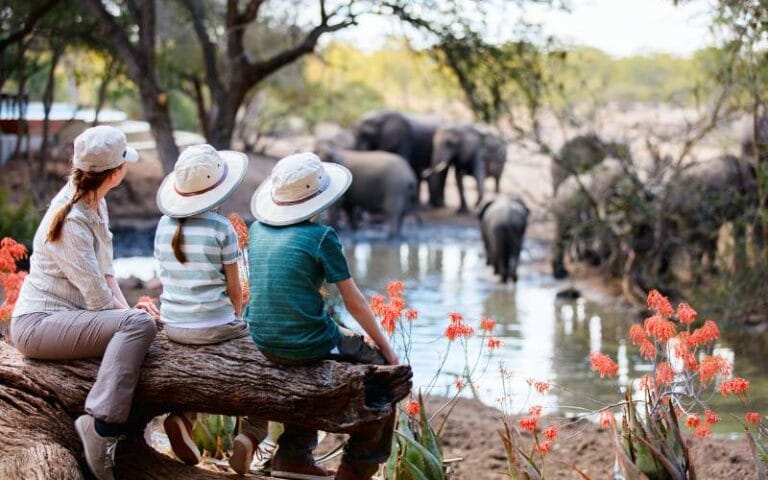
Cultural Village Visits
Where lodges have community partnerships nearby, a cultural village visit gives kids a window into daily life and traditions that no wildlife encounter can provide. Traditional dances, beadwork, language. Children pick up a few Shangaan words faster than their parents do, which they tend to find satisfying.
These visits work best when the community is a proper participant in the arrangement, not a backdrop for tourist photographs. We only recommend the ones built on that kind of footing.
Water, Conservation and the Bigger Picture
Where rivers and conditions allow, canoeing gives kids a completely different angle on the bush. Flat-water stretches on rivers like the Olifants or Sabie let families paddle quietly past hippo wallows and egret-lined banks without the engine noise of a game vehicle. Fishing is available at some lodges, less about the catch and more about sitting still long enough to notice everything else moving around you.
Conservation activities, where lodges offer them, range from tree planting to short talks on anti-poaching work. For older kids especially, understanding that the bush needs active protection, that none of what they're seeing happens automatically, adds real weight to the trip.
If you're putting together a family safari and want to know which lodges get the kids' programme right, that is exactly the kind of detail we hold. Have a look at our family safari page or reach out and we'll talk through what makes sense for the ages and temperaments you're working with.
If this resonated
The bush has been expecting you
Start with a conversation. We will ask what makes you want to wake up at four-thirty, and build from there.
Begin a conversation
Royal Malewane reopens: what we remember, and what the fact sheet confirms
The original Royal Portfolio property is back after months behind scaffolding. We haven't seen it yet. Here is what we know anyway.

We run on solar and we have not printed since 2019
Vikki and Sian on solar power, paper, and what a small safari company can honestly claim.

Sandringham Private Game Reserve: should you go early, or wait?
Greater Kruger's newest reserve opens in August 2026. Our honest take on who should book Sandringham early, and who should give it a few seasons.

The packing guide
What to bring on safari, what to leave at home, and the one thing no lodge can lend you. An honest packing list from the team in Hoedspruit.

How do you want to feel when you get home?
Why we plan safaris around how you want to feel when you get home, not around a pin on the map.

South Africa's online traveller declaration: what it means for your safari (and what it doesn't)
A five-minute customs form now stands between you and the arrivals hall. Here's what it is, who needs it, and what nothing to declare actually means for a normal safari guest.

Safari After Dark
Night drives reveal a different Africa. Quieter, older, more deliberate. Here's what we love about the bush after the sun goes down.

How we tailor every Marula Hill safari
We don't start with destinations. We start with you: your pace, your family, your idea of a good day in the bush.

When space teaches: what Saseka's refresh tells us about gathering in the bush
What a thoughtful safari lodge refresh tells us about gathering in the bush.

Inside FedAir's new Baobab lounge at Hoedspruit
The new Baobab lounge at Hoedspruit airport changes how a safari begins. Vikki Jackson on the room that holds you before the bush does.

How safari pricing actually works
From the people who build the quotes. What you are really paying for, where the money goes, and how to spend it well.

Monwana, and what coming home actually means
By Vikki Jackson and Sian Loehrer. A week at the Thornybush lodge that has built its whole identity around the word home, and what we found when we tested it against the room, the drives, the afternoons and the bill.

The Mozambique dhow: a slow boat at the end of a fast trip
Why we put a dhow afternoon into almost every Mozambique trip. Sail, salt water and the long breath out after safari.

Why we built the Antarctica page
A short note from Sian on why an African safari business added Antarctica to its destination map, and how we handle a trip neither founder has yet made.

Lion Sands Ivory Lodge. What their redesign gets right
I visited Lion Sands Ivory Lodge in the Sabi Sand. The redesigned spaces are quiet, bold, and rare. Here is what they got right.

Where the money actually goes on a luxury safari
A line-by-line look at what you're actually paying for on a luxury African safari — and what a quote that looks light is usually hiding.

Bazaruto vs Quirimbas: which Mozambique archipelago is right for you?
How to choose between Mozambique's two great archipelagos for a bush-and-beach trip. Geography, lodge feel, when to go.

Sabi Sand or Kruger
Two reserves, one fence line, very different mornings

What is the best month to visit Cape Town?
Cape Town rewards you differently in every season, but March to May is the window most of our clients come back to.

What Singita Lebombo's 2026 redesign tells us
Lebombo reopened March 2026 warmer, quieter, more art-led

Gorilla trekking, Uganda or Rwanda
Two countries, the same forest, two very different days

Do you need travel insurance for a safari
What safari travel insurance must cover, and why standard policies fall short

How two women from outside the travel industry built a luxury safari brand from Africa
We are the two women behind Marula Hill. One of us came from IBM, the other from MARS Southern Africa. Here is the long version of how a private safari business gets built from outside the travel industry.

Sole-use villa safaris in Africa
What sole-use villa safaris mean in practice, who they suit, and what to ask

Why Rwanda is the cleanest country in Africa
A plastic-bag ban from 2008. A mandatory community work morning on the last Saturday of every month. The system behind Rwanda's cleanliness, explained.