
A family vacation in Cape Town that works for all ages
Cape Town suits kids and grown-ups equally well: beaches, penguins, aquariums, and a city that's easy to move around.

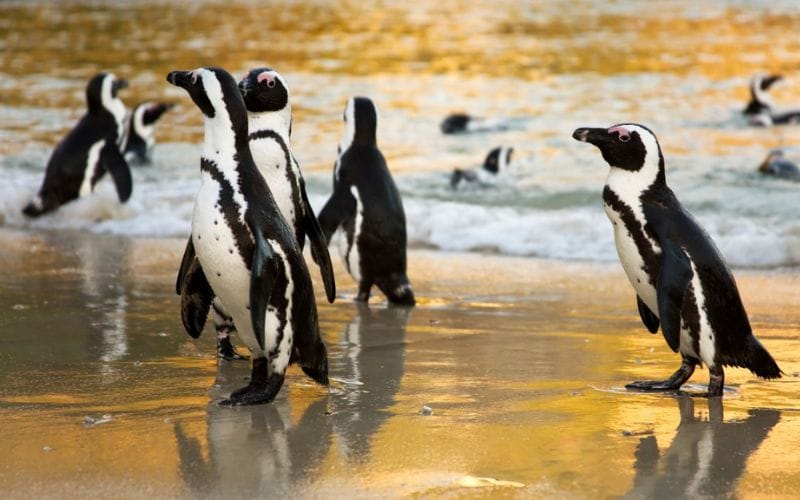
The boardwalk at Boulders Beach smells of salt and seabird. You're standing maybe two metres from a colony of African penguins, close enough to hear them squabble over a patch of shade, and your kids have completely forgotten their phones. The sea is flat and glassy. Someone's eating an ice cream. That's often the moment families realise Cape Town is going to be different from what they expected.
It's not a theme park destination. Nobody's engineered the fun. The city just has an abundance of good things that happen to land well across ages: calm beaches, wildlife you can walk among, food worth sitting down for, and a mountain that makes everything feel bigger than it actually is.
We've designed a lot of family itineraries through Cape Town, both as standalone trips and as the coastal chapter of a longer South African or Botswana trip. Here's what consistently works.
Why Cape Town works across generations
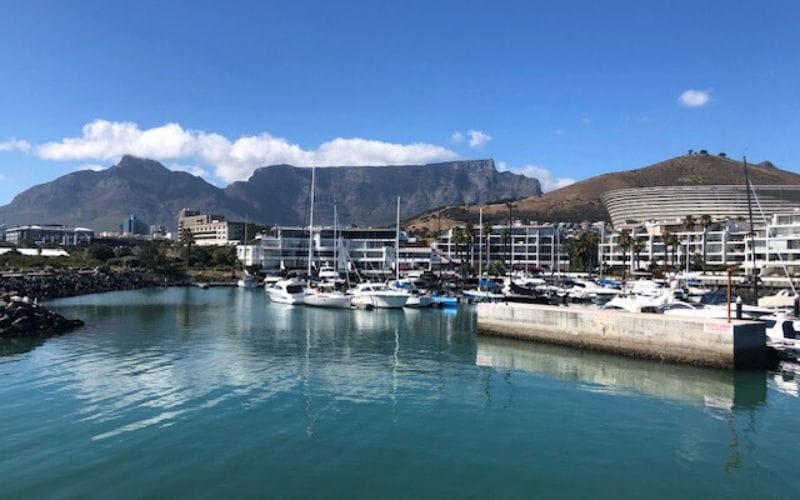
Table Mountain is the first thing you see from the plane. Then the bay opens up and the city sits there between the mountain and the sea, compact and easy to read. That physical geography is actually part of what makes it work for families: short distances, clear landmarks, no sense of being lost in something too large.
Kids take to it quickly. The city is walkable in parts, the beaches are close, and there's enough variety that different people in the same family can want different things on the same day and still find common ground. The food scene is very good, restaurants are relaxed about children, and the weather from December through to April is reliably warm and dry.
Medically, Cape Town is also well served. It matters more than people think when you're travelling with young children or older relatives, and it's part of why the city appears so often in our family itineraries.
The beaches and ocean
Muizenberg, on the False Bay side, is where you go for swimming with young children. The water is warmer than the Atlantic side, the waves are gentle, and the famous painted beach huts make it feel festive without being crowded. It's the kind of beach where an afternoon disappears.
Boulders Beach is different. You're there for the penguins. The protected colony is enormous and the boardwalks put you right alongside them at eye level. It pairs naturally with a half-day drive through Chapman's Peak or a stop at the Cape of Good Hope, which makes for a long and satisfying day out of the city.
For families who want more from the ocean, kayaking along the Atlantic coastline and rock-pool exploration at low tide are both easy to arrange. Older children especially tend to love the seal colony at Hout Bay Harbour. It's chaotic, noisy, and smells exactly as you'd expect, which kids find extremely satisfying.
What to do with everyone
The Two Oceans Aquarium at the V&A Waterfront is consistently one of the best afternoons we see families have in Cape Town. It's well-designed, not too large, and the predator exhibit with sharks and rays overhead holds attention for longer than most adults expect.
Table Mountain on a clear day is worth doing early in the trip before the cloud rolls in. The cable car takes about five minutes and the view from the top is the kind of thing that needs no commentary. Younger children find the geology and the plants interesting; teenagers tend to go quiet and just look.

Cape Point Nature Reserve is further out but worth the drive. Baboons are a near-certainty and there are zebra in the reserve too. The terrain is dramatic in a way that's quite different from the city, and the southern tip of the peninsula has a good argument for being the most beautiful viewpoint in the country.
For families with a particular interest in wildlife conservation, the Cheetah Outreach Centre and Giraffe House both offer encounters that are educational without being overwhelming. These work especially well for younger children and tend to produce a lot of questions on the drive back.
Where to stay
The right neighbourhood matters. We recommend three areas depending on what a family needs.
V&A Waterfront is the easiest base if you have younger children. Everything is walkable (the aquarium, restaurants, boat trips) and you're not relying on a car for every outing. The One&Only Cape Town sits in the Waterfront and is our first call for families who want space, a proper kids' club, and a hotel that handles the logistics well. The Radisson Blu Waterfront is a step down in price and a reliable choice when budget is a consideration.
Camps Bay is where you go for the beach-holiday feel. The main strip is lined with restaurants and the beach is right there at the end of the road. It's more atmospheric than the Waterfront and better for families with teenagers who want some independence. Properties here tend toward the villa and boutique end.
Constantia sits in the wine valley behind the mountain and offers a different pace entirely. It's quieter, greener, and a good base if the family includes grandparents or anyone who'd rather not be in the middle of city noise. The drive over Constantia Nek into Hout Bay is one of our favourite morning routes.
The Silo Hotel, in the converted grain silo above the Zeitz Museum of Contemporary Art Africa, is our recommendation when a family wants something architecturally distinct. The rooms are large, the design is striking, and it's the kind of place that makes adults feel like the trip is for them too, not just the children.
How long and when
Four to seven nights is the right length. Less than four and you're rushing; more than seven and Cape Town starts to feel like you've done it. Enough time to have a slow beach day, a long drive down the peninsula, a couple of proper restaurant meals, and at least one morning with no plan.
December through to April is when we'd go with families. The weather is consistent, the city is lively without being oppressive, and the beaches are at their best. School holiday weeks get busy but that's easy to plan around.
Fitting Cape Town into a wider itinerary
Most families we work with combine Cape Town with a private safari, usually in the Sabi Sand or Botswana. The order we recommend is Cape Town first, then the bush. The city is stimulating and active; the safari is slower and more focused. It's a natural progression and families tend to arrive in the bush already relaxed and open, which makes the wildlife experience better.
Five nights in Cape Town followed by four to six nights on safari is a common structure that works across ages. It gives everyone something to look forward to throughout the trip rather than everything landing at the start.
If you're putting something like this together and want a view on what structure would suit your family specifically, we'd be glad to think it through with you. That kind of planning conversation is where a lot of the best itineraries start.
If this resonated
The bush has been expecting you
Start with a conversation. We will ask what makes you want to wake up at four-thirty, and build from there.
Begin a conversation
Royal Malewane reopens: what we remember, and what the fact sheet confirms
The original Royal Portfolio property is back after months behind scaffolding. We haven't seen it yet. Here is what we know anyway.

We run on solar and we have not printed since 2019
Vikki and Sian on solar power, paper, and what a small safari company can honestly claim.

Sandringham Private Game Reserve: should you go early, or wait?
Greater Kruger's newest reserve opens in August 2026. Our honest take on who should book Sandringham early, and who should give it a few seasons.

The packing guide
What to bring on safari, what to leave at home, and the one thing no lodge can lend you. An honest packing list from the team in Hoedspruit.

How do you want to feel when you get home?
Why we plan safaris around how you want to feel when you get home, not around a pin on the map.

South Africa's online traveller declaration: what it means for your safari (and what it doesn't)
A five-minute customs form now stands between you and the arrivals hall. Here's what it is, who needs it, and what nothing to declare actually means for a normal safari guest.

Safari After Dark
Night drives reveal a different Africa. Quieter, older, more deliberate. Here's what we love about the bush after the sun goes down.

How we tailor every Marula Hill safari
We don't start with destinations. We start with you: your pace, your family, your idea of a good day in the bush.

When space teaches: what Saseka's refresh tells us about gathering in the bush
What a thoughtful safari lodge refresh tells us about gathering in the bush.

Inside FedAir's new Baobab lounge at Hoedspruit
The new Baobab lounge at Hoedspruit airport changes how a safari begins. Vikki Jackson on the room that holds you before the bush does.

How safari pricing actually works
From the people who build the quotes. What you are really paying for, where the money goes, and how to spend it well.

Monwana, and what coming home actually means
By Vikki Jackson and Sian Loehrer. A week at the Thornybush lodge that has built its whole identity around the word home, and what we found when we tested it against the room, the drives, the afternoons and the bill.

The Mozambique dhow: a slow boat at the end of a fast trip
Why we put a dhow afternoon into almost every Mozambique trip. Sail, salt water and the long breath out after safari.

Why we built the Antarctica page
A short note from Sian on why an African safari business added Antarctica to its destination map, and how we handle a trip neither founder has yet made.

Lion Sands Ivory Lodge. What their redesign gets right
I visited Lion Sands Ivory Lodge in the Sabi Sand. The redesigned spaces are quiet, bold, and rare. Here is what they got right.

Where the money actually goes on a luxury safari
A line-by-line look at what you're actually paying for on a luxury African safari — and what a quote that looks light is usually hiding.

Bazaruto vs Quirimbas: which Mozambique archipelago is right for you?
How to choose between Mozambique's two great archipelagos for a bush-and-beach trip. Geography, lodge feel, when to go.

Sabi Sand or Kruger
Two reserves, one fence line, very different mornings

What is the best month to visit Cape Town?
Cape Town rewards you differently in every season, but March to May is the window most of our clients come back to.

What Singita Lebombo's 2026 redesign tells us
Lebombo reopened March 2026 warmer, quieter, more art-led

Gorilla trekking, Uganda or Rwanda
Two countries, the same forest, two very different days

Do you need travel insurance for a safari
What safari travel insurance must cover, and why standard policies fall short

How two women from outside the travel industry built a luxury safari brand from Africa
We are the two women behind Marula Hill. One of us came from IBM, the other from MARS Southern Africa. Here is the long version of how a private safari business gets built from outside the travel industry.

Sole-use villa safaris in Africa
What sole-use villa safaris mean in practice, who they suit, and what to ask

Why Rwanda is the cleanest country in Africa
A plastic-bag ban from 2008. A mandatory community work morning on the last Saturday of every month. The system behind Rwanda's cleanliness, explained.