
Tarangire: Tanzania's other great safari park
Huge elephant herds, ancient baobabs, and very few crowds. Here's why we include Tarangire in nearly every northern Tanzania itinerary.

The dust comes first. A fine red powder that settles on everything: your sleeve, your binoculars, the seat of the Land Cruiser, before you've even properly arrived. Then, as the vehicle crests a low ridge and the Tarangire River valley opens below you, the scale of the place hits. A hundred elephants at the water's edge. Ancient baobabs rising behind them, their swollen trunks pale against the dry season sky. Nothing moving quickly. Just the park doing what it has always done, long before anyone had a name for it.
This is why we send people to Tarangire.
What most Tanzania itineraries miss
Serengeti gets the headlines. Ngorongoro gets the photographs. And between those two giants, Tarangire has spent decades being treated as an optional extra, a one-night add-on for people with extra days to fill.
That undersells it badly.
In the dry season, from June through October, Tarangire runs one of the most concentrated wildlife gatherings anywhere in East Africa. As pans and seasonal waterholes dry across the surrounding plains, animals converge on the Tarangire River in numbers that rival anything you'll see on the northern circuit. The Silale Swamp, a permanent water source deep inside the park, pulls particular volumes of game: buffalo, zebra, wildebeest, and the elephant herds that Tarangire is rightly famous for. Up to three thousand elephants move through the park during peak dry season. After a long time planning Tanzania safaris, that figure still stops us short.
The baobabs
Serengeti gives you open sky and the sense that the plains go on past the horizon. Tarangire gives you something different. The place feels ancient in a way you can physically see.
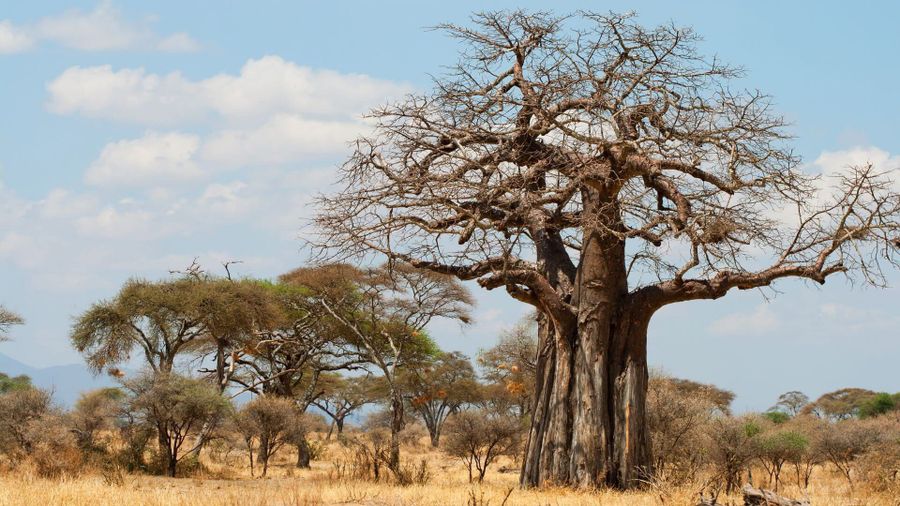
The baobabs here are enormous. Some are over a thousand years old. They grow in clusters across the park's ridges and valleys, their trunks the width of small rooms, their branches reaching in every direction without any apparent logic. At dusk, when the light turns amber and a herd drifts through a stand of them, it is the kind of thing that stays with you long after the trip is done.
It also makes for exceptional photography. The Serengeti is vast and relatively spare. Tarangire gives your lens something to do.
Beyond the game drive
Walking safaris here are worth taking seriously. Out on foot, the pace changes entirely. A guide can spend twenty minutes on a single termite mound, on what it tells you about the soil, the species that depend on it, the birds that nest in its walls. It is a completely different way of seeing a place, and Tarangire's terrain suits it well: dry riverbed scrub, open grassland, stands of acacia.
Night drives reveal a different park again. The leopards that move carefully between the baobabs in daylight are out hunting in the dark. Civets, porcupines, bush babies, the occasional aardvark working through the grass. An experienced guide with a spotlight can show you things no daytime drive ever will.
Where we stay
We work with a small number of properties in Tarangire that we know well and trust consistently.
Tarangire Treetops builds its suites around the baobabs themselves. Some rooms are literally constructed into the trees. The views across the savannah from the open decks are hard to match, and the feeling of being above the bush rather than beside it changes how you experience the place.
Lemala Mpingo Ridge sits on a ridge above the Tarangire River. Private decks with outdoor bathtubs, views down to where the elephants drink, a level of finish that punches harder than many more famous camps. We find it particularly good for couples who want seclusion without sacrificing comfort.
Both properties deliver a very different stay from the large, high-volume lodges that dominate the Serengeti's central areas. The guest numbers are smaller. The experience is quieter. That matters.
How Tarangire fits into a northern circuit
The classic northern Tanzania loop connects Tarangire, Lake Manyara, the Ngorongoro Crater, and the Serengeti. Each leg adds something the others don't have, and they work well as a sequence.
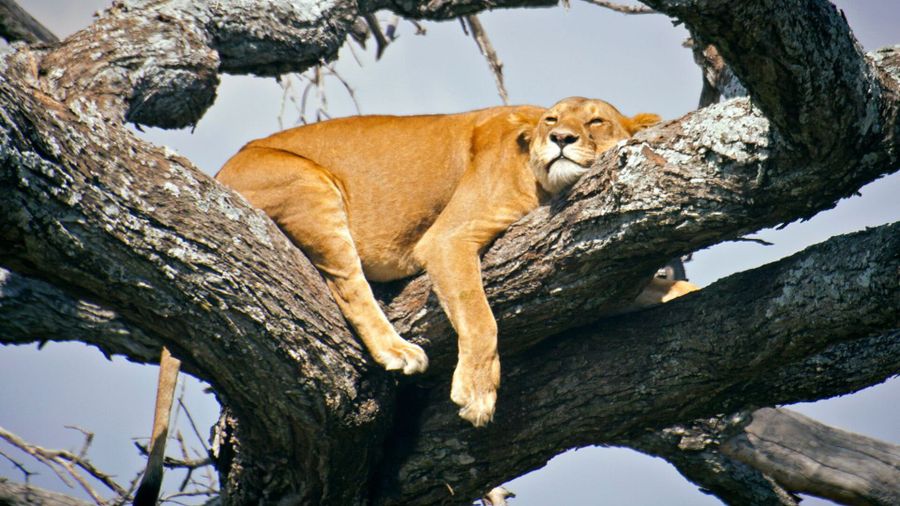
We usually recommend starting in Tarangire. The wildlife density in dry season is immediate and striking, which sets a strong tone for the rest of the trip. Lake Manyara follows well: smaller, different in character, notable for its tree-climbing lions and the flamingos that gather on the lake's edge. Then Ngorongoro, which is unlike anything else on the continent. Then the Serengeti, ideally timed around a migration crossing if the calendar allows.
Tarangire also pairs well with a South Africa leg. A few days in the Sabi Sand before or after Tanzania gives you two quite different safari ecosystems on one trip, and we put those combinations together regularly.
What to know before you go
The dry season, June to October, is when we most often recommend Tarangire. The wildlife concentrations around the river and the Silale Swamp are at their peak, the roads are in good condition, and the skies stay clear.
The green season, November through May, changes the park significantly. The vegetation fills in, the migratory birds arrive in force, and the whole place looks and feels different. Wildlife is harder to spot through the long grass, but there is real beauty in it, and the camps are less busy. It is worth considering if the timing works and you are comfortable with some trade-offs on game-viewing.
A note from us
Tarangire does not shout. It does not have the Serengeti's marketing weight or the Crater's dramatic geology. What it has is scale, depth, and a kind of unhurried quality that is harder and harder to find in East Africa's most visited parks.
If you are planning a Tanzania safari and wondering whether it belongs in your itinerary, we would say almost always yes. Get in touch and we can talk through how it might fit with what you have in mind.
If this resonated
The bush has been expecting you
Start with a conversation. We will ask what makes you want to wake up at four-thirty, and build from there.
Begin a conversation
Royal Malewane reopens: what we remember, and what the fact sheet confirms
The original Royal Portfolio property is back after months behind scaffolding. We haven't seen it yet. Here is what we know anyway.

We run on solar and we have not printed since 2019
Vikki and Sian on solar power, paper, and what a small safari company can honestly claim.

Sandringham Private Game Reserve: should you go early, or wait?
Greater Kruger's newest reserve opens in August 2026. Our honest take on who should book Sandringham early, and who should give it a few seasons.

The packing guide
What to bring on safari, what to leave at home, and the one thing no lodge can lend you. An honest packing list from the team in Hoedspruit.

How do you want to feel when you get home?
Why we plan safaris around how you want to feel when you get home, not around a pin on the map.

South Africa's online traveller declaration: what it means for your safari (and what it doesn't)
A five-minute customs form now stands between you and the arrivals hall. Here's what it is, who needs it, and what nothing to declare actually means for a normal safari guest.

Safari After Dark
Night drives reveal a different Africa. Quieter, older, more deliberate. Here's what we love about the bush after the sun goes down.

How we tailor every Marula Hill safari
We don't start with destinations. We start with you: your pace, your family, your idea of a good day in the bush.

When space teaches: what Saseka's refresh tells us about gathering in the bush
What a thoughtful safari lodge refresh tells us about gathering in the bush.

Inside FedAir's new Baobab lounge at Hoedspruit
The new Baobab lounge at Hoedspruit airport changes how a safari begins. Vikki Jackson on the room that holds you before the bush does.

How safari pricing actually works
From the people who build the quotes. What you are really paying for, where the money goes, and how to spend it well.

Monwana, and what coming home actually means
By Vikki Jackson and Sian Loehrer. A week at the Thornybush lodge that has built its whole identity around the word home, and what we found when we tested it against the room, the drives, the afternoons and the bill.

The Mozambique dhow: a slow boat at the end of a fast trip
Why we put a dhow afternoon into almost every Mozambique trip. Sail, salt water and the long breath out after safari.

Why we built the Antarctica page
A short note from Sian on why an African safari business added Antarctica to its destination map, and how we handle a trip neither founder has yet made.

Lion Sands Ivory Lodge. What their redesign gets right
I visited Lion Sands Ivory Lodge in the Sabi Sand. The redesigned spaces are quiet, bold, and rare. Here is what they got right.

Where the money actually goes on a luxury safari
A line-by-line look at what you're actually paying for on a luxury African safari — and what a quote that looks light is usually hiding.

Bazaruto vs Quirimbas: which Mozambique archipelago is right for you?
How to choose between Mozambique's two great archipelagos for a bush-and-beach trip. Geography, lodge feel, when to go.

Sabi Sand or Kruger
Two reserves, one fence line, very different mornings

What is the best month to visit Cape Town?
Cape Town rewards you differently in every season, but March to May is the window most of our clients come back to.

What Singita Lebombo's 2026 redesign tells us
Lebombo reopened March 2026 warmer, quieter, more art-led

Gorilla trekking, Uganda or Rwanda
Two countries, the same forest, two very different days

Do you need travel insurance for a safari
What safari travel insurance must cover, and why standard policies fall short

How two women from outside the travel industry built a luxury safari brand from Africa
We are the two women behind Marula Hill. One of us came from IBM, the other from MARS Southern Africa. Here is the long version of how a private safari business gets built from outside the travel industry.

Sole-use villa safaris in Africa
What sole-use villa safaris mean in practice, who they suit, and what to ask

Why Rwanda is the cleanest country in Africa
A plastic-bag ban from 2008. A mandatory community work morning on the last Saturday of every month. The system behind Rwanda's cleanliness, explained.