
How safe is an African safari?
African safaris are safer than most people assume. Here is what to actually pay attention to.

The guide cuts the engine. Twenty metres away, a leopard shifts her weight in the shade of a leadwood tree, then looks straight at the vehicle. Nobody moves. Nobody speaks. The whole thing lasts maybe thirty seconds before she drops her gaze and walks off into the thicket.
You are sitting in an open Land Cruiser. There are no windows or doors. Nothing between you and the bush except four metres of still air and a guide who has spent years learning exactly when to hold and when to go.
That is the nature of a South African safari. And it is far safer than most people approaching it for the first time expect.
What actually keeps you safe in the bush
The answer, most of the time, is your guide. FGASA-qualified guides and trackers train for years before they sit behind the wheel on a commercial game drive. They read animal behaviour the way a weather forecaster reads a sky: fresh tracks, a kudu alarm call, the angle of an elephant's ears. They know the difference between a mock charge and a real one before you have had time to register either.
On the vehicle itself, there are rules that matter. Stay seated when the guide says to stay seated. Do not stand up or lean out over the side, especially near predators or elephants. Animals respond to the vehicle's silhouette as a unit. The moment a head appears above the roofline, that changes. Good guides will tell you this on the way out of camp. Listen to them.
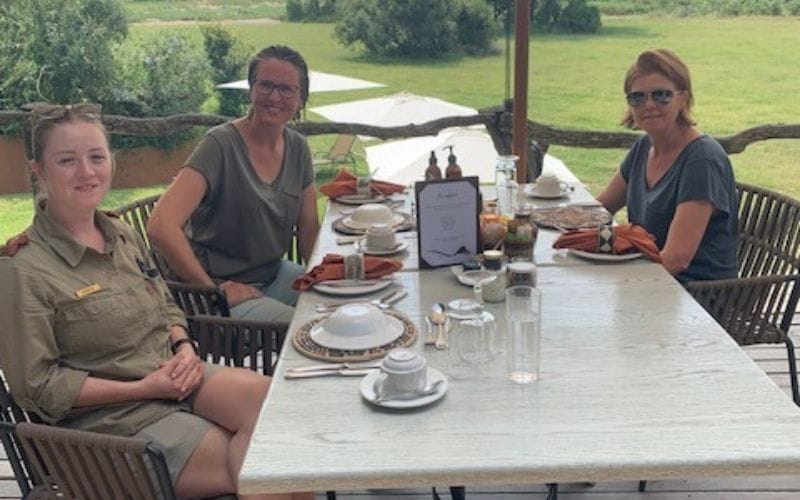
Fenced versus unfenced lodges
This is the question guests ask us most often when we are going through lodge options, and the honest answer is: both are safe, but they require different behaviour.
Fenced camps, like most lodges inside Kruger's concessions or within private reserves that use perimeter fencing, give you a clear boundary. You can walk between tents or rooms at night without an escort. The wildlife is on the other side of the fence.
Unfenced lodges sit in open wilderness. Animals move through camp. A hyena might pass within earshot at 2am. A herd of buffalo might graze fifty metres from the dining area at sunrise. Lodges that operate this way follow strict protocols: no walking anywhere in camp alone after dark, always with an armed ranger escort, no exceptions. They make this clear at check-in, and they mean it.
We work with lodges on both sides of this. Neither is inherently better. What matters is that you understand which one you are staying in and follow the lodge's guidance accordingly.
Health: what to prepare for before you travel
Malaria is the most important health consideration for a South African safari. Much of the Greater Kruger area, including the Sabi Sand and Timbavati, sits within a malaria zone. Speak to a travel health clinic before you depart. They will advise on prophylaxis based on your trip dates and itinerary. It is not something to skip or leave to chance.
A few other basics worth getting right before you go:
Drink bottled or filtered water throughout your trip. All reputable lodges provide this, but it is worth asking when you arrive. Do not drink tap water in camp, especially in more remote locations.
Sunscreen is non-negotiable in the Lowveld. The game drives run from early morning into the mid-morning heat, and again from late afternoon into dusk. You are out in direct sun. Bring SPF 50 and reapply.
If you take prescription medication, carry more than you need and keep it in your hand luggage. Getting something resupplied in a remote bush camp is not straightforward.
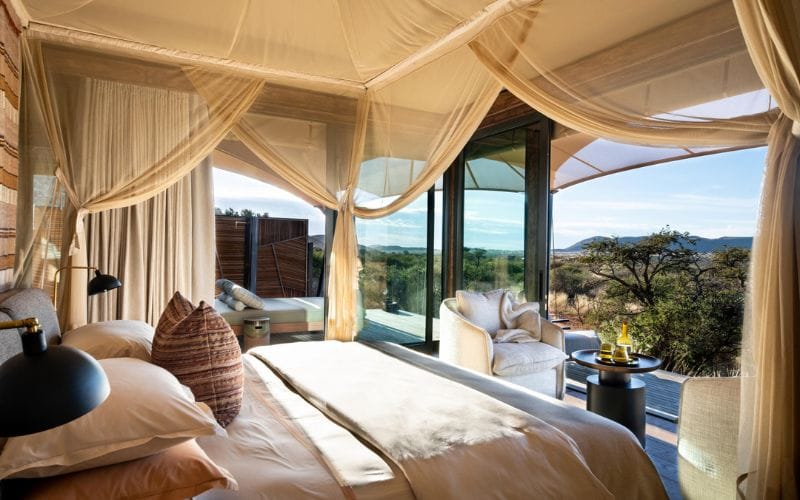
What most people worry about that they do not need to
The internet is full of safari horror stories. A few of them are real. Most are either extreme edge cases or the result of someone ignoring direct instructions from a guide.
You are not going to be eaten. The risk of a serious wildlife incident on a guided safari with a reputable operator is very low. Animals in well-managed reserves see game vehicles every day. They are not threatened by them and do not hunt guests. The protocols that lodges run have been refined over decades.
Crime concerns are also regularly overblown when it comes to safari lodges specifically. Private reserves and lodge concessions operate in largely remote areas. You are not walking through an unfamiliar city. Standard caution applies, particularly in transit through airports or towns on the way to camp, but once you are at the lodge, you are in a tightly managed environment.
The things that do occasionally go wrong on safari tend to be health-related. Dehydration on a long drive. A tick bite that went unnoticed. Sunstroke on a walking trail. These are manageable with preparation, not fear.
A note on choosing the right operator
How your safari is set up matters at least as much as which reserve you visit. Guides at well-run lodges know their areas intimately. Emergency protocols, evacuation procedures, and links to medical facilities are standard practice at any lodge we recommend. We have been through these properties ourselves, which is partly why we ask a lot of questions before putting someone on a plane to one.
If you are weighing up options for a first trip to South Africa, the Greater Kruger area is a strong starting point. For families with younger children, there are specific considerations worth going through before you book. Our piece on family safaris in South Africa covers those in more detail.
If you would like to talk through any of this before you start planning, we are happy to take you through it.
If this resonated
The bush has been expecting you
Start with a conversation. We will ask what makes you want to wake up at four-thirty, and build from there.
Begin a conversation
Royal Malewane reopens: what we remember, and what the fact sheet confirms
The original Royal Portfolio property is back after months behind scaffolding. We haven't seen it yet. Here is what we know anyway.

We run on solar and we have not printed since 2019
Vikki and Sian on solar power, paper, and what a small safari company can honestly claim.

Sandringham Private Game Reserve: should you go early, or wait?
Greater Kruger's newest reserve opens in August 2026. Our honest take on who should book Sandringham early, and who should give it a few seasons.

The packing guide
What to bring on safari, what to leave at home, and the one thing no lodge can lend you. An honest packing list from the team in Hoedspruit.

How do you want to feel when you get home?
Why we plan safaris around how you want to feel when you get home, not around a pin on the map.

South Africa's online traveller declaration: what it means for your safari (and what it doesn't)
A five-minute customs form now stands between you and the arrivals hall. Here's what it is, who needs it, and what nothing to declare actually means for a normal safari guest.

Safari After Dark
Night drives reveal a different Africa. Quieter, older, more deliberate. Here's what we love about the bush after the sun goes down.

How we tailor every Marula Hill safari
We don't start with destinations. We start with you: your pace, your family, your idea of a good day in the bush.

When space teaches: what Saseka's refresh tells us about gathering in the bush
What a thoughtful safari lodge refresh tells us about gathering in the bush.

Inside FedAir's new Baobab lounge at Hoedspruit
The new Baobab lounge at Hoedspruit airport changes how a safari begins. Vikki Jackson on the room that holds you before the bush does.

How safari pricing actually works
From the people who build the quotes. What you are really paying for, where the money goes, and how to spend it well.

Monwana, and what coming home actually means
By Vikki Jackson and Sian Loehrer. A week at the Thornybush lodge that has built its whole identity around the word home, and what we found when we tested it against the room, the drives, the afternoons and the bill.

The Mozambique dhow: a slow boat at the end of a fast trip
Why we put a dhow afternoon into almost every Mozambique trip. Sail, salt water and the long breath out after safari.

Why we built the Antarctica page
A short note from Sian on why an African safari business added Antarctica to its destination map, and how we handle a trip neither founder has yet made.

Lion Sands Ivory Lodge. What their redesign gets right
I visited Lion Sands Ivory Lodge in the Sabi Sand. The redesigned spaces are quiet, bold, and rare. Here is what they got right.

Where the money actually goes on a luxury safari
A line-by-line look at what you're actually paying for on a luxury African safari — and what a quote that looks light is usually hiding.

Bazaruto vs Quirimbas: which Mozambique archipelago is right for you?
How to choose between Mozambique's two great archipelagos for a bush-and-beach trip. Geography, lodge feel, when to go.

Sabi Sand or Kruger
Two reserves, one fence line, very different mornings

What is the best month to visit Cape Town?
Cape Town rewards you differently in every season, but March to May is the window most of our clients come back to.

What Singita Lebombo's 2026 redesign tells us
Lebombo reopened March 2026 warmer, quieter, more art-led

Gorilla trekking, Uganda or Rwanda
Two countries, the same forest, two very different days

Do you need travel insurance for a safari
What safari travel insurance must cover, and why standard policies fall short

How two women from outside the travel industry built a luxury safari brand from Africa
We are the two women behind Marula Hill. One of us came from IBM, the other from MARS Southern Africa. Here is the long version of how a private safari business gets built from outside the travel industry.

Sole-use villa safaris in Africa
What sole-use villa safaris mean in practice, who they suit, and what to ask

Why Rwanda is the cleanest country in Africa
A plastic-bag ban from 2008. A mandatory community work morning on the last Saturday of every month. The system behind Rwanda's cleanliness, explained.