
Sabi Sand Game Reserve: South Africa's leopard country
The Sabi Sand has the highest leopard density of any protected area in South Africa. Here's what makes it genuinely different, and how we plan trips here.

The tracker cuts the engine and the bush falls quiet. You're sitting in an open vehicle in the Lowveld half-dark, watching a leopard move through the knobthorn scrub ten metres off the road. She's not hiding. She barely notices you're there. That kind of sighting, in that kind of light, at that kind of distance, is why people come to the Sabi Sand.
Not for a glimpse. For this.
What makes the Sabi Sand different
The Sabi Sand sits on the southwest corner of the Kruger National Park, about 65,000 hectares of private reserve land in Mpumalanga's Lowveld. The fence between the Sabi Sand and Kruger came down in 1993, and animals have moved freely between the two ever since. That matters for game viewing. A leopard raised in the Sabi Sand can range into Kruger and back without obstruction, and wildlife crossing in from Kruger adds to what's already an exceptionally dense population.
The two rivers the reserve is named after, the Sabie and the Sand, run through the land year-round. That permanent water keeps game resident rather than migratory, which is part of why the sightings here are so consistent.
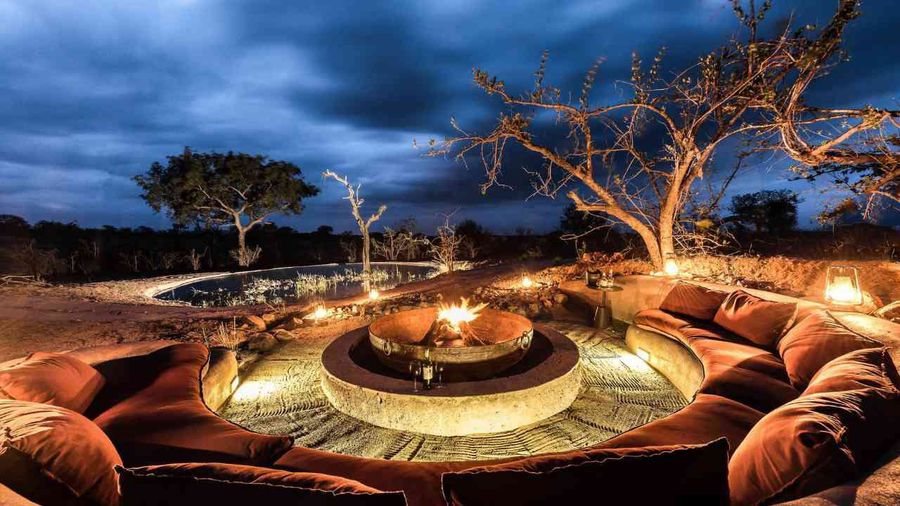
The leopard numbers
Singita, in partnership with Panthera, ran a camera trap survey across the reserve and found 12.2 leopards per 100 square kilometres. That figure, confirmed against previous studies, makes the Sabi Sand the highest-density leopard habitat of any protected area surveyed in South Africa. Not just high. The upper threshold of what leopard ecology can sustain.
What that means on the ground is that a leopard sighting here is not a lucky day. On a four-night stay with twice-daily drives, most guests see leopard more than once, often at close range, sometimes watching a kill or a cub.
The animals are habituated to vehicles. Decades of careful, consistent game viewing practices have produced leopards that treat an open Land Cruiser as furniture. When the Shangaan trackers who work alongside guides in these vehicles follow a leopard off-road through the mopane, the cat rarely breaks stride.
The lodges that define the reserve
Londolozi, on the banks of the Sand River, has been privately owned by the Varty family since 1926. In 1993 Londolozi's Tree Camp became the first safari lodge in Africa to receive Relais & Châteaux status. The five camps sit close to each other along the riverline, and the guiding here is some of the most knowledgeable we've seen anywhere in South Africa.
Singita has operated in the Sabi Sand since 1993. The conservation focus is serious. Their biodiversity team runs ongoing monitoring of leopard, rhino, wild dog, and lion populations, and the guiding reflects that depth of knowledge.
Sabi Sabi Earth Lodge is built differently. The architecture sits below ground level, sunken into a slope of the hillside, with a waterhole visible from the main dining area. It draws a specific kind of guest. People who want less of the conventional lodge aesthetic and more of something that feels like the bush itself.
Dulini River Lodge sits on the western side of the reserve, raised above the Sand River on a low bank. The game viewing from the deck is worth the trip alone, and the guides work 10,500 hectares of some of the best traversing in the reserve.
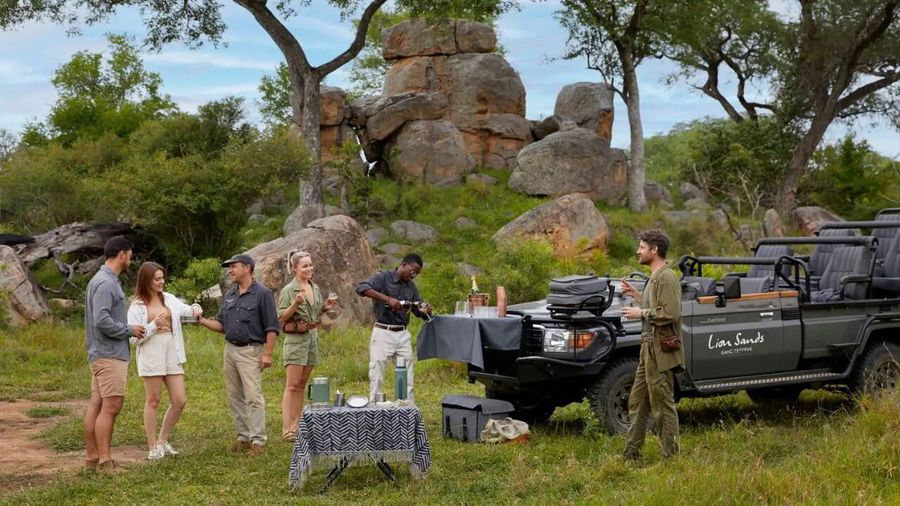
What a game drive actually looks like here
Drives go out twice a day: early morning and late afternoon into dark. In the Sabi Sand, guides can take vehicles off-road to follow animals, which makes a real difference when a leopard or lion moves into thick cover.
The Shangaan trackers reading spoor from the front seat of the vehicle are often the difference between finding an animal and not. This is a long-taught skill. Watching a good tracker read the ground is as interesting as any wildlife encounter.
Night drives run in most camps, and these are worth prioritising. The Lowveld after dark produces things you won't find on a daytime drive: civets, genets, honey badgers, the occasional aardvark moving across a dry riverbed.
When to go
The Sabi Sand rewards a visit in any season, but the dry winter months from May to September offer the clearest game viewing. Vegetation thins out, animals concentrate around water, and the Lowveld light in June and July is cold and gold. Mornings on the vehicle require a blanket; by midday the temperature has climbed back into the twenties.
The wet season from November through March brings green bush, good birding, and the chance of seeing newborn impala in late November and December. Leopard sightings don't drop off significantly in summer. The animals are there regardless of season; it's the visibility that changes.
How we plan Sabi Sand trips
Most of our guests spend four to five nights in the Sabi Sand, long enough to fall properly into the pace of drives and have a genuine range of sightings. We often pair it with a contrasting destination, a coastal stay in the Western Cape or a few nights at a different reserve type, to give a trip some shape and variety.
The reserve can work well as a standalone if someone is on a short trip to South Africa and wants to put most of their time on game viewing. The airstrip at Sabi Sand is served from Johannesburg and Skukuza, so it's a short flight from the city with no significant driving.
Lodge selection matters here more than in some destinations. The traversing areas, guiding quality, and lodge character vary enough that the right fit depends on what a guest is actually looking for. It's the kind of conversation we find useful to have before booking.
If you're putting together a South Africa trip and want to talk through your options, get in touch with our team. We know these lodges well, and we know which ones suit which people.
See also: Ximuwu.
If this resonated
The bush has been expecting you
Start with a conversation. We will ask what makes you want to wake up at four-thirty, and build from there.
Begin a conversation
Royal Malewane reopens: what we remember, and what the fact sheet confirms
The original Royal Portfolio property is back after months behind scaffolding. We haven't seen it yet. Here is what we know anyway.

We run on solar and we have not printed since 2019
Vikki and Sian on solar power, paper, and what a small safari company can honestly claim.

Sandringham Private Game Reserve: should you go early, or wait?
Greater Kruger's newest reserve opens in August 2026. Our honest take on who should book Sandringham early, and who should give it a few seasons.

The packing guide
What to bring on safari, what to leave at home, and the one thing no lodge can lend you. An honest packing list from the team in Hoedspruit.

How do you want to feel when you get home?
Why we plan safaris around how you want to feel when you get home, not around a pin on the map.

South Africa's online traveller declaration: what it means for your safari (and what it doesn't)
A five-minute customs form now stands between you and the arrivals hall. Here's what it is, who needs it, and what nothing to declare actually means for a normal safari guest.

Safari After Dark
Night drives reveal a different Africa. Quieter, older, more deliberate. Here's what we love about the bush after the sun goes down.

How we tailor every Marula Hill safari
We don't start with destinations. We start with you: your pace, your family, your idea of a good day in the bush.

When space teaches: what Saseka's refresh tells us about gathering in the bush
What a thoughtful safari lodge refresh tells us about gathering in the bush.

Inside FedAir's new Baobab lounge at Hoedspruit
The new Baobab lounge at Hoedspruit airport changes how a safari begins. Vikki Jackson on the room that holds you before the bush does.

How safari pricing actually works
From the people who build the quotes. What you are really paying for, where the money goes, and how to spend it well.

Monwana, and what coming home actually means
By Vikki Jackson and Sian Loehrer. A week at the Thornybush lodge that has built its whole identity around the word home, and what we found when we tested it against the room, the drives, the afternoons and the bill.

The Mozambique dhow: a slow boat at the end of a fast trip
Why we put a dhow afternoon into almost every Mozambique trip. Sail, salt water and the long breath out after safari.

Why we built the Antarctica page
A short note from Sian on why an African safari business added Antarctica to its destination map, and how we handle a trip neither founder has yet made.

Lion Sands Ivory Lodge. What their redesign gets right
I visited Lion Sands Ivory Lodge in the Sabi Sand. The redesigned spaces are quiet, bold, and rare. Here is what they got right.

Where the money actually goes on a luxury safari
A line-by-line look at what you're actually paying for on a luxury African safari — and what a quote that looks light is usually hiding.

Bazaruto vs Quirimbas: which Mozambique archipelago is right for you?
How to choose between Mozambique's two great archipelagos for a bush-and-beach trip. Geography, lodge feel, when to go.

Sabi Sand or Kruger
Two reserves, one fence line, very different mornings

What is the best month to visit Cape Town?
Cape Town rewards you differently in every season, but March to May is the window most of our clients come back to.

What Singita Lebombo's 2026 redesign tells us
Lebombo reopened March 2026 warmer, quieter, more art-led

Gorilla trekking, Uganda or Rwanda
Two countries, the same forest, two very different days

Do you need travel insurance for a safari
What safari travel insurance must cover, and why standard policies fall short

How two women from outside the travel industry built a luxury safari brand from Africa
We are the two women behind Marula Hill. One of us came from IBM, the other from MARS Southern Africa. Here is the long version of how a private safari business gets built from outside the travel industry.

Sole-use villa safaris in Africa
What sole-use villa safaris mean in practice, who they suit, and what to ask

Why Rwanda is the cleanest country in Africa
A plastic-bag ban from 2008. A mandatory community work morning on the last Saturday of every month. The system behind Rwanda's cleanliness, explained.