
Is a South Africa safari worth it?
A South Africa safari is worth it. Here's what you actually get for the money, and what to watch for when planning.

The vehicle stops before you even see the leopard. Your guide's hand drops low and flat. Then you spot her, six metres off the track, chest deep in the dry grass, watching you with the same careful attention you're giving her. Nobody speaks. The afternoon turns gold around you.
That moment is why a South Africa safari is worth it. And yes, before we go further: the answer is yes. For most travellers, a well-planned South African safari returns more than what went in. Rates at private lodges in the Sabi Sand or Greater Kruger generally run between R6,000 and R18,000 per person per night, all-inclusive. That is not a small number. But the structure of what you're buying changes the calculation significantly.
What you're actually paying for
Private game reserve lodges are all-inclusive by design. Your rate covers game drives twice daily, meals, drinks, guiding, park fees, and in most cases laundry. When you break it down per experience, the number looks different from the headline rate.
You're also paying for access. South Africa's private concessions, particularly those bordering Kruger, operate outside the park's rules on off-road driving and night game drives. That changes what's possible. A leopard doesn't stay on the road to wait for a camera. Your guide can follow her off-track. At night, with a spotlight running, the Lowveld opens into a different world entirely.
The guiding standard here is worth mentioning separately. Good guides know their reserve well enough to anticipate, not just react. They read spoor on the road before sunrise, position the vehicle for the light, and know which waterhole is worth waiting at in the late afternoon. That knowledge is part of what you're paying for, and it's harder to quantify than thread counts.
What South Africa has that other destinations don't
Compared to somewhere like Botswana, which offers extraordinary intimacy but requires light aircraft transfers and comes with a considerably higher price floor, South Africa is accessible. Johannesburg is a major international hub. The Sabi Sand is a three-hour drive from the airport. You can fly into Cape Town, spend a few days there, and connect to a safari in under two hours. That logistical ease lowers the barrier without lowering the wildlife.
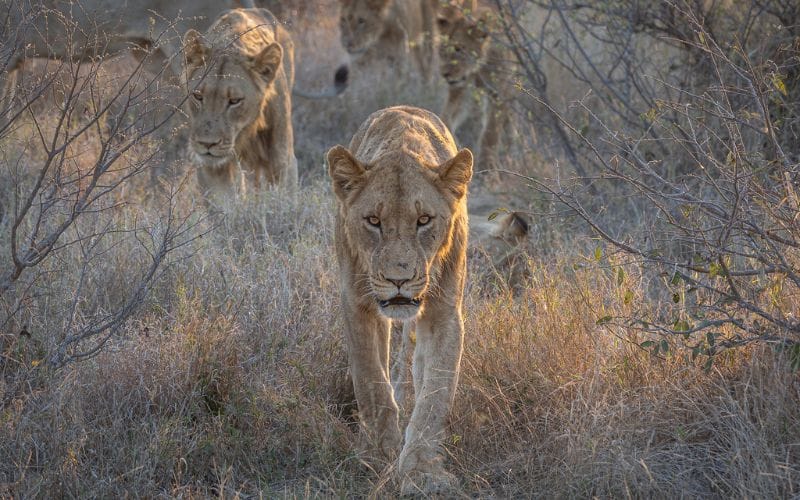
South Africa also gives you the Big Five in reliably high numbers. Sabi Sand has the highest recorded leopard density in South Africa. Lion prides are resident and habituated. Elephant, buffalo, rhino. If ticking the list is part of what makes it meaningful for your group, South Africa delivers more consistently than almost anywhere else.
The landscapes shift as you move around the country. The Lowveld savanna around Kruger, with its mopane and marula trees and the particular red dust of late winter, is different from the open grasslands of KwaZulu-Natal or the fynbos-fringed private reserves of the Western Cape. One trip can hold more than one South Africa.
Is a luxury lodge actually necessary?
Not for everyone. South Africa has a wider accommodation spectrum than most safari countries. Self-drive in Kruger National Park stays affordable and puts you in real wilderness. But the experience is different.
In a private lodge, game drives run without the restriction of staying on roads. You're in a small group, usually no more than six guests per vehicle, with a dedicated guide and tracker. Meals are served in the bush or in a boma under a proper Southern Cross sky. The pace of the day is built around wildlife, not park opening hours.
The thing we hear most from first-time luxury safari guests is that the sightings are more personal. Not just more frequent, though that's often true too. Personal, because there's no jostling, no engine idling from a neighbouring vehicle, no phone calls. Just the animal and the moment. When the elephant walks to within ten metres of the vehicle and your guide goes quiet, the silence is yours.
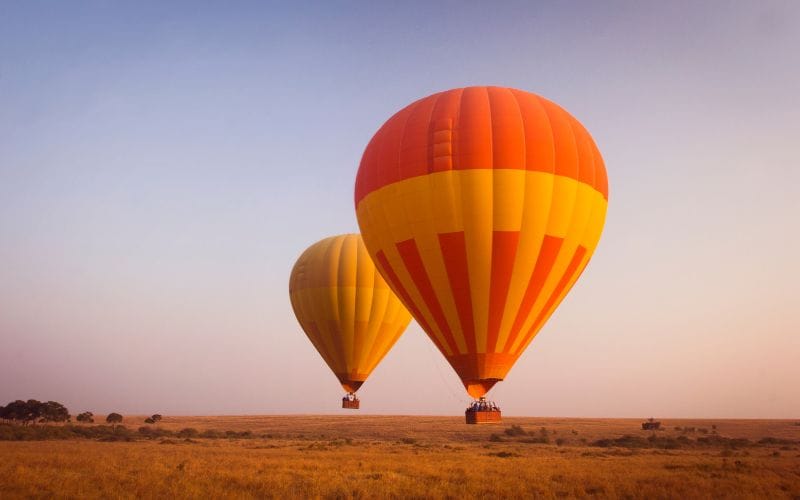
Wellness add-ons, spas, hot air balloon rides at sunrise, bush breakfasts out on the plains: these are real parts of the offering at most private lodges and they matter to a lot of travellers. Whether they matter to you is a question worth asking before you book.
What makes the difference between a trip that delivers and one that doesn't
Season is a bigger variable than most people account for. Winter in the bushveld, roughly May through September, is the prime game viewing window. Vegetation thins, animals concentrate at water sources, and the air is dry and clear. The sightings are better, and the days are cooler. Rates reflect this.
Shoulder months, April and October, offer strong value. The heat starts to ease in October, and the bush is still fairly open. April sits just after the green season, sometimes still with remnant foliage, but the rates are lower, and the parks are quieter.
Lodge selection matters as much as timing. Not all private concessions are equal in terms of wildlife density, guiding quality, or how well the lodge itself is run. We spend a lot of time in the bush for exactly this reason: so we know which properties consistently deliver and which ones have a good website and an inconsistent reality.
The conservation layer
It's worth saying plainly: the money you spend at a private South African reserve does fund conservation. Phinda, Shamwari, the Sabi Sand conservancy, most of these operations direct revenue toward anti-poaching, habitat management, and community employment. Your stay isn't just a transaction. Reserves that are well-funded operate at a higher ecological standard, which in turn produces better wildlife sightings. It's a loop that works.
South Africa's private reserve model, built on the idea that wildlife pays its way, has been running long enough to show real results. The Sabi Sand leopards are among the best-studied in Africa, with a long-running Panthera research project on the reserve. That kind of sustained investment shows.
How to think about whether it's right for you
A South African safari at a private lodge is worth it if you want close, unhurried time with wildlife. The personal service and the particular quality of silence that comes from being in the bush far from other people are part of the same thing.
It may not be the right fit if your budget sits firmly at the budget end of the spectrum, if you're uncomfortable with early mornings and variable schedules, or if you'd rather self-drive at your own pace. South Africa has options for those travellers too, they just look different from a private lodge experience.
The question we'd encourage you to ask yourself is not "is a safari worth it in general" but "what does a good safari look like for us specifically." The answer to that shapes everything, from the destination to the lodge to the time of year. If you're not sure where to start, we're easy to reach and we like the planning part as much as the travel itself.
Read how to plan a first safari in South Africa or get in touch with us directly to talk through what makes sense for your trip.
If this resonated
The bush has been expecting you
Start with a conversation. We will ask what makes you want to wake up at four-thirty, and build from there.
Begin a conversation
Royal Malewane reopens: what we remember, and what the fact sheet confirms
The original Royal Portfolio property is back after months behind scaffolding. We haven't seen it yet. Here is what we know anyway.

We run on solar and we have not printed since 2019
Vikki and Sian on solar power, paper, and what a small safari company can honestly claim.

Sandringham Private Game Reserve: should you go early, or wait?
Greater Kruger's newest reserve opens in August 2026. Our honest take on who should book Sandringham early, and who should give it a few seasons.

The packing guide
What to bring on safari, what to leave at home, and the one thing no lodge can lend you. An honest packing list from the team in Hoedspruit.

How do you want to feel when you get home?
Why we plan safaris around how you want to feel when you get home, not around a pin on the map.

South Africa's online traveller declaration: what it means for your safari (and what it doesn't)
A five-minute customs form now stands between you and the arrivals hall. Here's what it is, who needs it, and what nothing to declare actually means for a normal safari guest.

Safari After Dark
Night drives reveal a different Africa. Quieter, older, more deliberate. Here's what we love about the bush after the sun goes down.

How we tailor every Marula Hill safari
We don't start with destinations. We start with you: your pace, your family, your idea of a good day in the bush.

When space teaches: what Saseka's refresh tells us about gathering in the bush
What a thoughtful safari lodge refresh tells us about gathering in the bush.

Inside FedAir's new Baobab lounge at Hoedspruit
The new Baobab lounge at Hoedspruit airport changes how a safari begins. Vikki Jackson on the room that holds you before the bush does.

How safari pricing actually works
From the people who build the quotes. What you are really paying for, where the money goes, and how to spend it well.

Monwana, and what coming home actually means
By Vikki Jackson and Sian Loehrer. A week at the Thornybush lodge that has built its whole identity around the word home, and what we found when we tested it against the room, the drives, the afternoons and the bill.

The Mozambique dhow: a slow boat at the end of a fast trip
Why we put a dhow afternoon into almost every Mozambique trip. Sail, salt water and the long breath out after safari.

Why we built the Antarctica page
A short note from Sian on why an African safari business added Antarctica to its destination map, and how we handle a trip neither founder has yet made.

Lion Sands Ivory Lodge. What their redesign gets right
I visited Lion Sands Ivory Lodge in the Sabi Sand. The redesigned spaces are quiet, bold, and rare. Here is what they got right.

Where the money actually goes on a luxury safari
A line-by-line look at what you're actually paying for on a luxury African safari — and what a quote that looks light is usually hiding.

Bazaruto vs Quirimbas: which Mozambique archipelago is right for you?
How to choose between Mozambique's two great archipelagos for a bush-and-beach trip. Geography, lodge feel, when to go.

Sabi Sand or Kruger
Two reserves, one fence line, very different mornings

What is the best month to visit Cape Town?
Cape Town rewards you differently in every season, but March to May is the window most of our clients come back to.

What Singita Lebombo's 2026 redesign tells us
Lebombo reopened March 2026 warmer, quieter, more art-led

Gorilla trekking, Uganda or Rwanda
Two countries, the same forest, two very different days

Do you need travel insurance for a safari
What safari travel insurance must cover, and why standard policies fall short

How two women from outside the travel industry built a luxury safari brand from Africa
We are the two women behind Marula Hill. One of us came from IBM, the other from MARS Southern Africa. Here is the long version of how a private safari business gets built from outside the travel industry.

Sole-use villa safaris in Africa
What sole-use villa safaris mean in practice, who they suit, and what to ask

Why Rwanda is the cleanest country in Africa
A plastic-bag ban from 2008. A mandatory community work morning on the last Saturday of every month. The system behind Rwanda's cleanliness, explained.