
Botswana with kids: why families keep coming back
Botswana is one of Africa's most rewarding destinations for families. Here's what makes it work, and how to plan it well.

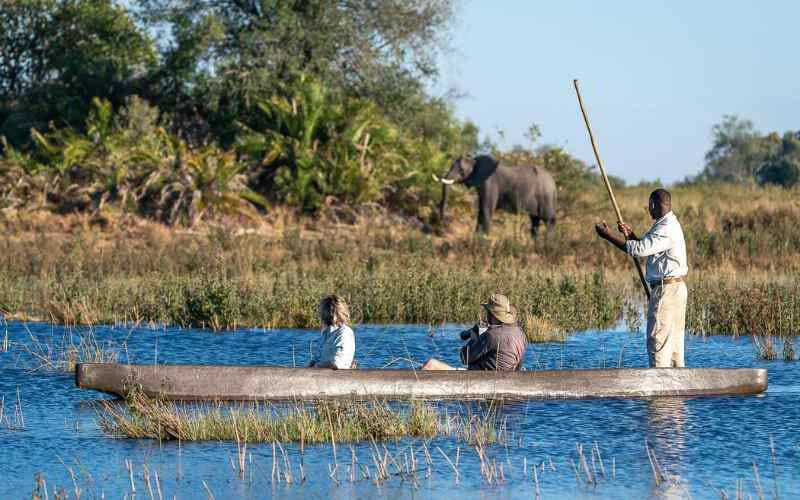
The mokoro barely makes a sound as it pushes through the reeds. Your daughter is sitting perfectly still at the bow (something you've never seen her do at home). Ahead, a fish eagle calls once, then again. An elephant lifts its head from the water to look at you, decides you're no threat, and goes back to drinking. This is the Okavango Delta at its most ordinary. For your family, it will be the moment they talk about for years.
Why Botswana Works So Well for Families
Botswana doesn't feel like a managed experience. There are no queues of vehicles jostling for the best angle on a kill. The concessions are large, the camps are small. Wildlife has room to behave like wildlife.
For families, that quietness matters more than it might sound. Children pick up on the energy of a place. When the bush is calm and the guide is genuinely engaged, kids engage too. When it's crowded and rushed, they switch off.
The other thing that sets Botswana apart is how seriously the camps take the children themselves. Junior ranger programmes, bush tracking exercises, guided walks geared to smaller attention spans. These aren't afterthoughts. The guides we work with here actually enjoy taking families out, and that comes through in the experience.
The Places That Make the Itinerary
Any good Botswana family safari draws on at least two ecosystems, because the contrast is part of what keeps it interesting.
The Okavango Delta is where most itineraries begin, and for good reason. Mokoro rides on the waterways give younger children a safe, slow-paced way to get close to wildlife. Hippos surface a few metres away. Kingfishers dart between the reeds. It's calm enough for a five-year-old, and interesting enough that teenagers don't feel like they're being babysat.
Moremi Game Reserve offers something different: proper land-based game drives in thick bush, with real predator activity. Lions, leopards, wild dogs: Moremi produces sightings as reliably as anywhere in Africa. Older children who want the classic safari experience will find it here.
Chobe National Park is where the elephants are, in numbers that are difficult to imagine until you're standing in the middle of it. The river cruises along the Chobe River are one of the most family-friendly wildlife experiences on the continent. You watch herds of 50, 80, 100 elephants wade across in the late afternoon light, and no one on the boat says anything for a long time.
What the Camps Actually Offer
The practical side of travelling with children matters more than any brochure tends to admit. Early dinners, flexible wake-up times for younger kids, space to move. These aren't luxuries; they're what determine whether a family enjoys the trip or endures it.
Botswana's better camps have worked this out. Family tents are genuinely sized for families, not just two adults who've squeezed a cot into the corner. Some properties offer private vehicles as standard, which gives you the freedom to turn back when someone needs a snack or a nap without feeling like you're disrupting the group.
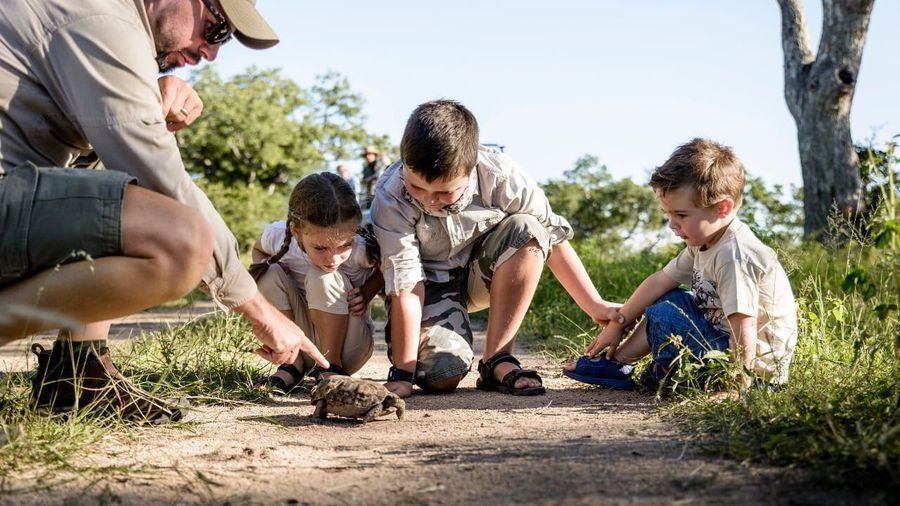
Guides here are also trained to read the room. If the kids are flagging at hour two of a drive, a good guide will pull up under a shady tree, pour some juice, and find something small and fascinating to examine in the dirt. A dung beetle pushing its ball uphill turns out to be more interesting to a seven-year-old than a sleeping lion a kilometre away.
When to Go
The dry season, from May to October, gives you the best wildlife viewing. Vegetation thins out, animals concentrate around water, and the temperatures are manageable. It also lands inside most school holiday windows, which makes the logistics simpler.
April to May and November are quieter. Rates are lower, the bush is green, and the birdlife is extraordinary. For families with flexible school arrangements, these shoulder months deserve serious consideration.
The wet season (December to March) is different again. Newborn animals are everywhere, the Okavango channels are full and lush, and birdwatchers will not be disappointed. It takes some planning to get the activity mix right, but families who go in this period often find it less crowded and surprisingly special.
How the Experience Stays With Children
Parents who've taken their children to Botswana tend to say the same thing. It wasn't the big sightings that did it. It was the guide who spent twenty minutes teaching their son how to read animal tracks in the sand. The afternoon the whole family sat in silence watching a leopard move through the grass. The conversation at dinner that turned into a real discussion about conservation and what these places might look like in fifty years.
These experiences don't happen on every trip. They need the right setting and a guide who actually cares. Botswana, more than most places, gives you both.
We've taken enough families through these camps to know which properties genuinely handle children well, and which itineraries hold a ten-year-old's attention across a full week. That knowledge makes a genuine difference to how the trip unfolds.
If you're thinking about Botswana for your family and aren't sure where to start, we're happy to talk it through. Start with a conversation.
If this resonated
The bush has been expecting you
Start with a conversation. We will ask what makes you want to wake up at four-thirty, and build from there.
Begin a conversation
Royal Malewane reopens: what we remember, and what the fact sheet confirms
The original Royal Portfolio property is back after months behind scaffolding. We haven't seen it yet. Here is what we know anyway.

We run on solar and we have not printed since 2019
Vikki and Sian on solar power, paper, and what a small safari company can honestly claim.

Sandringham Private Game Reserve: should you go early, or wait?
Greater Kruger's newest reserve opens in August 2026. Our honest take on who should book Sandringham early, and who should give it a few seasons.

The packing guide
What to bring on safari, what to leave at home, and the one thing no lodge can lend you. An honest packing list from the team in Hoedspruit.

How do you want to feel when you get home?
Why we plan safaris around how you want to feel when you get home, not around a pin on the map.

South Africa's online traveller declaration: what it means for your safari (and what it doesn't)
A five-minute customs form now stands between you and the arrivals hall. Here's what it is, who needs it, and what nothing to declare actually means for a normal safari guest.

Safari After Dark
Night drives reveal a different Africa. Quieter, older, more deliberate. Here's what we love about the bush after the sun goes down.

How we tailor every Marula Hill safari
We don't start with destinations. We start with you: your pace, your family, your idea of a good day in the bush.

When space teaches: what Saseka's refresh tells us about gathering in the bush
What a thoughtful safari lodge refresh tells us about gathering in the bush.

Inside FedAir's new Baobab lounge at Hoedspruit
The new Baobab lounge at Hoedspruit airport changes how a safari begins. Vikki Jackson on the room that holds you before the bush does.

How safari pricing actually works
From the people who build the quotes. What you are really paying for, where the money goes, and how to spend it well.

Monwana, and what coming home actually means
By Vikki Jackson and Sian Loehrer. A week at the Thornybush lodge that has built its whole identity around the word home, and what we found when we tested it against the room, the drives, the afternoons and the bill.

The Mozambique dhow: a slow boat at the end of a fast trip
Why we put a dhow afternoon into almost every Mozambique trip. Sail, salt water and the long breath out after safari.

Why we built the Antarctica page
A short note from Sian on why an African safari business added Antarctica to its destination map, and how we handle a trip neither founder has yet made.

Lion Sands Ivory Lodge. What their redesign gets right
I visited Lion Sands Ivory Lodge in the Sabi Sand. The redesigned spaces are quiet, bold, and rare. Here is what they got right.

Where the money actually goes on a luxury safari
A line-by-line look at what you're actually paying for on a luxury African safari — and what a quote that looks light is usually hiding.

Bazaruto vs Quirimbas: which Mozambique archipelago is right for you?
How to choose between Mozambique's two great archipelagos for a bush-and-beach trip. Geography, lodge feel, when to go.

Sabi Sand or Kruger
Two reserves, one fence line, very different mornings

What is the best month to visit Cape Town?
Cape Town rewards you differently in every season, but March to May is the window most of our clients come back to.

What Singita Lebombo's 2026 redesign tells us
Lebombo reopened March 2026 warmer, quieter, more art-led

Gorilla trekking, Uganda or Rwanda
Two countries, the same forest, two very different days

Do you need travel insurance for a safari
What safari travel insurance must cover, and why standard policies fall short

How two women from outside the travel industry built a luxury safari brand from Africa
We are the two women behind Marula Hill. One of us came from IBM, the other from MARS Southern Africa. Here is the long version of how a private safari business gets built from outside the travel industry.

Sole-use villa safaris in Africa
What sole-use villa safaris mean in practice, who they suit, and what to ask

Why Rwanda is the cleanest country in Africa
A plastic-bag ban from 2008. A mandatory community work morning on the last Saturday of every month. The system behind Rwanda's cleanliness, explained.