
The best gay city in South Africa for visitors
Cape Town is South Africa's most welcoming city for LGBTQ+ travellers. Here's what to know before you go.

The afternoon light hits the cobblestones in De Waterkant and turns them amber. The windows of the little painted houses catch the sun. Somewhere up the hill a bar has opened its doors early, and the faint sound of music drifts down to the street. It's relaxed here in a way that doesn't feel performed.
Cape Town is, by almost any measure, the most welcoming city in South Africa for LGBTQ+ travellers. That has a lot to do with the legal and social protections that exist here. South Africa was the first country in Africa to legalise same-sex marriage, and those rights are embedded in a constitution that explicitly protects sexual orientation. But it also has to do with the particular character of this city. Cape Town has a long tradition of open, mixed neighbourhoods, and that shapes how people move through it and how visitors feel in it.
We've planned a lot of trips here. For LGBTQ+ clients, it comes up more than anywhere else. Here's what we actually tell people.
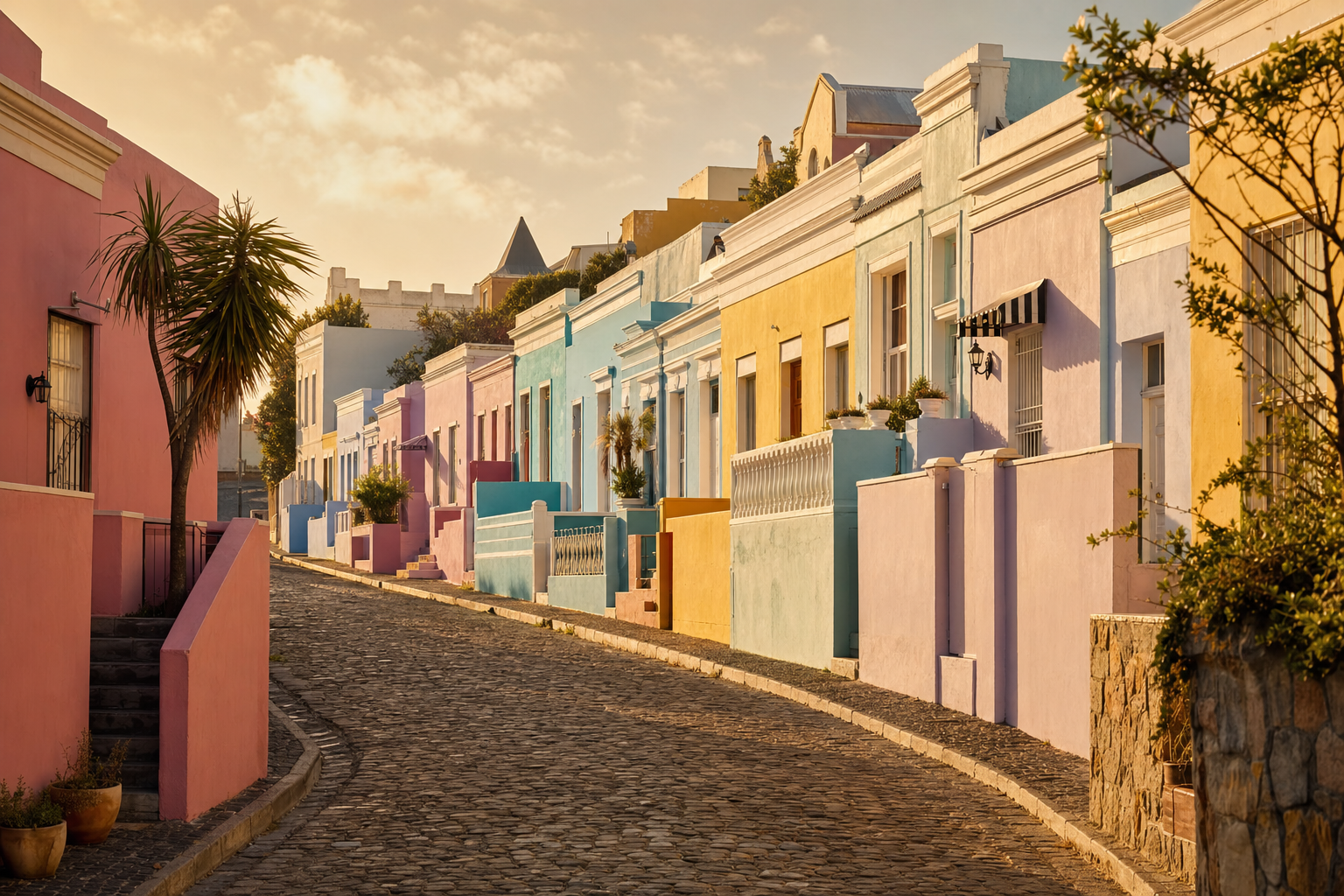
De Waterkant: the heart of the LGBTQ+ scene
De Waterkant is the neighbourhood that most people are referring to when they talk about Cape Town's gay scene. It sits just above the V&A Waterfront, and it's compact enough to walk in an afternoon. The streets are lined with LGBTQ+-friendly cafes, bars, galleries and small boutiques.
The Pink District, right in the middle of De Waterkant, is where most of the nightlife concentrates. There are a handful of long-running gay bars and clubs along these few streets, plus a couple of late-night drag and cabaret spots. The line-up changes year to year, which is part of the point. We send clients the current list when they book.
What makes De Waterkant work is that it doesn't feel sectioned off from the rest of the city. It's part of it. On a Saturday night, the crowd spills from LGBTQ+-specific venues into the broader neighbourhood without any particular dividing line.
A city with real infrastructure for the community
Cape Town isn't just welcoming in a social sense. The city has organisations that have been active for decades: the Triangle Project has provided LGBTQ+ counselling and legal support since 1996, and OUT LGBT Well-Being operates nationally from a Cape Town base.
For travellers, the practical significance of this is that there are support structures in place if anything goes wrong. We always mention this to clients, not to flag a risk but to emphasise the opposite. Cape Town is one of the few cities in sub-Saharan Africa where LGBTQ+ visitors have real recourse and real community.
Pride events run throughout the year, with the Cape Town Pride Festival typically taking place in February and March. The parade draws a substantial crowd and covers the central city.
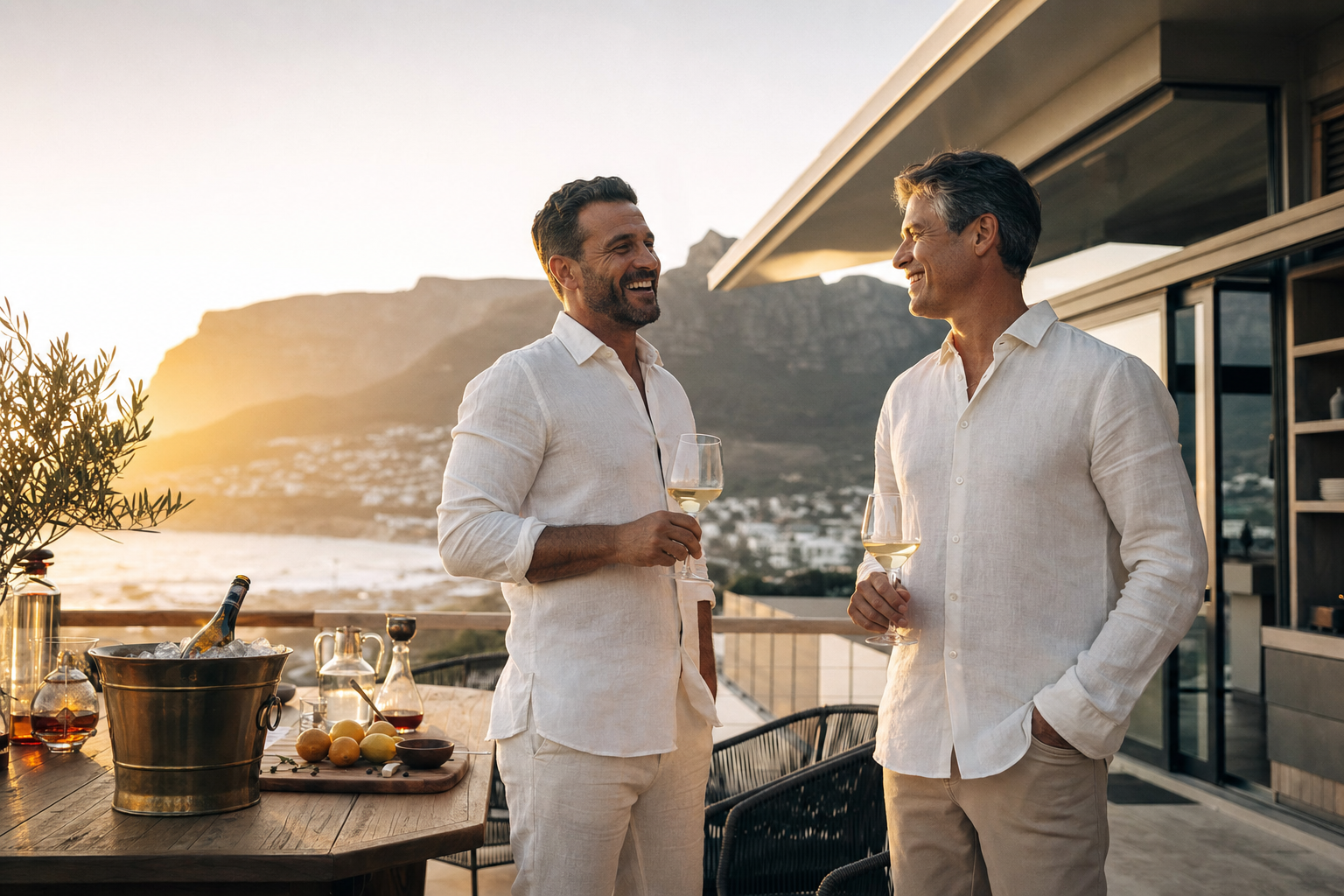
Rooftop bars and the Cape Town skyline
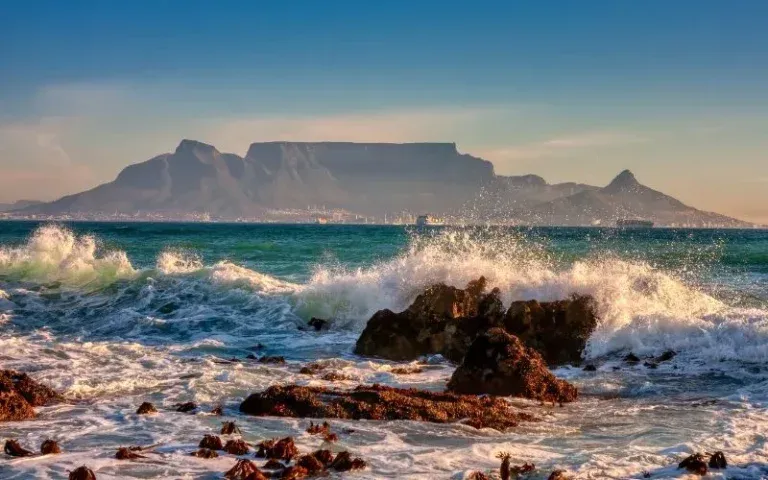
Cape Town has an unusually good rooftop bar scene, and most of it is LGBTQ+-welcoming without needing to be explicitly labelled as such. The best of the views sit above the V&A Waterfront, where the bars look across at Table Mountain framed behind the bowl of the harbour, the Atlantic turning pink at sunset.
Table Mountain and the peninsula
The natural setting of Cape Town is relevant to any trip here, and it's something LGBTQ+ travellers mention as much as the social scene. Table Mountain is the obvious starting point. The cable car takes you up in a few minutes; the views from the top take in the Atlantic, the Cape Peninsula curving south below you, the city laid out at your feet, and on a clear day the line of the Hottentots Holland mountains beyond. For those who want to walk, the Platteklip Gorge route is well-maintained and takes about two hours up.
Further south, Chapman's Peak Drive follows the cliff edge of the peninsula in a way that's difficult to describe without sounding promotional. The road hangs above the ocean for several kilometres. At the Cape of Good Hope, the land ends dramatically, the two oceans meeting in rough water below the lighthouse.
Clifton Beach and Camps Bay are both popular with LGBTQ+ visitors during summer. Clifton's four beaches are sheltered from the wind; Camps Bay is livelier, with a long promenade and the Twelve Apostles mountain range as a backdrop.
Bo-Kaap, Woodstock and the cultural side of the city
Not everything worth doing in Cape Town involves a bar or a beach. Bo-Kaap, with its brightly painted Cape Malay houses climbing the slope of Signal Hill, is one of the most photographed neighbourhoods in South Africa. Its Cape Malay food culture is part of what makes it worth walking. Woodstock, just east of the city centre, has shifted over the past decade into an arts and design district, with galleries, street murals and independent design studios filling old industrial buildings.
The Bree Street and Long Street live music venues attract mixed, LGBTQ+-friendly crowds on most nights, with the line-up usually swinging between Afrobeat, jazz and electronic depending on the evening.
The Cape Winelands
An hour east of Cape Town, Stellenbosch, Franschhoek and Paarl form the core of the Cape Winelands. This is wine country with serious food alongside it, and the area has been LGBTQ+-welcoming for long enough that it doesn't require a footnote.
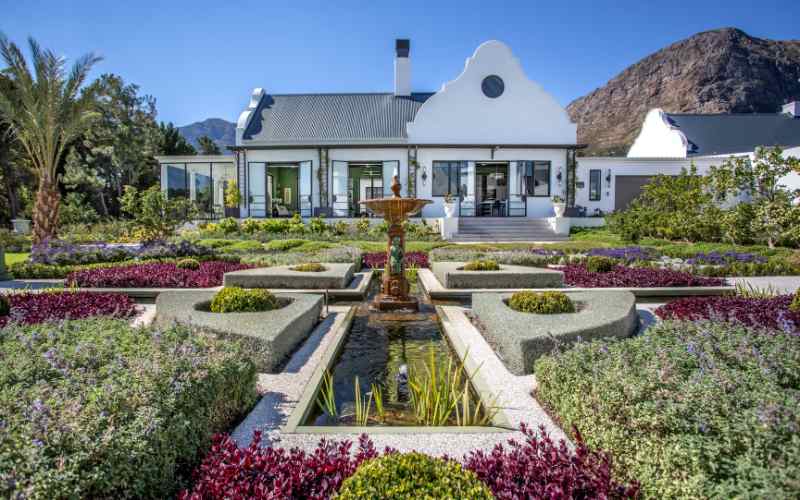
Franschhoek in particular, which operates on a culinary reputation that attracts visitors from across South Africa and internationally, has restaurants and guesthouses that cater to LGBTQ+ couples without any fuss. A day on the Franschhoek Wine Tram, moving between estates and stopping for tastings, is one of the more relaxed ways to spend an afternoon in the Western Cape.
Planning your trip
Cape Town works well as a standalone city break and also as part of a longer South Africa itinerary. A lot of our clients pair it with a safari in the Sabi Sand or Kruger, or with a few nights in the Garden Route. If you want to read more about the practicalities of LGBTQ+ travel across South Africa more broadly, our post on LGBTQ+ safari safety in South Africa goes into the detail.
We also plan Cape Town itineraries directly, and we're happy to talk through what makes sense for your dates and interests. Just get in touch.
If this resonated
The bush has been expecting you
Start with a conversation. We will ask what makes you want to wake up at four-thirty, and build from there.
Begin a conversation
Royal Malewane reopens: what we remember, and what the fact sheet confirms
The original Royal Portfolio property is back after months behind scaffolding. We haven't seen it yet. Here is what we know anyway.

We run on solar and we have not printed since 2019
Vikki and Sian on solar power, paper, and what a small safari company can honestly claim.

Sandringham Private Game Reserve: should you go early, or wait?
Greater Kruger's newest reserve opens in August 2026. Our honest take on who should book Sandringham early, and who should give it a few seasons.

The packing guide
What to bring on safari, what to leave at home, and the one thing no lodge can lend you. An honest packing list from the team in Hoedspruit.

How do you want to feel when you get home?
Why we plan safaris around how you want to feel when you get home, not around a pin on the map.

South Africa's online traveller declaration: what it means for your safari (and what it doesn't)
A five-minute customs form now stands between you and the arrivals hall. Here's what it is, who needs it, and what nothing to declare actually means for a normal safari guest.

Safari After Dark
Night drives reveal a different Africa. Quieter, older, more deliberate. Here's what we love about the bush after the sun goes down.

How we tailor every Marula Hill safari
We don't start with destinations. We start with you: your pace, your family, your idea of a good day in the bush.

When space teaches: what Saseka's refresh tells us about gathering in the bush
What a thoughtful safari lodge refresh tells us about gathering in the bush.

Inside FedAir's new Baobab lounge at Hoedspruit
The new Baobab lounge at Hoedspruit airport changes how a safari begins. Vikki Jackson on the room that holds you before the bush does.

How safari pricing actually works
From the people who build the quotes. What you are really paying for, where the money goes, and how to spend it well.

Monwana, and what coming home actually means
By Vikki Jackson and Sian Loehrer. A week at the Thornybush lodge that has built its whole identity around the word home, and what we found when we tested it against the room, the drives, the afternoons and the bill.

The Mozambique dhow: a slow boat at the end of a fast trip
Why we put a dhow afternoon into almost every Mozambique trip. Sail, salt water and the long breath out after safari.

Why we built the Antarctica page
A short note from Sian on why an African safari business added Antarctica to its destination map, and how we handle a trip neither founder has yet made.

Lion Sands Ivory Lodge. What their redesign gets right
I visited Lion Sands Ivory Lodge in the Sabi Sand. The redesigned spaces are quiet, bold, and rare. Here is what they got right.

Where the money actually goes on a luxury safari
A line-by-line look at what you're actually paying for on a luxury African safari — and what a quote that looks light is usually hiding.

Bazaruto vs Quirimbas: which Mozambique archipelago is right for you?
How to choose between Mozambique's two great archipelagos for a bush-and-beach trip. Geography, lodge feel, when to go.

Sabi Sand or Kruger
Two reserves, one fence line, very different mornings

What is the best month to visit Cape Town?
Cape Town rewards you differently in every season, but March to May is the window most of our clients come back to.

What Singita Lebombo's 2026 redesign tells us
Lebombo reopened March 2026 warmer, quieter, more art-led

Gorilla trekking, Uganda or Rwanda
Two countries, the same forest, two very different days

Do you need travel insurance for a safari
What safari travel insurance must cover, and why standard policies fall short

How two women from outside the travel industry built a luxury safari brand from Africa
We are the two women behind Marula Hill. One of us came from IBM, the other from MARS Southern Africa. Here is the long version of how a private safari business gets built from outside the travel industry.

Sole-use villa safaris in Africa
What sole-use villa safaris mean in practice, who they suit, and what to ask

Why Rwanda is the cleanest country in Africa
A plastic-bag ban from 2008. A mandatory community work morning on the last Saturday of every month. The system behind Rwanda's cleanliness, explained.