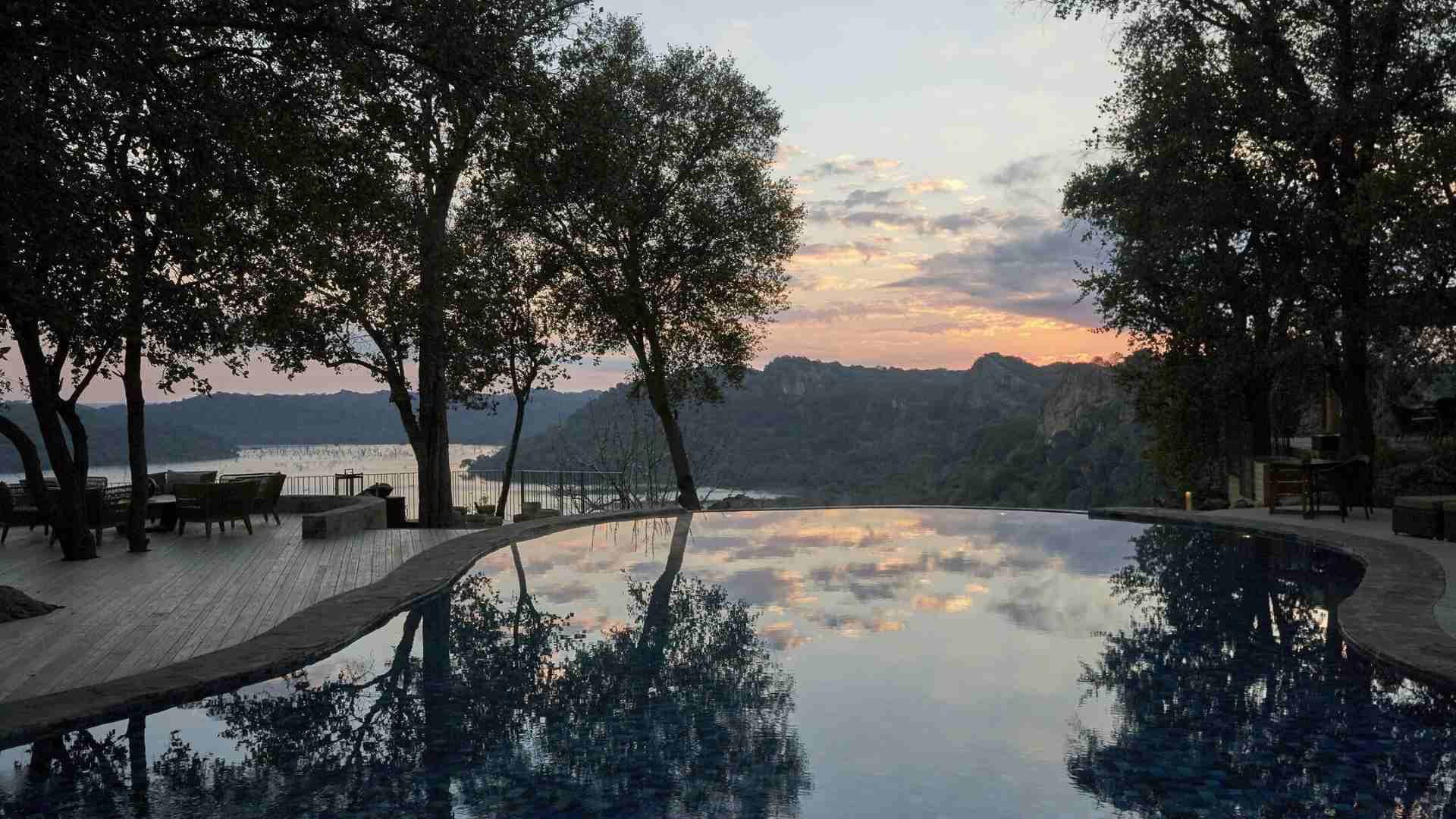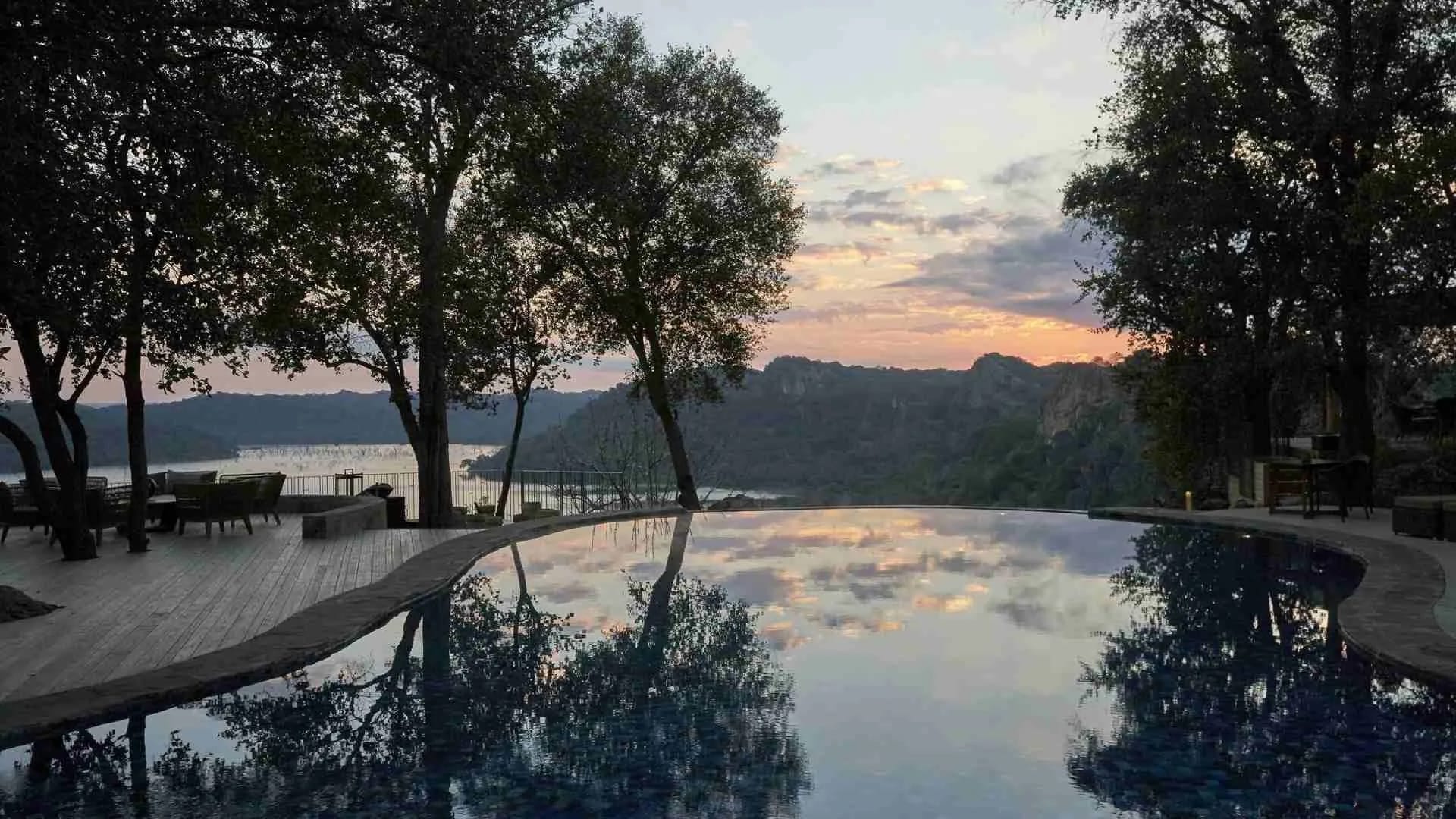
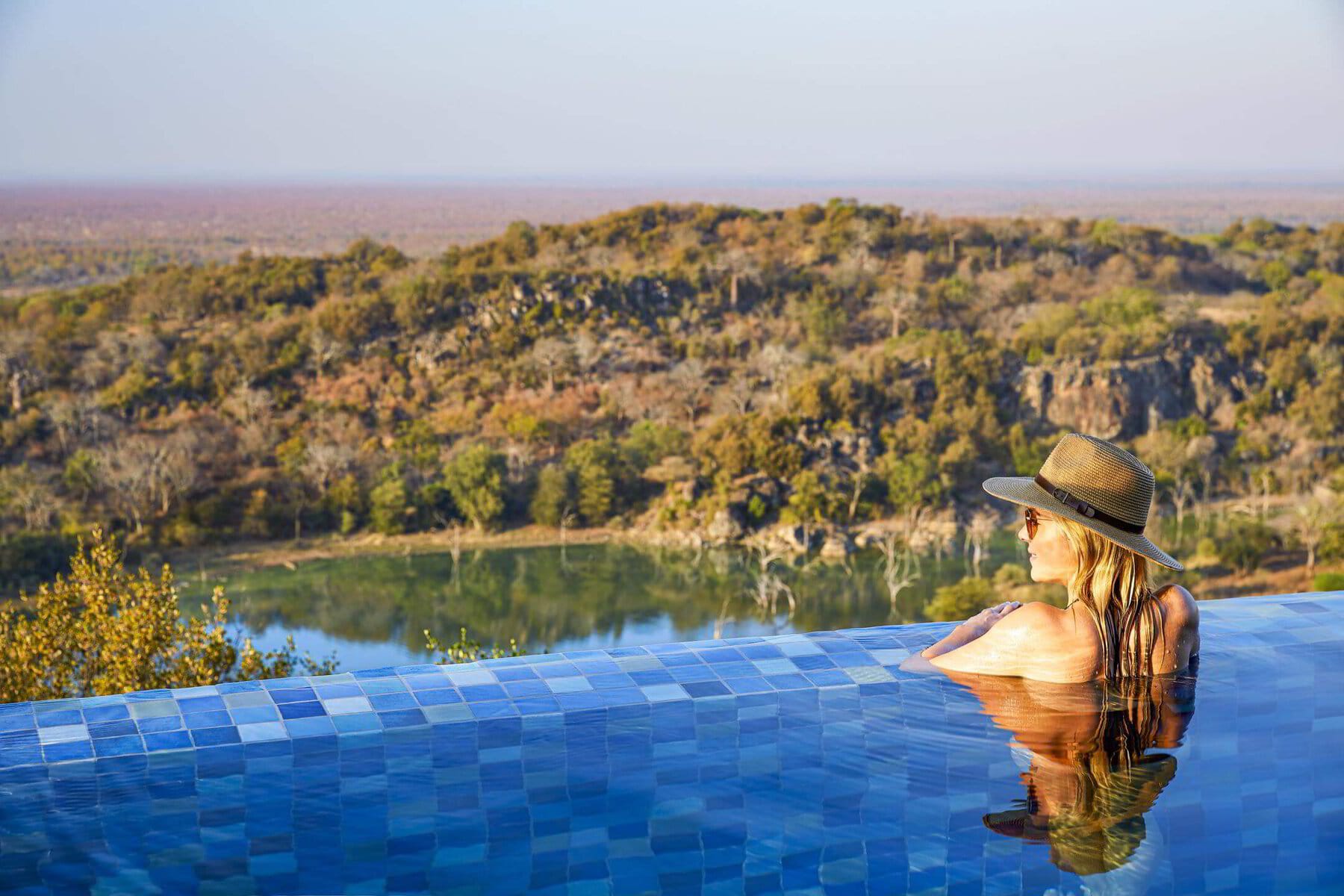
Infinity pool at golden hour with trees framing the view over the gorge, Singita Pamushana, Zimbabwe

Zimbabwe Safari Guide

Zimbabwe, where the guides write the textbook

The country has been quiet for years. The wildlife and the guides have not.

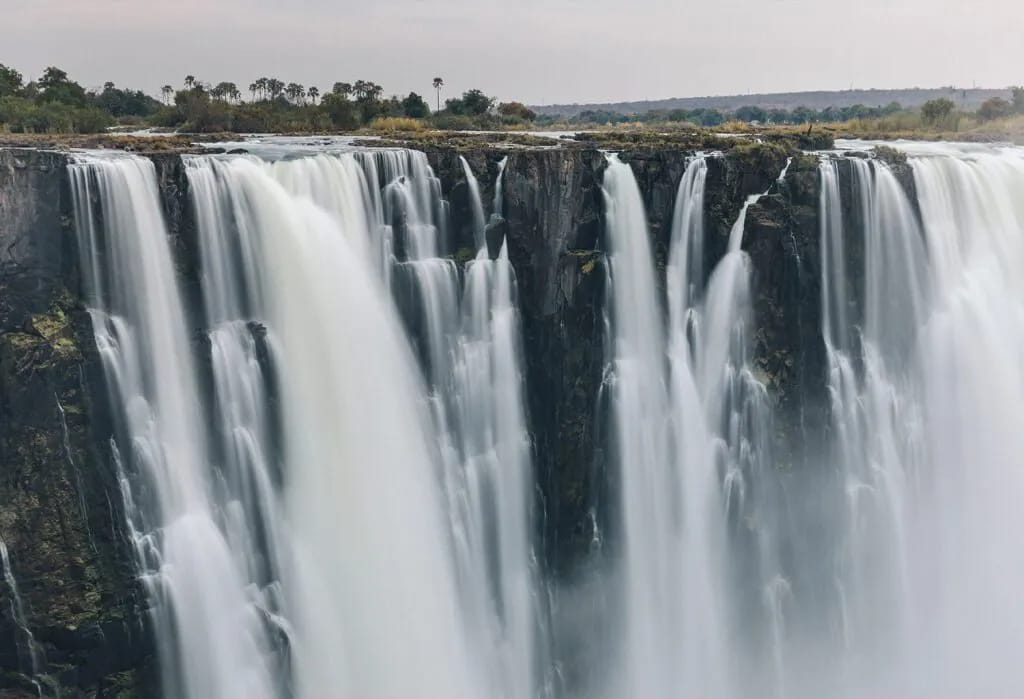
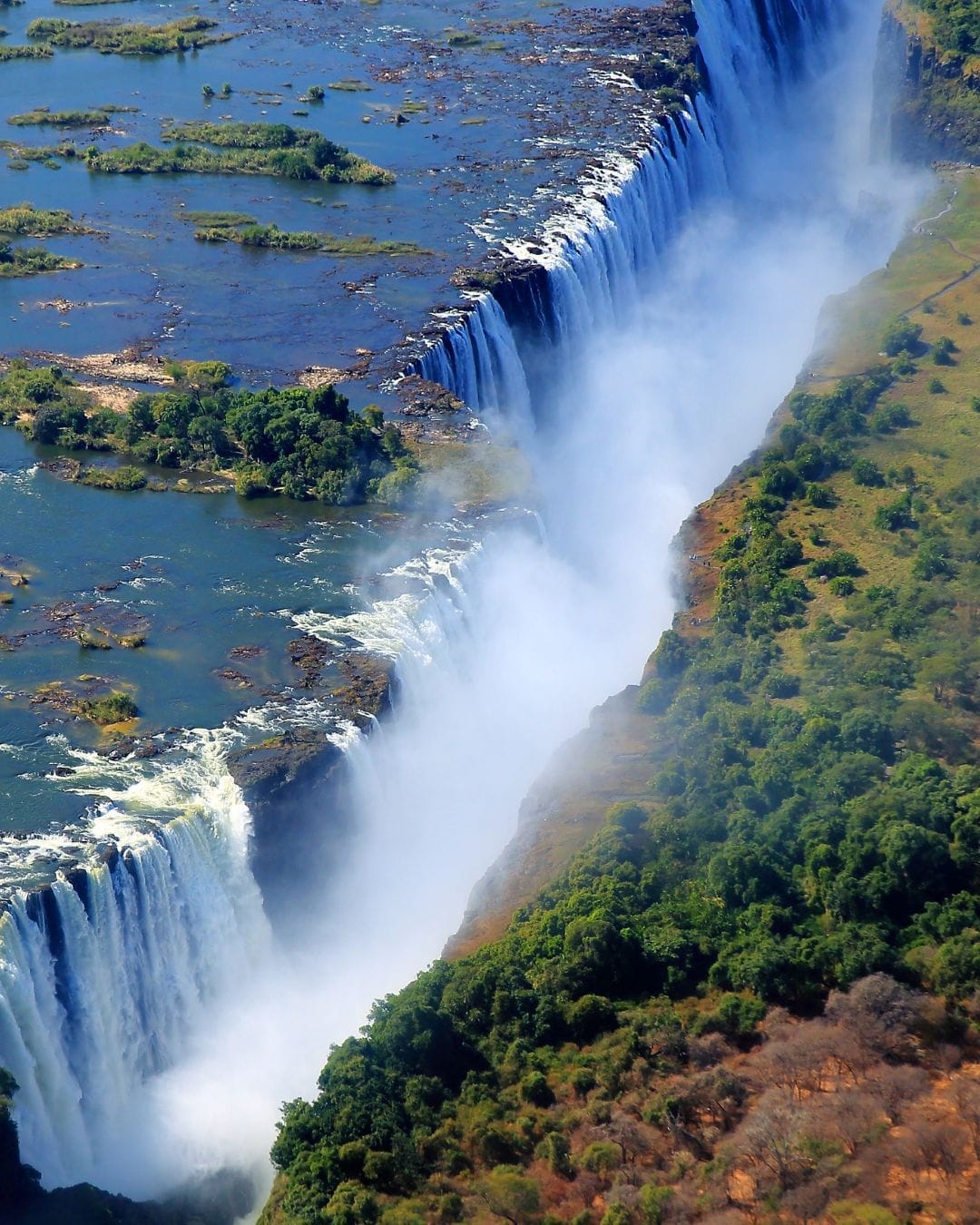
An aerial view of Victoria Falls in full flow, a long plume of mist rising as the Zambezi drops over the basalt edge with green riverine forest along the gorge

Why Zimbabwe

A country defined by the river and the elephant

Zimbabwe is shaped by the Zambezi. The river runs along the entire northern border, falls over the lip of Victoria Falls, slows through the Mana Pools floodplain, and broadens into Lake Kariba in the centre of the country. Most of the country's safari lodges sit on or near it. The southern half holds Hwange, the country's largest national park and home to one of the largest elephant populations on the continent, counted at just over 42,000 in the 2022 aerial survey.

The country has been quiet on the international travel map for nearly two decades. That has been hard for Zimbabweans, but it has kept the bush wild, the camps small, and the guiding standards high. The Zimbabwean Professional Guide qualification is among the most searching in Africa. A four-year apprenticeship, written exams covering ecology, ornithology, geology and history, and a practical exam involving an armed encounter with dangerous game. Fewer than thirty percent of candidates pass.

Most clients combine three regions. Victoria Falls or the Matetsi for two nights, Hwange for three or four, and either Mana Pools (for canoes and walking) or the flagship lodge on the Malilangwe in the south (for the rhino conservation and the malaria-free option). Nine nights is the right length for a first trip, and twelve to fourteen for a fuller circuit.

Zimbabwe also pairs naturally outward. With Zambia for the full Zambezi, where Mana Pools and the Lower Zambezi sit opposite each other across the river and share the same wildlife. With Botswana for the Delta-Hwange-Falls combination. With South Africa's Sabi Sand and Cape Town on a longer southern African trip. Most of the journeys we plan run twelve to sixteen nights when paired this way.

What this country does best

What Zimbabwe does best

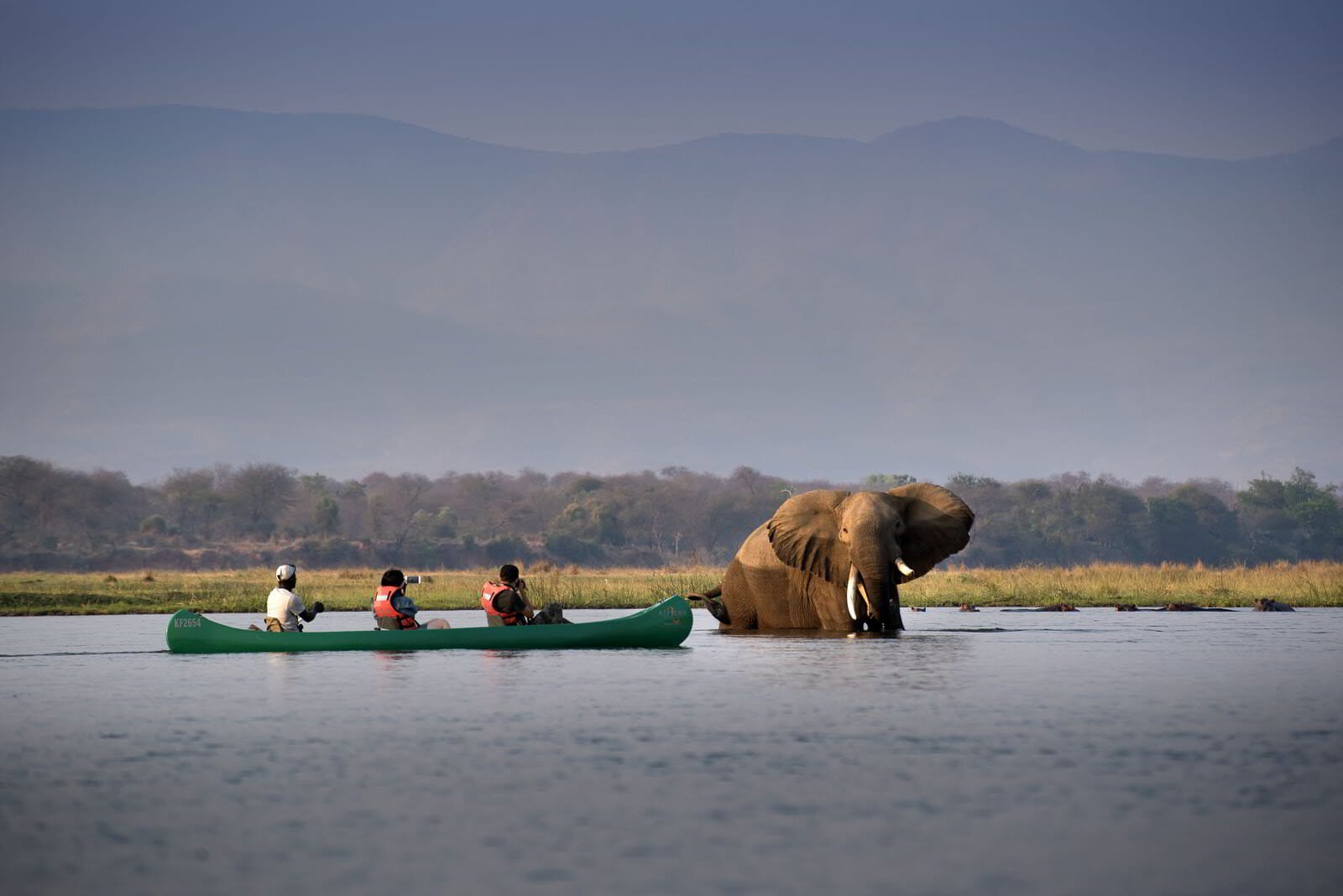
Canoe safari on the Zambezi River through Mana Pools National Park, elephants on the bank
01

Mana Pools by canoe

Paddling between elephants, slipping past hippo pods, drifting under the giant albida trees while baboons drop pods from the canopy. Mana Pools is one of the most atmospheric places on the continent and the country's most distinctive single experience. Three nights at one of the flagship Mana Pools lodges.

Elephant herd at a Hwange waterhole at golden hour, several hundred animals visible across the pan
02

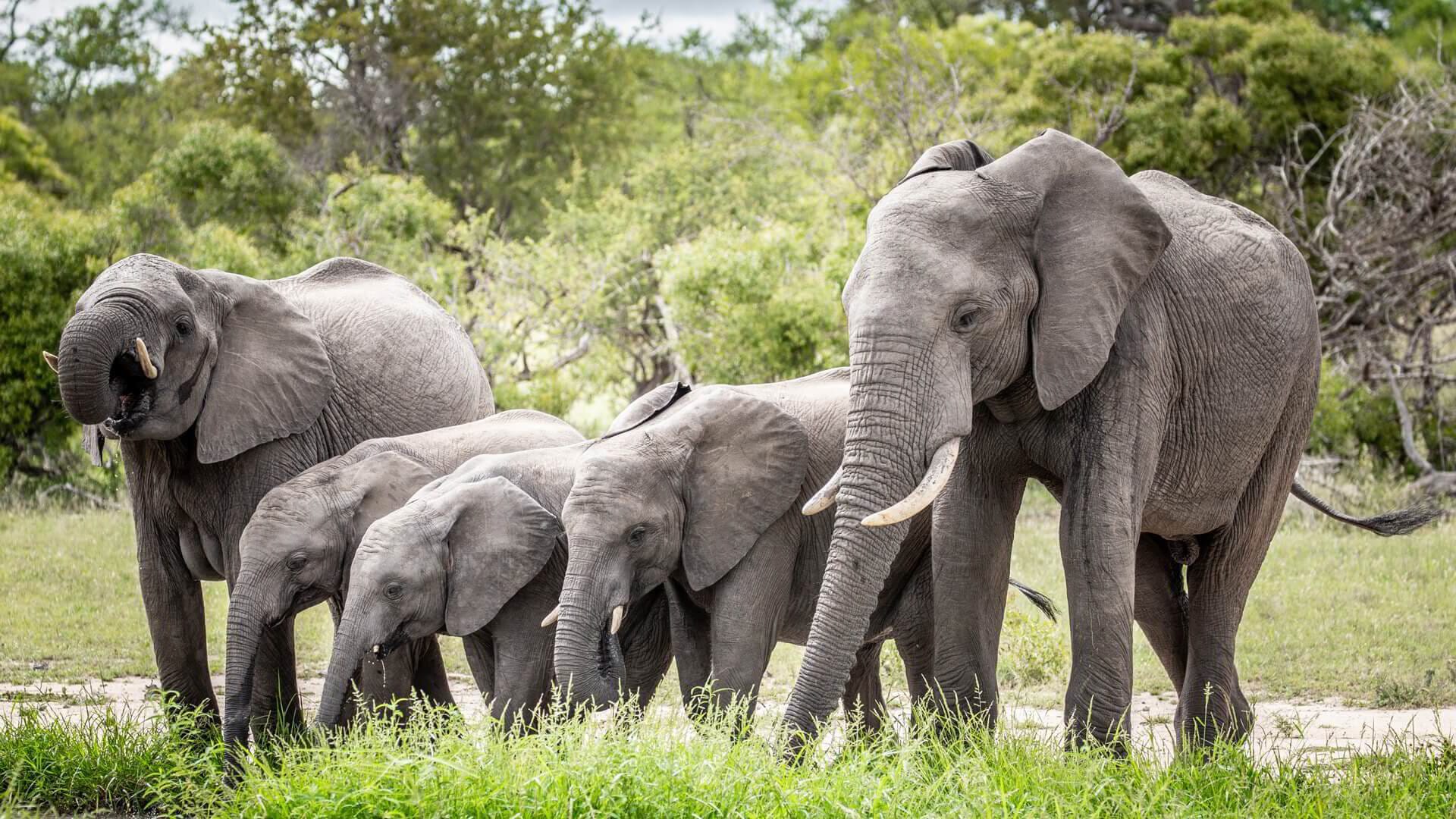
Hwange's elephants in the dry

Hwange has no permanent water, so the dry-season elephants concentrate on a network of pumped pans. From August to October you can sit at one pan and watch a thousand elephants come through over a single afternoon. The country's most generous wildlife display, and the reason we send most first-time Zimbabwe travellers here.

Matetsi River and the Zambezi above Victoria Falls in Zimbabwe at golden hour
03

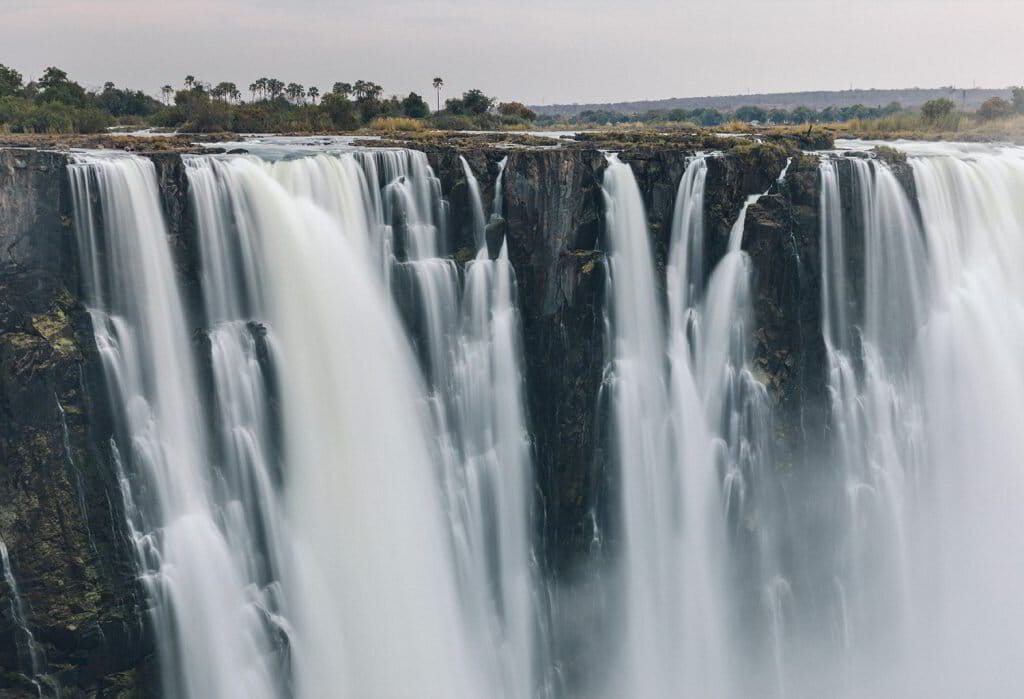
Victoria Falls from the Zimbabwean side

The Zimbabwean side gives you the longer walk along the gorge, the rainforest spray, and the iconic full-frontal photograph of the Falls. Pair it with the Matetsi private concession for game viewing on the Zambezi above the Falls. Most clients spend two nights here at the start or end of a trip.

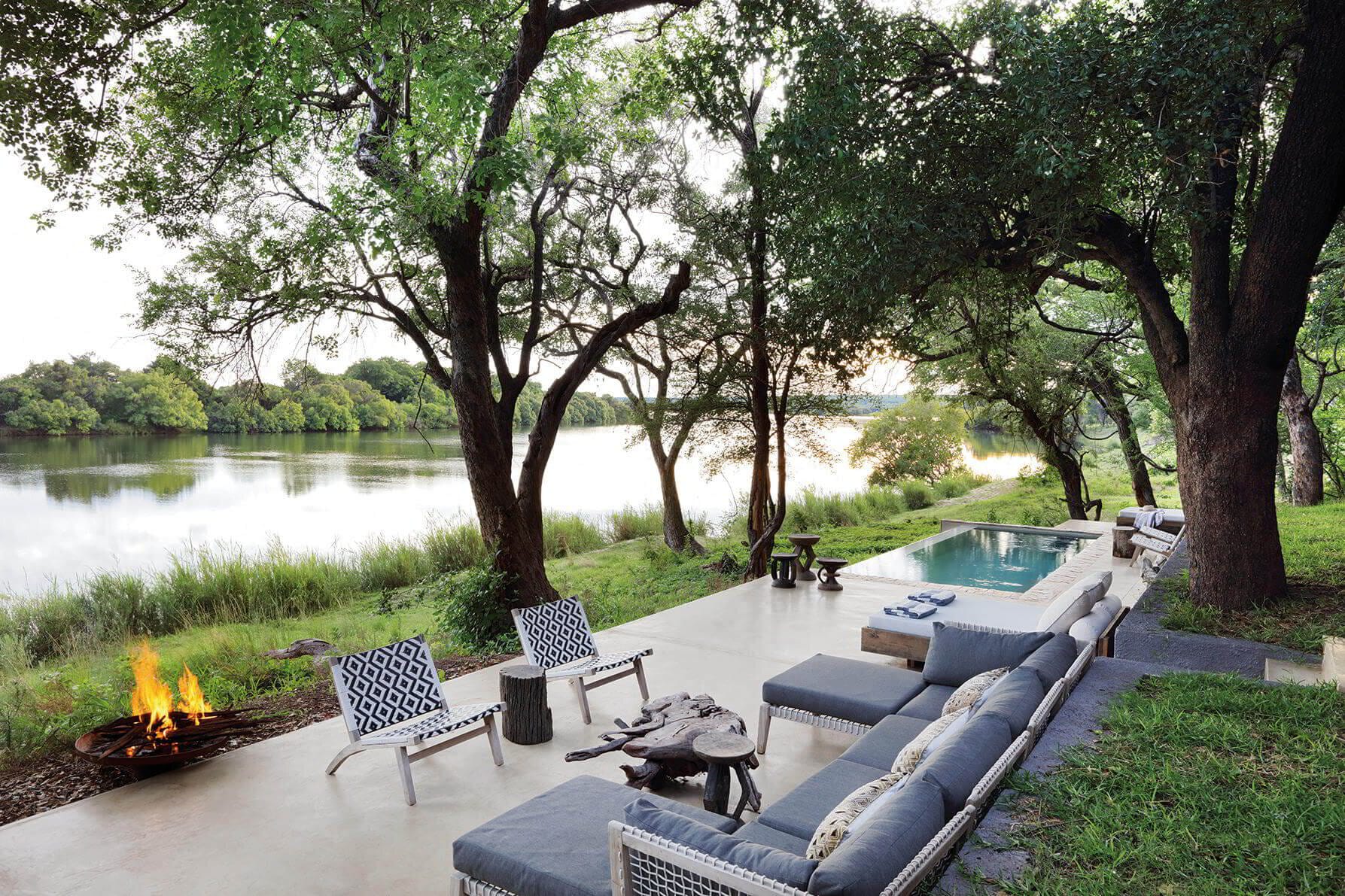
Outdoor living area on the Zambezi, infinity pool overlooking the river
04

Matetsi private concession

Forty kilometres above Victoria Falls on a private concession of the Matetsi River. Game drives, river cruises, walking, and the kind of quiet stretch of the Zambezi that the Falls themselves do not allow. A strong start or end to a Zimbabwe trip, and the property we recommend most often for the Falls leg.

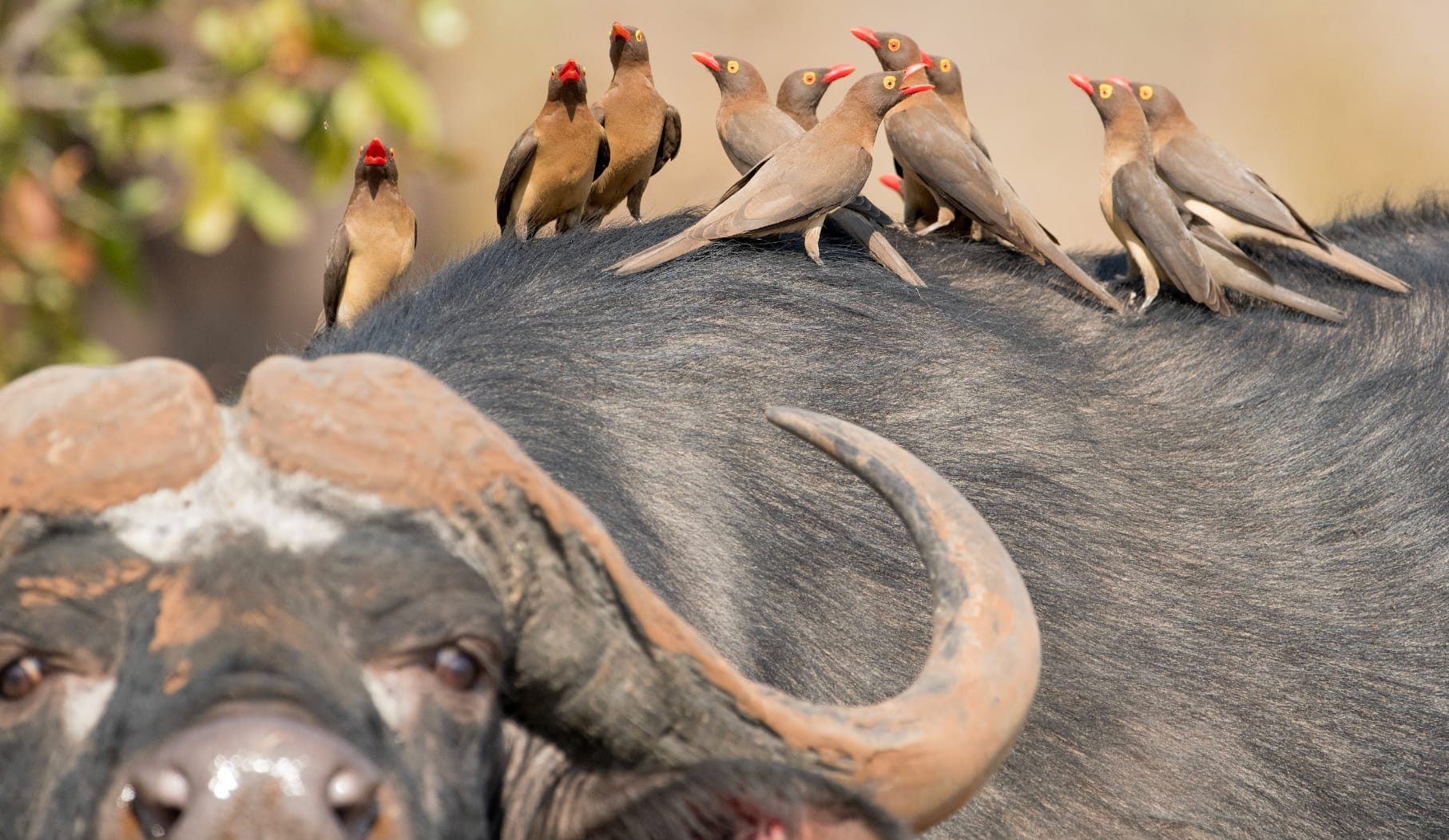
Cape buffalo with a flock of red-billed oxpeckers across its back, mud-caked horns, Malilangwe private reserve
05

The Malilangwe private reserve

A vast private wildlife reserve in the south-east, run by Singita with the Malilangwe Trust. Exceptional black rhino sightings, San rock art, and one of the highest-end safari operations on the continent. Malaria-free, family-friendly, often combined with Sabi Sand on a southern African trip.

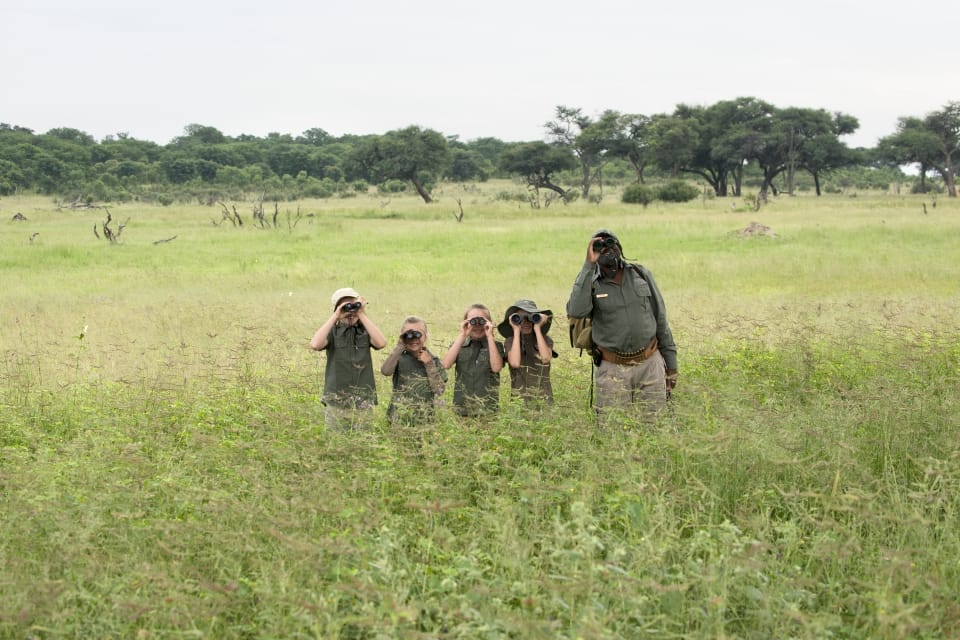
Safari guide and three young guests on a walking safari in the bush, all on binoculars
06

The Zimbabwean Professional Guides

The apprenticeship runs for years before the final examination, and it produces some of the best safari guides on the continent. Walking with a Pro Guide changes the way you see the bush. We pick camps for the guides on the roster as much as for anything else, and the difference is felt by the second morning.

Wide editorial photograph of a Hwange elephant herd on a floodplain at golden hour

Where, specifically

Where, specifically

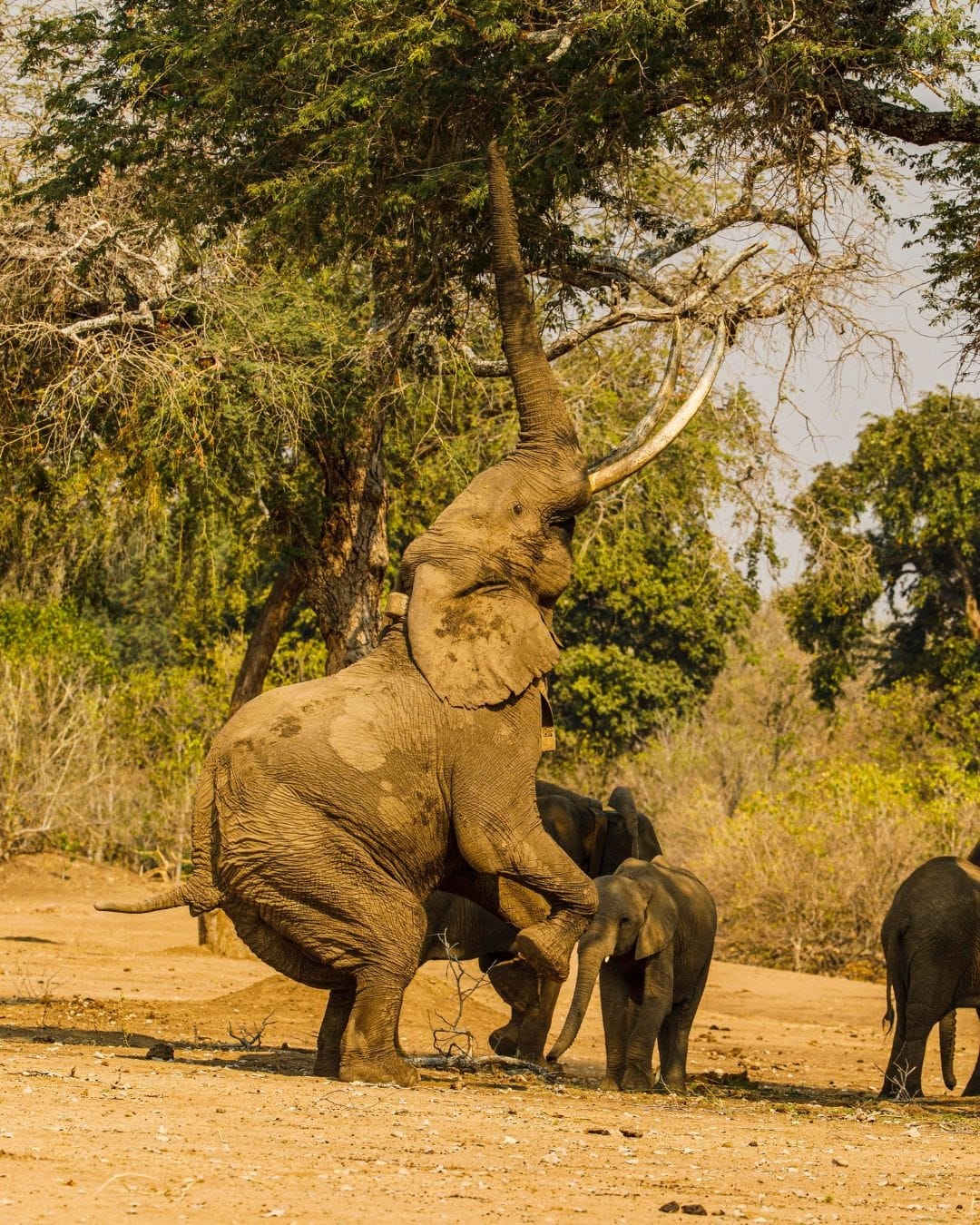
Bull elephant standing on hind legs to reach high albida pods in Mana Pools, Zimbabwe

01 · The canoe country

Mana Pools

UNESCO World Heritage site on the Zambezi. Canoeing and walking are both permitted, and most camps run a mixture of activities each day. Famous for the giant albida trees and the elephants that stand on their hind legs to feed on the high pods. Three nights minimum.
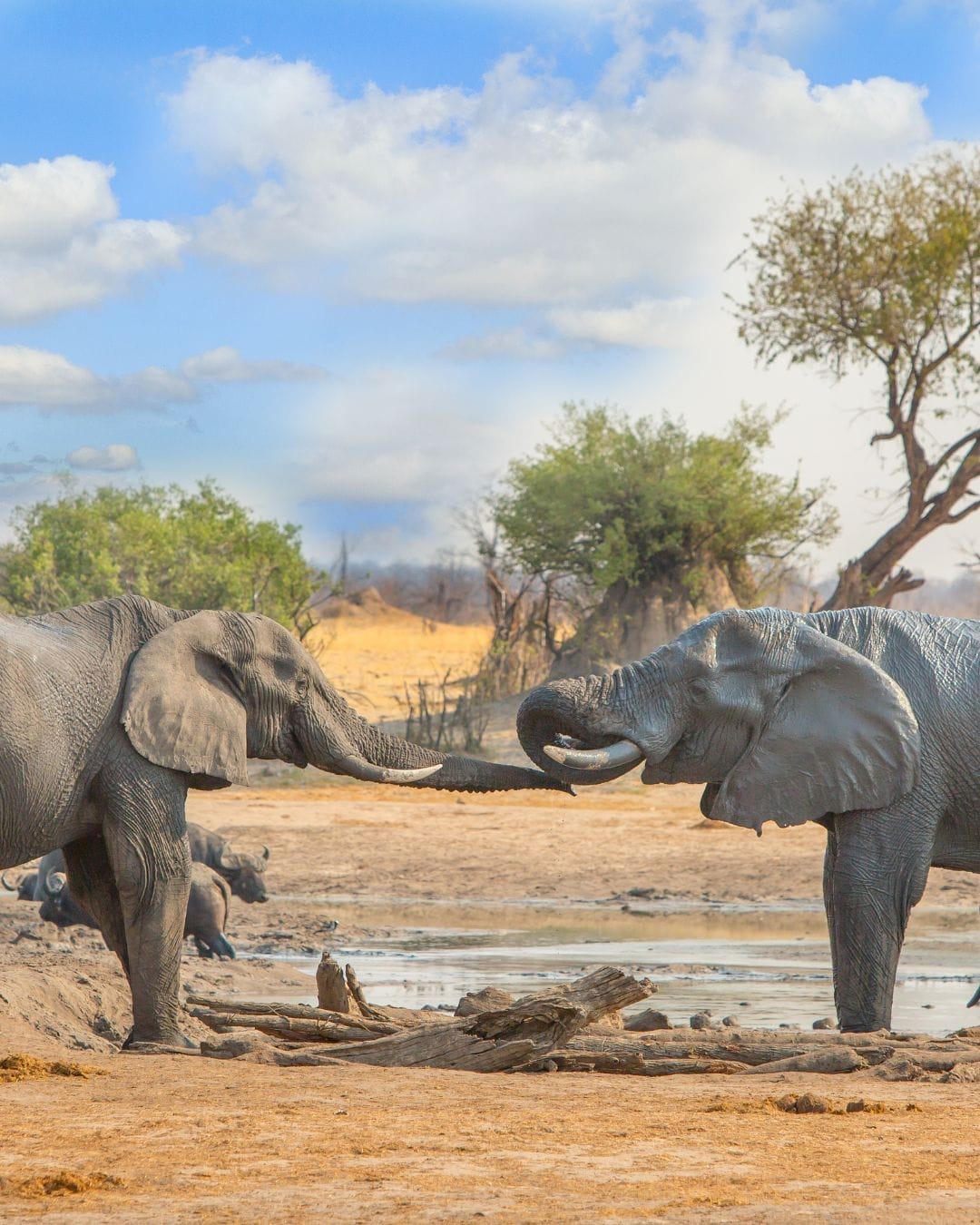
Two elephants meet trunks across a Hwange waterhole in dry season, buffalo resting behind

02 · The elephant country

Hwange National Park

Zimbabwe's largest national park. Camps in the private concessions offer off-road driving and walking that the public park does not. Linkwasha, Bomani, Somalisa, Little Makalolo. Three nights minimum, four for the elephant peak in September and October.

Matetsi River House outdoor living area on the Zambezi

03 · The Falls and the river

Matetsi & Victoria Falls

The Zimbabwean side of Victoria Falls and the Matetsi private concession. Two lodges on the concession offer game drives, river cruises and walking. The Falls themselves are a half-hour drive south. Two to three nights covers both.

A villa with infinity pool overlooking the Malilangwe reserve

04 · The southern reserve

Pamushana & the Malilangwe

A vast private wildlife reserve in the south-east, run by Singita with the Malilangwe Trust. Excellent black rhino sightings, San rock art, malaria-free, family-friendly. Two lodges anchor the conservancy. Three nights covers it.

Open Zimbabwean savannah landscape with golden grasses and acacia

05 · The inland sea

Lake Kariba & Matusadona

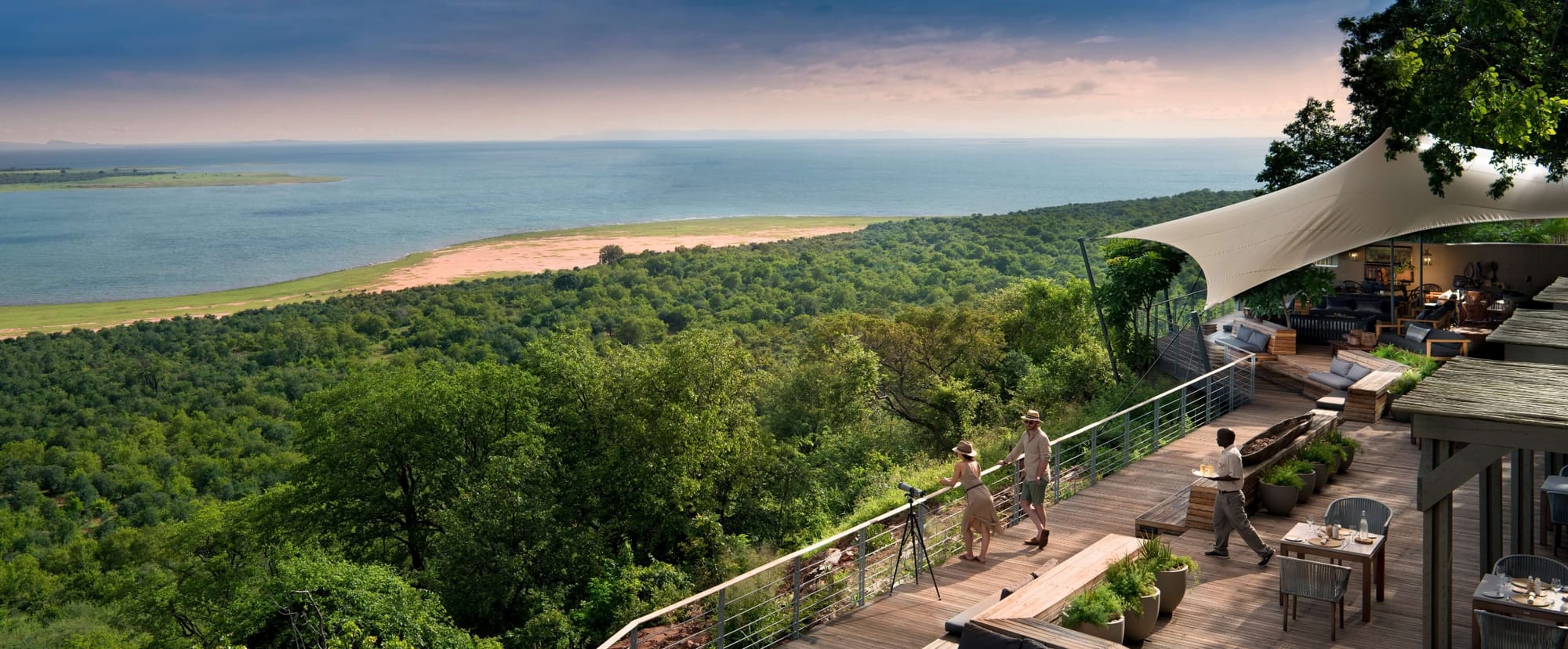
Lake Kariba and the Matusadona National Park on its southern shore. Boat-based game viewing on the lake, walking with armed scouts in the park, and one of the country's quieter regions. A small handful of lodges on the lake. Often a return-trip addition.

Bull elephant standing on hind legs to reach high albida pods in Mana Pools, Zimbabwe
Two elephants meet trunks across a Hwange waterhole in dry season, buffalo resting behind
Long-exposure of Victoria Falls on the Zimbabwean side, sheets of water dropping into the gorge
A villa with infinity pool overlooking the Malilangwe reserve
Couple on the viewing deck of Bumi Hills Safari Lodge overlooking Lake Kariba at golden hour

01 · The canoe country

Mana Pools

UNESCO World Heritage site on the Zambezi. Canoeing and walking are both permitted, and most camps run a mixture of activities each day. Famous for the giant albida trees and the elephants that stand on their hind legs to feed on the high pods. The Mana floodplain holds high concentrations of game in the late dry season, and the pace is unhurried. Three nights minimum at one of the flagship Mana Pools lodges, and most clients add a fourth.

02 · The elephant country

Hwange National Park

Zimbabwe's largest national park and home to one of the largest elephant populations on the continent. The park has no permanent water, so wildlife concentrates around a network of pumped pans in the dry season. Camps in the private concessions (Linkwasha, Bomani, Somalisa, Little Makalolo) offer off-road driving and walking that the public park does not. Cecil the lion lived here. Painted dogs den here. Three nights at minimum, four for the elephant peak in September and October.

03 · The Falls and the river

Matetsi & Victoria Falls

The Zimbabwean side of Victoria Falls and the Matetsi private concession that runs forty kilometres up the Zambezi above the Falls. Two lodges on the private concession offer game drives, river cruises, walking, and a quieter stretch of the Zambezi than the Falls themselves allow. The Falls are a half-hour drive south, and a half-day tour covers the rainforest walk and the iconic full-frontal photograph. Two to three nights covers both, and we tend to start or end most Zimbabwe trips here.

04 · The southern reserve

Pamushana & the Malilangwe

A vast private wildlife reserve in the south-east, run by Singita with the Malilangwe Trust. Excellent black rhino sightings, San rock art, malaria-free, and family-friendly. Combines well with Sabi Sand and Cape Town on a southern African trip. Two lodges anchor the reserve, with the second best for families and small groups taking the property exclusively. Three nights covers it.

05 · The inland sea

Lake Kariba & Matusadona

Lake Kariba is the largest man-made lake in the world by volume, and the Matusadona National Park sits on its southern shore. Boat-based game viewing on the lake, walking with armed scouts in the park, and one of the country's quieter regions. The established lodges sit above the lake. Often added on a return trip rather than a first, and a strong fit for travellers who already know Hwange and Mana Pools.

When to be here

We don't ask when you want to go. We ask what you want from it

Zimbabwe is a strongly seasonal country. Most northern camps close for the rains. Four ways to think about it.

For the elephants

Hwange at peak

August – October

The dry season concentrates the elephant population around the pumped waterholes. From August to October you can see herds of several hundred drinking together at the right pan. Cool mornings, hot middays, dry nights. Peak rates and our most-recommended window for first-time Zimbabwe travellers.

For the canoes

Mana Pools at flow

May – October

Mana Pools opens in April after the rains and closes again in late October before the next ones. Canoeing and walking run throughout. June to October is the strongest window. The river is calmer in the late dry season, the wildlife more concentrated on the banks.

For Victoria Falls in spate

The Falls at full volume

March – June

The Zambezi peaks in March and April after the upstream rains. The Falls are at their loudest and the spray is so thick you cannot see the rock face. The Zambian side becomes near-invisible. The Zimbabwean side still holds. By July the volume has dropped and the photographs are sharper, by October it is quiet enough for swimming at Devil's Pool on the Zambian side.

For Pamushana and the south

Year-round flexibility

All year

The flagship lodge on the Malilangwe runs year-round and is malaria-free. The southern reserves stay accessible through the rains, and the green-season landscape photographs beautifully. We tend to recommend Pamushana for families and for combining with Sabi Sand on a southern African trip.

Zimbabwe month by month

JanuaryJan
FebruaryFeb
MarchMar
AprilApr
MayMay
JuneJun
JulyJul
AugustAug
SeptemberSep
OctoberOct
NovemberNov
DecemberDec
  • Peak dry · Jul, Aug, Sep, Oct · Hwange elephants at peak, Mana Pools canoeing exceptional, highest rates
  • Dry begins · Jun · cool mornings, bush thinning, strong value before peak
  • Shoulder · Apr, May, Nov · rains ending or beginning, lower rates, quieter camps, Falls in flow
  • Green season · Dec, Jan, Feb, Mar · rains, most northern camps closed, Pamushana stays open
Matetsi River House on the Zambezi, the first leg of our eleven-night Zimbabwe itinerary

A signature Zimbabwe itinerary

Eleven nights from the Falls to Singita Pamushana

Two nights at the Falls, four on the Zambezi at Matetsi, then five quiet nights at Singita Pamushana inside the Malilangwe wilderness. A slow Zimbabwe route built around water, wildlife and one of the most private reserves in the country.

  • Nights11
  • RouteVictoria Falls · Matetsi · Malilangwe
View sample itinerary →

A starting point, not a fixed package. We rebuild every Zimbabwe itinerary around the traveller.

What it costs

What a Zimbabwe safari costs

Per person, per night, sharing. Fully inclusive of accommodation, meals, drinks, twice-daily activities (game drives, walking, canoeing, boating), park fees and lodge transfers. Light-aircraft transfers between regions add $300 to $600 per person per leg, and the better itineraries use them.

4-star plus

From $700 to $1,200

per person, per night, sharing

5-star

From $1,200 to $2,500

per person, per night, sharing

5-star premium

From $2,500 to $4,800

per person, per night, sharing

Zimbabwe peak season runs late June to October, when the dry season concentrates wildlife on the rivers and pans. Mana Pools is open from April to November and closes during the rains. Green season (December to March) brings the lowest rates but most northern camps close because the access roads become impassable. A 9 to 12 night 5-star Zimbabwe itinerary works out at roughly $11,000 to $20,000 per person all-in including internal flights.

Is Zimbabwe right for you

Best for, and not ideal for

Travellers who care about guiding The Zimbabwean Professional Guide qualification is among the most searching in Africa. The four-year apprenticeship and the field exam produce guides who change the way you read the bush by the second morning. If guiding matters to you more than the property, Zimbabwe is the country to book.
First-timers wanting the easy intro Zimbabwe rewards a little prior safari experience. The walking is technical, the parks are vast, and the country's strongest experiences (Mana Pools, Hwange's pans) reveal themselves over multiple nights. For a first African trip, South Africa's Sabi Sand or Kenya's Masai Mara is the more legible starting point.
Walking and canoe safari travellers Mana Pools is one of a small handful of parks on the continent where walking with elephants on foot and canoeing the same river are both part of the daily programme. The country's walking guides are exceptional, and the canoeing on Mana Pools and the Lower Zambezi side is some of the most atmospheric activity in safari travel.
Travellers wanting variety in landscape Zimbabwe is mostly miombo woodland, mopane forest and floodplain. It does not offer the dunes of Namibia, the highland forests of Rwanda, or the coastal contrast of Mozambique. For landscape variety on a single trip, we pair Zimbabwe with one of its neighbours rather than building everything inside the country.
Families wanting malaria-free The flagship lodge on the Malilangwe in the south-east is malaria-free and one of the highest-end family safari operations on the continent. Combines well with Madikwe in northern South Africa and Cape Town on a malaria-free southern African trip for families with younger children.
Travellers on a tight schedule Zimbabwe takes time. Getting to Mana Pools or remote Hwange involves a connection through Harare or Victoria Falls and a light aircraft, and the camps reward longer stays rather than overnights. Seven nights is the practical minimum. For shorter African breaks, South Africa's Sabi Sand area is a better fit.
Conservation-minded travellers Painted Dog Conservation in Hwange, the Malilangwe Trust at Pamushana, the anti-poaching units across the country's national parks. Zimbabwe's safari sector funds direct conservation work in ways most clients do not see until they ask. Your bed-night fees and concession fees do meaningful work on the ground.
Travellers wanting a beach finish in the same country Zimbabwe is landlocked. The classical bush-and-beach pairing requires a connecting flight to Mozambique or the wider <a href="/indian-ocean-islands/">Indian Ocean islands</a>, or up to the Kenyan coast. We plan this regularly, and the routings work, but it adds a day at each end and a separate set of malaria considerations.

Typical length: 9 to 14 nights, across two or three regions.

Most trips are not one country

What Zimbabwe pairs with

Zambia is the natural first pairing. Mana Pools and the Lower Zambezi sit opposite each other across the Zambezi and share the same wildlife. Walking the Luangwa for a few nights, then crossing to Mana Pools for the canoes, gives you the full Zambezi experience in one trip. Botswana pairs well for the Delta-Hwange-Falls combination, with a short charter flight connecting Maun to Hwange and Hwange to Victoria Falls.

South Africa's Sabi Sand pairs with the Malilangwe reserve for a southern African leopard-and-rhino circuit, with Cape Town and the Cape Winelands as the city finish. For travellers who want a beach finish, Mozambique's Bazaruto or the islands of the Quirimbas are a short hop south. For families looking for malaria-free options, Pamushana in the south-east of Zimbabwe pairs well with Madikwe in northern South Africa and the Cape. Twelve to sixteen nights covers most pairings comfortably.

Open Zimbabwean savannah landscape at golden hour, the gateway to southern African pairings

Questions we hear most

A few things worth knowing

When is the best time to visit Zimbabwe?

Late June to October is the dry season and the strongest window for game viewing in Hwange and Mana Pools. April-May and November are the shoulder months we tend to recommend most often for travellers wanting strong value with the bush still active. December to March is the green season, with most northern camps closed because of the rains. The Zimbabwean side of Victoria Falls is at its most dramatic between March and June when the Zambezi is in flood.

Is Zimbabwe safe to visit?

Yes. The safari areas of Zimbabwe (Hwange, Mana Pools, the Matetsi, Pamushana) are well-managed, well-staffed and well-served by experienced operators. We have not had a safety concern with any client trip in over a decade. Internal political tensions exist but are not present in the bush. We follow current advice from SATSA, the British and US embassies, and our on-the-ground partners.

Should I see Victoria Falls from the Zimbabwean or Zambian side?

The Zimbabwean side gives you the longer view, the iconic full-frontal photograph, and the rainforest walk. The Zambian side gives you the close-up at Knife-Edge Bridge and Devil's Pool from August to December. Most travellers see one. Travellers with three nights at the Falls can comfortably see both with a day-cross. We pick the side based on the rest of the itinerary and the time of year.

Do you need malaria tablets for Zimbabwe?

Yes for most safari areas, including Hwange, Mana Pools, Matetsi and the Zambezi Valley. The flagship lodge on the Malilangwe in the south-east is malaria-free, which is why we recommend it for families with younger children. Standard prophylactics are advised for the malarial regions, along with long sleeves at dusk and the screened tents most camps now provide.

Can children go on a Zimbabwe safari?

Yes, and Pamushana in particular is set up for it. Hwange and the Matetsi accept children from age six in most camps, with private vehicles and dedicated family programmes. Mana Pools is generally not appropriate for children under twelve because of the canoeing and walking content. We will steer you to the camps that handle families well, and away from those that quietly do not.

What is a Zimbabwe Professional Guide?

A Zimbabwe Professional Guide is the holder of the country's full safari guide licence, and one of the hardest to earn anywhere in Africa. Candidates spend a minimum of four years apprenticing under existing licensees, followed by written exams covering ecology, ornithology, geology, history and weapons handling, and a practical exam that includes tracking, plant identification, and a high-pressure session involving an armed encounter with dangerous game. Fewer than thirty percent of candidates pass. The licence allows the holder to lead walking and canoeing safaris in any national park in the country.

Plan your Zimbabwe safariPlan your safari

Plan it properly

Tell us what you are imagining

Tell us roughly what you are thinking. We come back within a working day, often sooner.

Write to us

One of us will write back.

Replies come from Vikki or Sian. No obligation, just a conversation.

Prefer to write to us directly? sian@marulahill.com · WhatsApp +27 82 459 0648